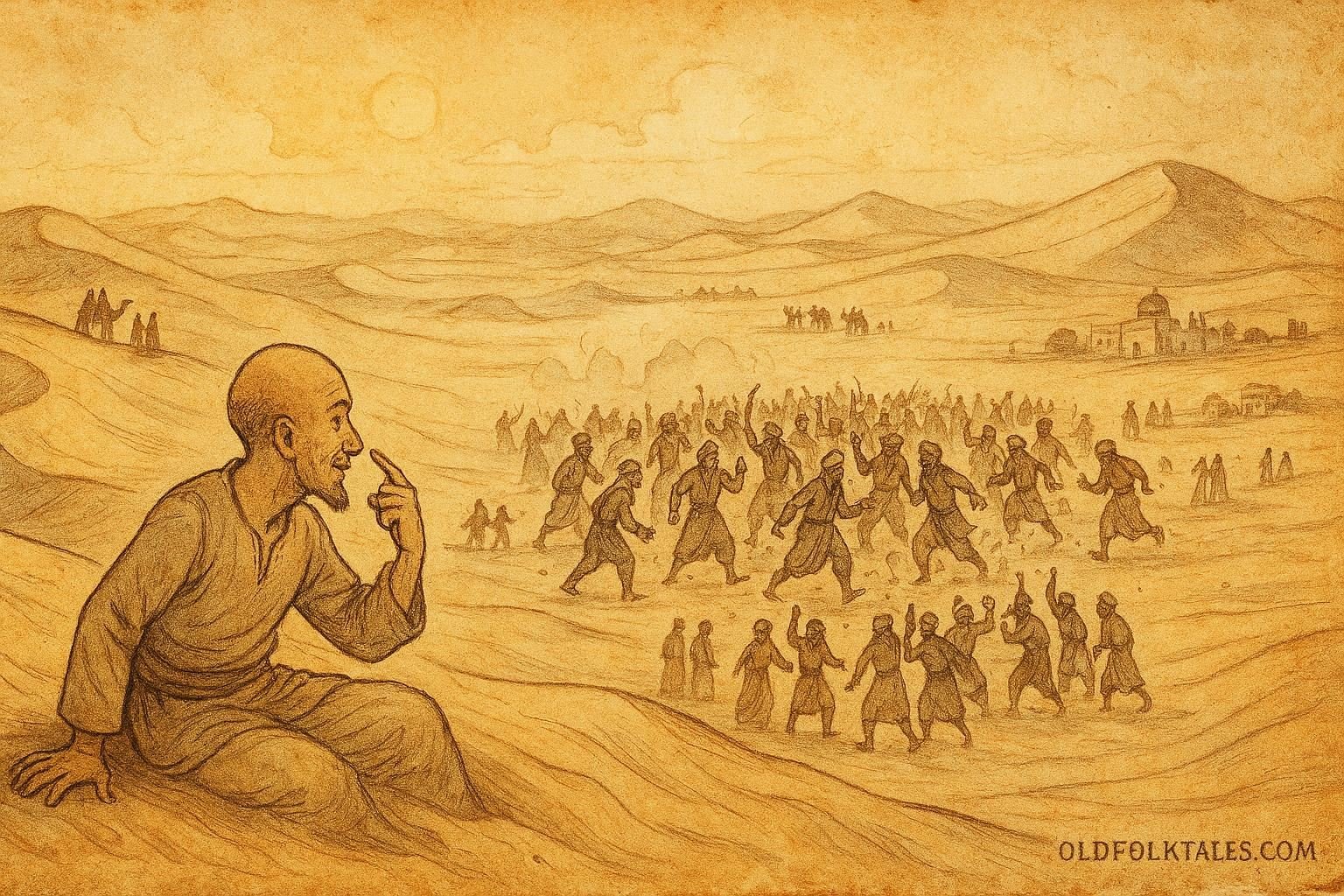
In the vast, sun-scorched deserts of Uzbekistan, where golden sands stretch endlessly and the wind carries whispers of long-forgotten travelers, a bald man journeyed alone. His head shone under the blazing sun, a feature that often drew amusement or scorn from strangers, yet beneath his seemingly ordinary appearance lay a sharp mind and a fearless spirit.
The bald man’s journey took him across arid plains, bustling bazaars, and scattered villages. He carried nothing but a small satchel of provisions and his wits, for he knew that in the desert, intelligence could be more valuable than strength or weapons. One day, as he approached a narrow pass lined with jagged rocks, he encountered a formidable band of forty notorious thieves. Known for terrorizing caravans, the thieves had robbed countless travelers, leaving fear and chaos in their wake.
Explore timeless legends from China, Japan, and Korea in our East Asian Folktales collection.
The bald man, realizing the danger, did not panic. Instead, he observed the thieves from a distance. They were rugged, boastful, and confident, each certain of his dominance. But the bald man knew brute force alone would not secure his survival or the safety of passing caravans. He decided to rely on cleverness, misdirection, and quick thinking, tools that had always served him well.
As the thieves demanded gold and goods, the bald man smiled and feigned ignorance, pretending to be a helpless, foolish traveler. He offered them his meager satchel, claiming it contained all his valuables, yet secretly hid messages and small tools that would aid him. Using stories, riddles, and subtle tricks, he confused, delayed, and divided the band, making them argue among themselves over nonexistent treasures.
In one daring maneuver, he convinced half the thieves that a rival gang awaited them in a nearby canyon. Excited by the prospect of plunder, those thieves ran ahead, leaving the others behind. Seizing the moment, the bald man set small traps and ingenious illusions, mirages, scattered footprints, and cleverly arranged desert flora, to exaggerate the desert’s dangers. The remaining thieves, frightened by signs of “supernatural forces,” retreated, believing the bald man to be protected by some mystical power.
Along the way, he also aided travelers, merchants, and village elders, guiding them safely past ambushes or alerting them to hazards. His clever interventions won him gratitude and small rewards, but he never sought recognition. Each encounter tested his judgment, revealing that true strength comes from intellect, observation, and ethical cleverness, not merely physical prowess.
When word of the bald man’s exploits spread, villagers celebrated him as a hero of wit. Merchants invited him to assist caravans, and even local leaders sought his counsel on strategies to safeguard trade routes. Yet he remained humble, never boasting, teaching by example that a clear mind and courageous heart could overcome threats far greater than oneself.
The desert, which once seemed an unforgiving expanse, became a stage for his cleverness. Through wit and strategic thinking, he not only survived the treacherous 40 thieves but protected the weak, thwarted greed, and upheld fairness, leaving a legacy of ingenuity and courage.
Discover the wisdom of ancient India and the Silk Road in South & Central Asian Folktales.
Moral Lesson
The story teaches that intelligence, resourcefulness, and ethical cleverness are often stronger than brute force. Courage and quick thinking can overcome the most formidable challenges, and humility ensures that talent benefits others, not just oneself.
Knowledge Check
1. Who is the main character of the story?
A bald man known for his cleverness and quick thinking.
2. How does he confront the 40 thieves?
Through intelligence, misdirection, and strategic traps rather than physical strength.
3. What virtues are emphasized in the tale?
Cleverness, patience, courage, humility, and ethical judgment.
4. What cultural aspects are depicted?
Uzbek deserts, bazaars, village life, and the value placed on wit over brute force.
5. How do villagers and merchants benefit from him?
He protects caravans, warns of dangers, and guides travelers safely.
6. What is the central lesson of the folktale?
Resourcefulness, intellect, and moral cleverness can overcome danger and achieve success.
Source: Uzbek oral tradition; referenced in regional folktale anthologies
Cultural Origin: Uzbekistan (Uzbek folk tale)