In the wide, sun-scorched plains stretching across southern Afghanistan and Baluchistan, there once lived a humble herdsman named Zikkfir. He was a quiet soul who owned little more than his staff, his goats, and his faith. Day after day, he whispered prayers under his breath, repeating the sacred names of God until they became the rhythm of his heart. He gave what little milk he had to strangers, fasted often, and spoke softly to all who came his way. Because his lips never ceased their remembrance, people began to call him the man of zikr, the man of remembrance.
Zikkfir sought no fame or fortune. He spent his nights under the desert stars, gazing into the endless sky, whispering praises that blended with the wind. The villagers respected him, though few understood the depth of his devotion. To him, the world was a fleeting shadow; only remembrance of the Divine was eternal.
The Saint of the Desert
As the years passed, those who crossed paths with Zikkfir began to tell stories of strange and wondrous things. It was said that when he touched the sick while murmuring Allah Hu, they rose healed. Wild animals came near his hut and lay peacefully at his feet. When a brush fire once spread through the scrubland, Zikkfir walked through the flames unburned, leading a frightened fawn to safety.
Those who witnessed such marvels tried to call him a saint, but Zikkfir would only bow his head and say, “Do not praise the servant, praise the Master whose mercy works through all.” He accepted no wealth, no gifts, no honours. His life was simple, and his words were few. “Pride,” he said, “is the serpent that coils around the soul and blinds it to truth.”
The Drought and the Test of Faith
Then came a year when the rain forgot the earth. Rivers shrank into dust, and the wells turned bitter. Fields lay cracked beneath the sun, and hunger haunted every home. The people prayed, but the sky remained silent. Seeing their despair, Zikkfir went alone into the barren hills, vowing to remain there until mercy descended.
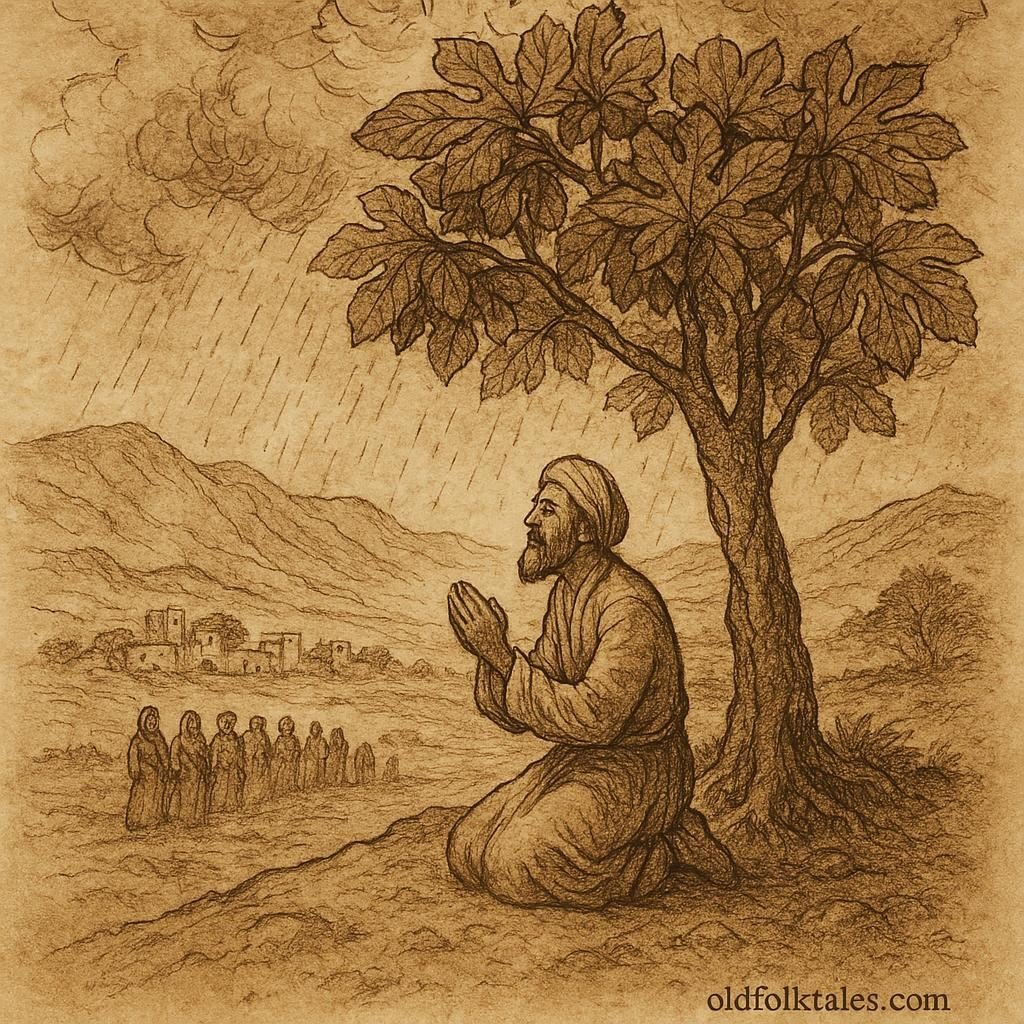
For forty days and forty nights, he fasted and prayed, his voice mingling with the wind, calling upon the hidden names of God. On the fortieth day, clouds gathered from every direction, and thunder rolled across the valleys. When the first drops fell, the parched land drank eagerly, and joy returned to the villages. But Zikkfir did not come back.
When they went to find him, they discovered him lying beneath a fig tree, his face serene as though asleep. The prayer beads were still clasped in his hand. They knew then that his spirit had been taken to the One he had loved most. The villagers buried him beneath the fig tree, and before long, a shrine rose over his grave. Even during the dry seasons, the tree above it remained green and full of fruit.
The Brotherhood of the Zikkfirs
Those who had followed him gathered together and took vows to live as he had lived. They called themselves the Zikkfirs, the brothers of remembrance. They wore coarse robes, carried wooden beads, and wandered from place to place, never resting long in one home. At dawn, their voices could be heard in the marketplaces, chanting the names of God; by sunset, they would vanish into the wilderness.
The people came to see them as both holy and mysterious. To feed a Zikkfir was said to bring blessing, but to mock one was to invite misfortune. Stories spread across the land: one Zikkfir healed a blind child with a single touch; another walked unharmed into a burning village to save a crying infant; yet another, slain by robbers on a lonely road, caused roses to bloom where his blood fell upon the sand.
To the people, these wonders were signs that the saint’s blessing still moved through his disciples. The brotherhood of the Zikkfirs became a living echo of their master’s devotion, a reminder that faith was not bound to place or power but lived in every act of remembrance.
The Lesson of Compassion and Faith
The legend of the Zikkfir endures because it teaches the beauty of humility and the strength of compassion. True faith, it says, lies not in riches or praise but in the quiet heart that remembers its Creator. The Zikkfirs’ wandering life, their poverty, and their endless prayer are symbols of the soul’s journey, seeking the Divine amid the desolation of the world.
Even today, in distant villages along the Afghan and Baluch coasts, elders tell the story of the desert saint who prayed for rain and vanished into peace. And they still say, “The heart that remembers God is like the desert after rain, barren no more.”
Moral Lesson
The tale of Zikkfir teaches that compassion, humility, and remembrance can transform even the harshest life. Those who serve others and remember the Divine in every breath find peace greater than any treasure.
Knowledge Check
1. Who was Zikkfir in this Afghan folktale?
Zikkfir was a humble herdsman who devoted his life to prayer and became known as a saint through his acts of compassion and remembrance.
2. What miracle followed his forty days of prayer?
After forty days of fasting and prayer, rain finally fell upon the drought-stricken land, ending the famine.
3. Why did the villagers build a shrine for Zikkfir?
They found him peacefully dead beneath a fig tree after the rains came, and they honoured him as a saint by building a shrine over his resting place.
4. What vow did his followers, the Zikkfirs, take?
They vowed to live simply, wander constantly, and continue chanting the divine names of God as he had done.
5. What moral lesson does the story teach?
The story teaches that humility, compassion, and devotion bring divine peace, while pride and greed bring emptiness.
6. Where does this folktale originate?
The legend originates from southern Afghanistan and Baluchistan, regions where the traditions of remembrance and ascetic devotion remain strong.
Source: Afghan folktale, Baluchistan region (Southern Afghanistan).
Cultural context: Rooted in local Sufi-inspired traditions of the Zikri brotherhood, reflecting devotion through constant remembrance of God.