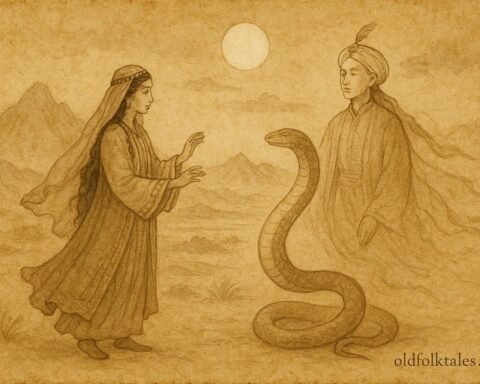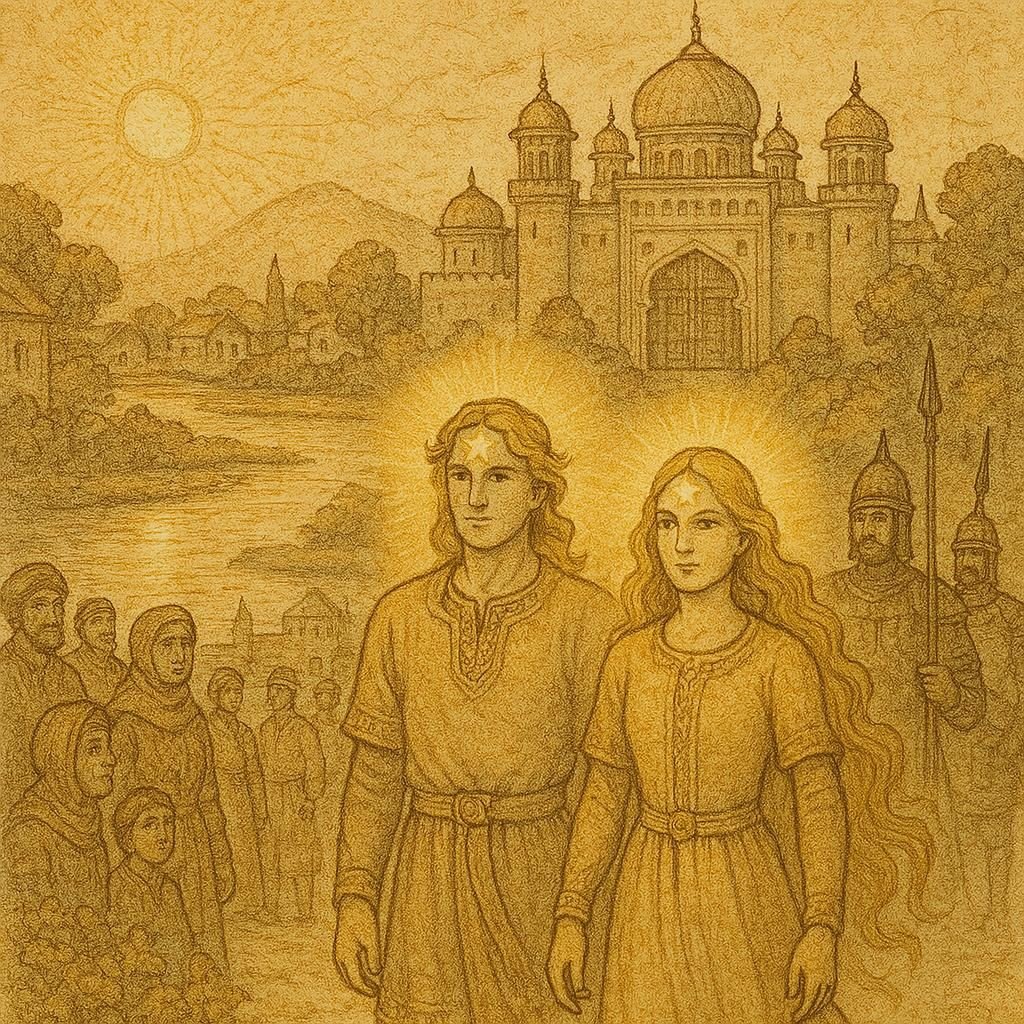
In the heart of an ancient Uzbek kingdom, a queen of unparalleled grace and virtue promised her husband that she would bear children unlike any the world had seen: children with golden hair and stars shining upon their foreheads. When the children were born, the palace shimmered with their miraculous presence, and the king rejoiced, certain that fortune and divine blessing had descended upon his lineage.
Yet envy festered in the hearts of the co-wives, who coveted the queen’s favour. Consumed by jealousy, they devised a dark plot. As soon as the queen gave birth, they stole her newborns and cast them into the river, cruelly leaving lifeless animals in their place. The king, deceived by the false evidence, believed the children had perished, and in his sorrow and anger, he exiled the queen from the palace.
Discover the wisdom of ancient India and the Silk Road in South & Central Asian Folktales.
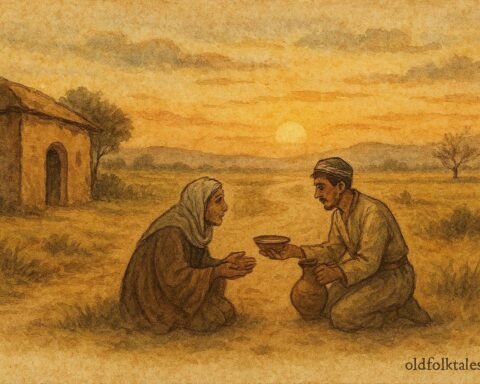
Despite the river’s cold currents, fate and divine protection watched over the infants. They were found and nurtured by humble villagers in the fertile valleys of Khiva, where reeds whispered in the wind and the sun cast golden streaks across the plains. The children, named Zarlik and Munglik, grew strong and virtuous, their golden hair gleaming like dawn, and the stars upon their foreheads shining with a subtle, otherworldly light.
As the years passed, the siblings embarked on quests without fully knowing their royal heritage. They rescued villagers from natural disasters, outwitted robbers who plagued the caravans, and retrieved lost treasures, their courage and cleverness drawing admiration across the land. Each challenge they faced seemed guided by an unseen hand, as if the divine was leading them toward their destiny.
Word of their heroic deeds eventually reached the palace, sparking curiosity in the king and his court. When Zarlik and Munglik were invited to perform acts of skill before the royal audience, their miraculous features, golden hair and the starlit foreheads, unmistakably revealed their noble origin. The king, recognizing the children as his own, embraced them with a heart both humbled and overjoyed.
The queen, still living in modest exile, was summoned to the court. Upon seeing her children and hearing the full account of the co-wives’ treachery, her innocence was declared beyond doubt. Tears of remorse and relief mingled on her cheeks as she was restored to her rightful place, and the family was joyfully reunited. Justice, long delayed, had finally triumphed.
As for the deceitful co-wives, the law of the land and moral order demanded their punishment. They were held accountable for their cruelty, ensuring that envy could not continue to shadow the palace halls. From that day forth, the kingdom prospered, guided by virtue, honesty, and the protection of fate.
The story of Zarlik and Munglik became a cherished tale in Uzbek villages, a reminder that divine providence watches over the innocent, that truth cannot be silenced, and that courage and virtue will ultimately restore justice.
Moral Lesson
True innocence and virtue, protected by fate and courage, will overcome jealousy and deceit, ensuring that justice prevails.
Knowledge Check
-
Who are Zarlik and Munglik?
Zarlik and Munglik are the golden-haired, star-marked children of the queen, central to the tale of divine protection and justice. -
What role do the co-wives play?
The co-wives’ jealousy drives the conflict; their deceitful actions endanger the queen and her children but ultimately lead to their own punishment. -
What miraculous traits reveal the children’s identity?
Their golden hair and the stars on their foreheads signal their royal birth and divine favor. -
What themes are central to the story?
Key themes include truth overcoming envy, innocence vindicated, fate and divine protection, and moral justice. -
Where did this tale originate?
The story comes from Uzbek oral tradition, specifically Khiva, Bukhara, and Fergana Valley regions. -
What moral lesson does the folktale teach?
The folktale teaches that virtue and innocence, guided by fate and courage, will overcome deceit and envy, ensuring that justice prevails.
Source: Charles Masson, Legends of the Afghan Countries, in Verse (1848), pp. 61–86.
Origin: Oral tradition from Khiva, Bukhara, and Fergana Valley regions of Uzbekistan.