A long time ago, in a quiet village on the sun-baked plains of Turkmenistan, there lived a young man whose fame spread far and wide, not for his strength or noble birth, but for his sharp mind and clever ways. Villagers admired him for his quick thinking, for he often solved disputes, untangled tricky problems, and found clever solutions to everyday troubles that left others scratching their heads.
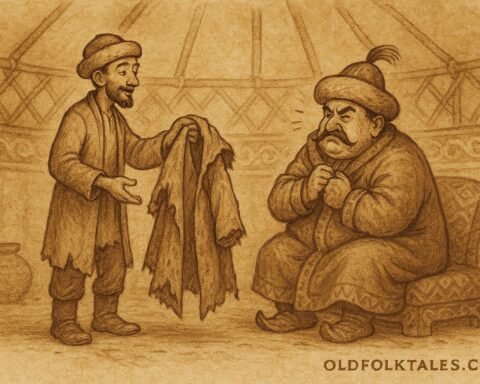
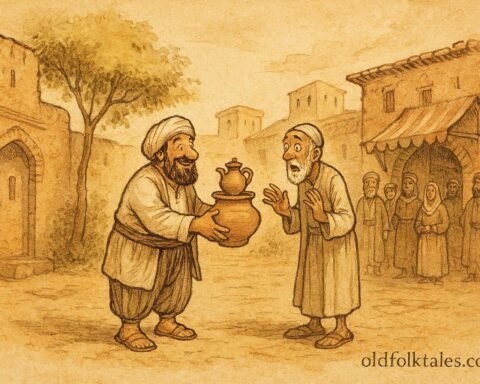
One day, a wealthy merchant arrived in the village, leading a magnificent horse with a glossy chestnut coat and eyes that gleamed like polished amber. The merchant, proud of his wealth, sought to test the young man. “I hear of your cleverness,” he said with a smirk, “and I bring a challenge. Complete this simple task, and the horse will be yours.”
The villagers gathered to watch, curious to see if the young man’s reputation would hold against the merchant’s cunning. The task seemed straightforward: the merchant asked the young man to measure the length of his expansive courtyard and report it accurately. On the surface, a simple task, yet the merchant secretly intended to trap him, hoping the young man would miscalculate and prove foolish.
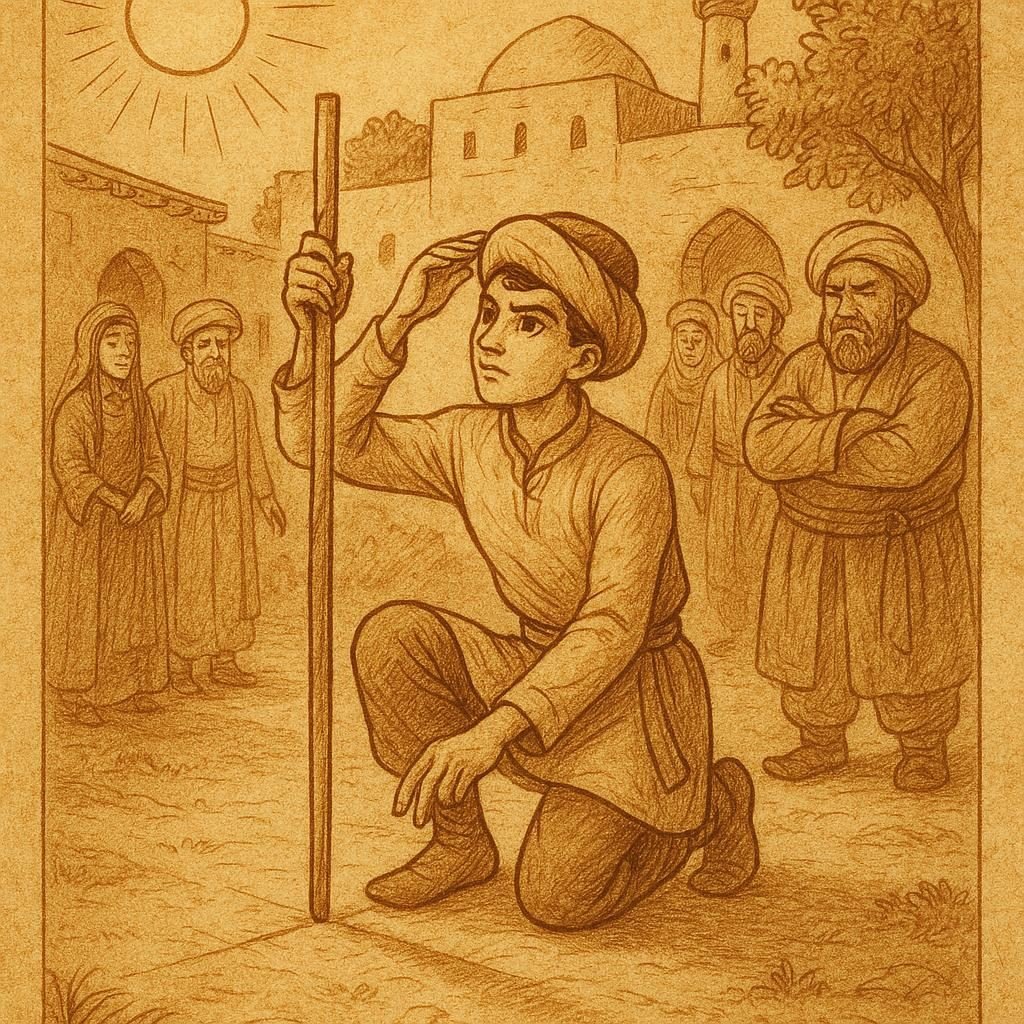
The young man examined the courtyard thoughtfully. He noticed that while the courtyard’s perimeter was long and uneven, the merchant had relied on his servants’ laziness to mark distances. Smiling inwardly, he devised a plan. Instead of pacing the courtyard in the usual way, he cleverly used the village’s shadows and the position of the sun, marking points at precise intervals and noting their relations. By sunset, he returned to the merchant, confident in his answer.
The merchant scoffed at first, certain the young man had miscounted, yet when they checked, the measurements were exact. Not only had the young man completed the task correctly, but he had done so using intelligence rather than brute effort or wealth. The villagers cheered, impressed by his ingenuity, and the merchant, begrudgingly, handed over the splendid horse.
But the young man’s cleverness did not end there. He approached the horse and, in a gesture of humor and wisdom, whispered to it and performed small tricks, proving that the animal could respond to clever cues. The merchant, witnessing this, realized that true value lay not just in owning things, but in the knowledge and insight to use them wisely.
The tale of the clever horse trader spread quickly, serving as a reminder to all: intelligence, careful thought, and ingenuity often surpass wealth, arrogance, and material power. In a land where resources could be scarce and survival required quick thinking, the young man became an emblem of the sharp mind prevailing over the self-important rich.
Moral Lesson
The story teaches that wit and intelligence can achieve more than wealth or brute force. Cleverness and strategy, tempered with honesty, are invaluable assets in life.
Knowledge Check
-
Who is the protagonist in the story?
-
The young, clever man from the Turkmen village known for his wit.
-
-
What task does the merchant give the young man?
-
To measure the length of his large courtyard accurately.
-
-
How does the young man complete the task?
-
Using clever observation, shadows, and sun positioning rather than simple pacing.
-
-
What theme does the story emphasize?
-
Intelligence and wit are more valuable than material wealth.
-
-
What lesson does the horse trader demonstrate to the merchant?
-
That true worth lies in cleverness and knowledge, not just possessions.
-
-
Which cultural region does this folktale come from?
-
Turkmenistan; part of traditional Turkmen oral storytelling.
-
Source & Cultural Origin:
Source: Traditional Turkmen oral literature, Turkmenistan.