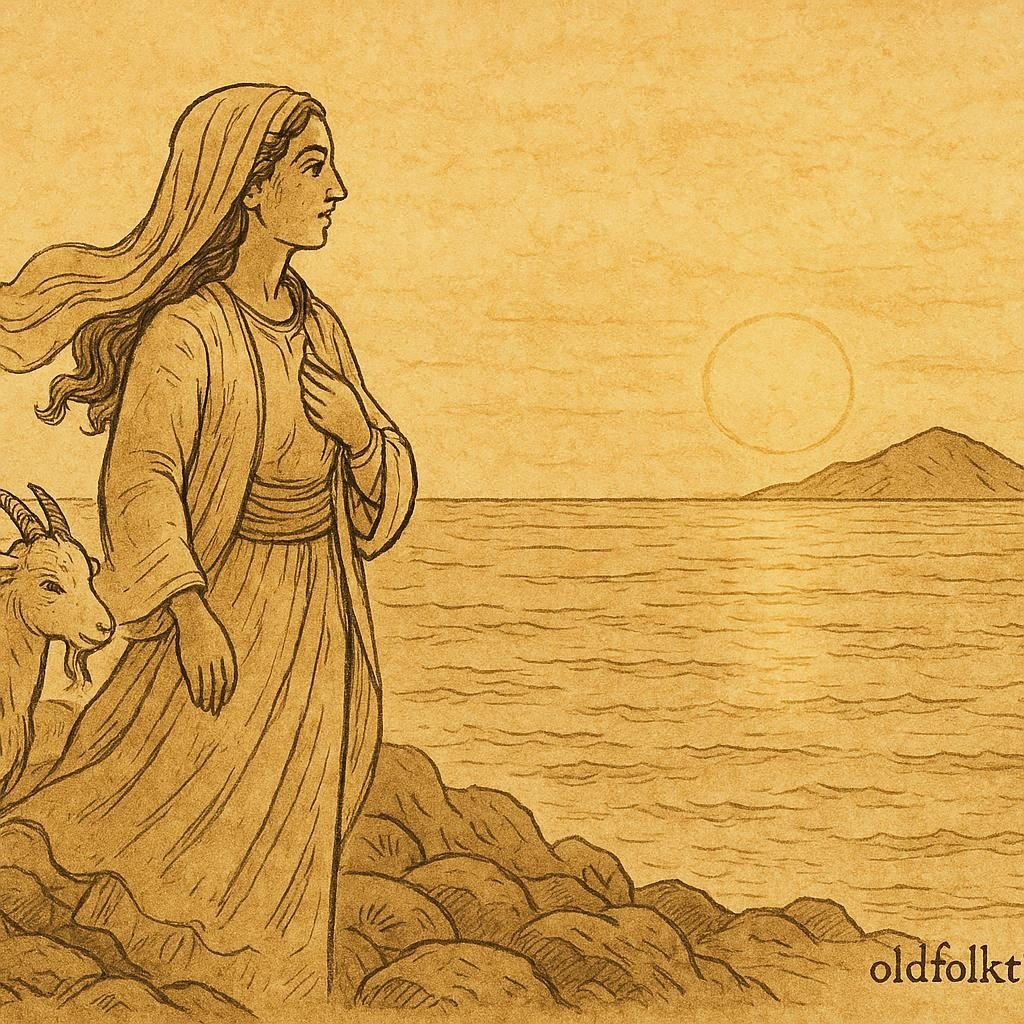
In the heart of the Arabian Sea, where the winds carry the scent of salt and wildflowers, there once lived a young poetess on the island of Socotra, renowned for her beauty, grace, and verses that flowed like waves. Her life revolved around her humble home, her prayers, her family, and a beloved goat named Fidadah, her constant companion. Above all, her heart was filled with love, though it would soon become both her greatest gift and her deepest wound.
One day, a stranger from the mainland visited Socotra. He was charming and eloquent, a man whose words stirred hearts like music. When the poetess first met him, something awoke within her, a love that grew quietly in her chest like a spark beneath ash. She hid her feelings, afraid that others would mock her dreams, but her heart blossomed in secret.
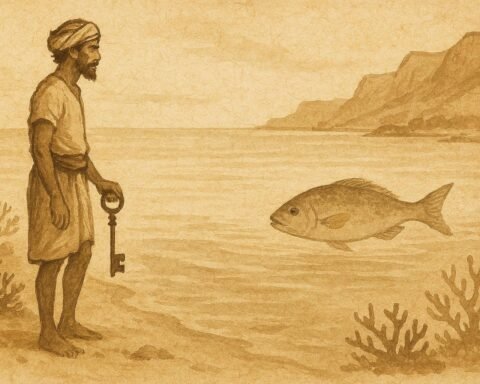
The man, too, seemed moved by her gentleness and intelligence. In time, he asked her family for her hand in marriage. The poetess’s parents were cautious. They reminded her of the wisdom passed down through generations: “A Socotri woman is like a fish in the sea, the moment it leaves the water, it dies.” But love makes even the wise heart reckless. She chose to follow her beloved, leaving behind her family, her island, and the tranquil hills that shaped her youth.
Their wedding was simple yet filled with joy, and they departed across the waves in a boat made of ebony wood, gliding away from the shores of Socotra as the sun melted into the horizon. For a few blissful months, her world was perfect. Her husband’s voice was kind, his laughter soft. She dreamed of a future bright with children, of songs sung to them at night, and of poems composed in gratitude to the heavens.
But soon, the tide of fortune began to turn.
Her husband’s warmth faded. His relatives whispered cruelly about her, mocking her origins and calling her “a naive islander.” The man she had trusted began to believe them. His tone grew cold, his gaze sharp. The once-loving husband turned into a stranger who treated her with disdain, and then, one dreadful night, with violence.
Still, she endured, her faith and patience stronger than despair. “Perhaps this is a test,” she whispered to Fidadah as she wept in silence. Yet her suffering deepened. Her husband’s family urged him to abandon her, promising him another wife “more suitable” than the poetess of Socotra.
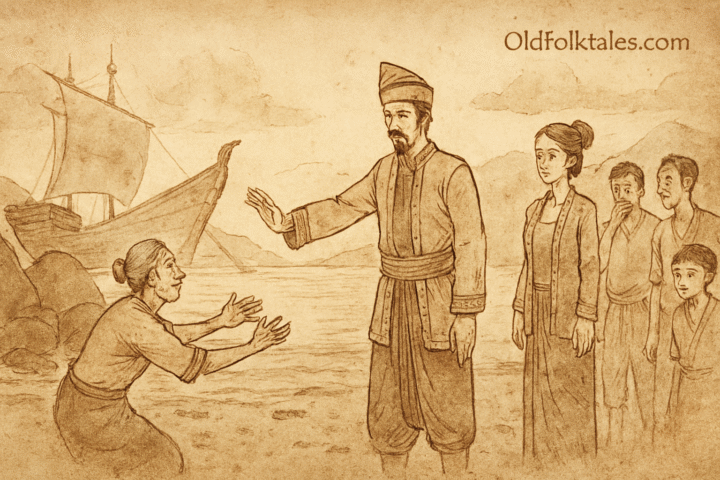
Blinded by pride, he listened. The man who had once crossed the sea for her now cast her out of his home without mercy. Worse still, he refused to send her back to Socotra, the island she loved and the family she had sacrificed. Alone, betrayed, and heartbroken, she had only Fidadah to comfort her.
The poetess wandered to the seashore, her tears mingling with the tide. The endless waves reminded her of home, of the green hills where sheep grazed, of the songs of her people carried on the wind. Clutching Fidadah close, she began to whisper verses to the sea:
“Come to me, Fidadah,
Let me tell you what befell me.
My love betrayed me, my heart is weary.
Come, let me hold you close,
And breathe again the scent of Socotra.”
The sea listened as she poured her sorrow into song. Her voice rose and fell like the wind, filled with longing for her lost island. She gazed toward the horizon, hoping to glimpse Socotra’s familiar silhouette. But her eyes met only water and mist.
In her despair, she turned to a rocky island nearby, Sayal, and spoke to it as though it were alive. “O Sayal,” she cried, “move aside a little, that I may see my home again, the land where my family lives, where my sheep graze and my heart still dwells!” But the mountain was silent, unmoved by her grief.
The poetess remained there for days, composing poems of loss and love. Each verse carried her soul further into legend. Some say her voice turned into the wind that forever whispers over the waves. Others believe she vanished into the sea, her spirit reunited with her homeland in death.
To this day, the people of Socotra tell her story, the tale of the poetess who loved too deeply, who gave everything for love and found in sorrow the purest form of truth. And when the sea breeze sighs against the cliffs, they say it carries her songs still.
Moral of the Story
True love is sacred, but when blinded by passion, it can lead one away from wisdom and home. The tale reminds us that devotion must walk hand in hand with understanding, and that leaving behind one’s roots for fleeting affection often ends in regret.
Knowledge Check
-
Who was the main character in “The Socotri Poetess of Love”?
A young poetess from Socotra known for her beauty and verses. -
What role did Fidadah play in the story?
Fidadah, the poetess’s goat, symbolized loyalty and comfort in her sorrow. -
What caused the poetess’s suffering?
Her husband’s betrayal and the cruelty of his relatives. -
What cultural saying warned her against leaving the island?
“A Socotri woman is like a fish in the seawater; once it leaves, it dies.” -
What emotion is central to this Yemeni folktale?
Love, both its beauty and its pain. -
What lesson does the story teach?
That love without wisdom can lead to loss, and faithfulness to one’s heritage is priceless.
Source
Adapted from “A Tale of the Socotri Poetess” in Folk Tales from Socotra, Arweqa for Studies, Translation, and Publishing (2023), pp. 15–26.
Cultural Origin: Socotra Island, Yemen (Yemeni Folklore)