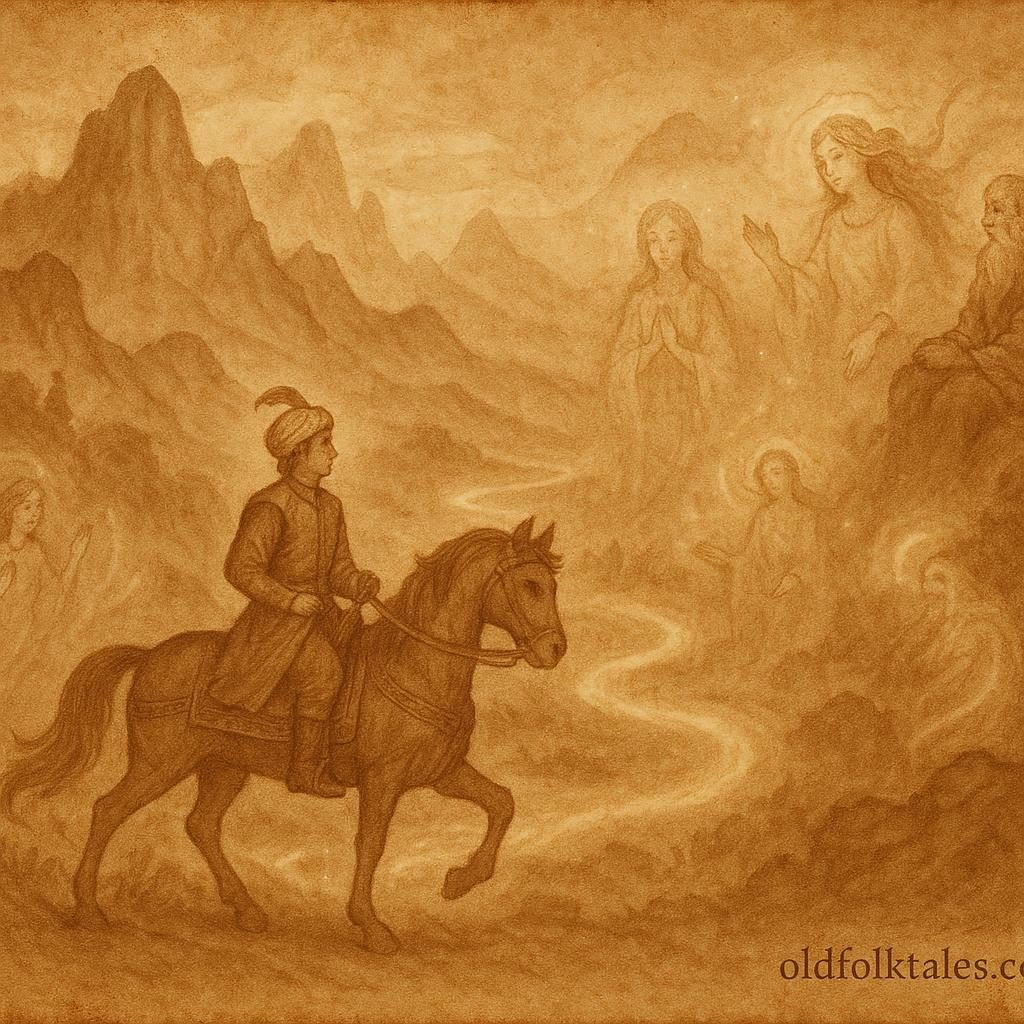
Long ago, in the heart of Anatolia, there reigned a mighty Padishah whose kingdom flourished under his just and generous rule. His palaces gleamed with marble and gold, his gardens bloomed with roses, and his people lived in peace. Yet, for all his wealth and glory, one sorrow lingered, he and his beloved Sultana had no child.
Every day they prayed for a blessing. They offered food to the poor and gifts to the holy men, hoping the heavens would grant them an heir. After many years, their prayers were answered, the queen bore a son, fair and radiant as the dawn. The Padishah named him after a star, for his birth brought light to the whole kingdom.
The prince grew strong and wise, but also thoughtful and quiet. While others delighted in the pleasures of youth, he spent his days in contemplation, gazing at the setting sun as if searching for something beyond it.
One evening, he turned to his father and said,
“My lord, I cannot rejoice in a life that ends in death. I seek Youth Without Age and Life Without Death.”
Journey through enchanted forests and islands in our Southeast Asian Folktales collection.
The Padishah’s face darkened with worry. “My son,” he replied, “no mortal can escape the will of time. To wish for eternal youth is to wish against the laws of creation.”
But the prince’s heart was resolute. Each attempt to dissuade him only strengthened his determination. Finally, the Padishah, with tears in his eyes, gave his blessing. “Go, my son. If you must seek this mystery, go with courage and honor. May Heaven guide you.”
The Journey Beyond the Known
The prince saddled his swiftest horse, kissed his parents farewell, and set forth into the world. He rode through green valleys and over high mountains where the air grew thin and sharp. Villages turned to wilderness, and rivers turned to deserts.
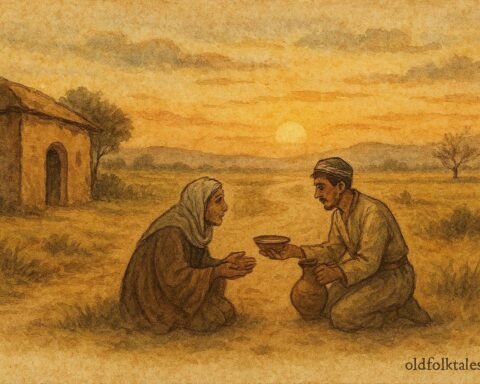
At last, his provisions were gone, and even his horse began to falter. Then, as the sun set crimson over the horizon, an old hermit appeared by the roadside. His beard was white as snow, and his eyes shone with peace.
“Where do you journey, my child?” asked the hermit.
“I seek Youth Without Age and Life Without Death,” the prince answered boldly.
The hermit sighed. “Many have sought it, and none returned. Yet your heart is pure. Take this loaf of bread and flask of water, they will never run empty. Eat and drink only when you must, for the path ahead is long.”
The prince bowed gratefully and rode on.
He crossed deserts of shimmering heat and forests where time itself seemed to sleep. In one valley, he met another ancient hermit, older even than the first, whose face was lined like old parchment.
“Where do you go, noble youth?” the old man asked.
“To find Youth Without Age and Life Without Death.”
The hermit nodded solemnly. “Then learn patience, for only those who wait upon truth may find it.” He blessed the prince and vanished like mist.
The Gates of Immortality
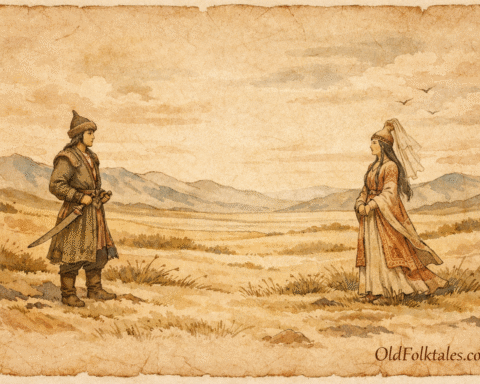
After what felt like centuries, the prince reached the foot of mountains so high their peaks pierced the heavens. He climbed until the sky itself seemed to open. There, beyond a river that shimmered with starlight, stood a crystal palace. At its gates waited a Maiden of Eternal Dawn, her beauty radiant yet serene.
“Welcome, brave traveler,” she said softly. “Few have reached this realm. You have crossed the boundaries of time and sorrow. Here you shall find Youth Without Age and Life Without Death.”
She led him into a land where flowers never faded, the air was always gentle, and joy flowed like music through the trees. Days passed like moments; moments stretched into eternity.
For the first time, the prince knew peace. He lived in perfect harmony beside the Maiden, learning the secrets of wisdom and the silence of eternal joy.
The Pull of Memory
Yet one day, while walking among the ever-blooming gardens, he heard a faint sound, a memory, a whisper from far away. It was the voice of his father calling his name, echoing through time and distance.
A deep longing stirred within him. Though centuries had passed, love had not faded. “I must return,” he told the Maiden. “My heart yearns to see my homeland once more.”
The Maiden’s eyes filled with sorrow. “If you cross the threshold,” she warned, “time will claim its due. All the years you escaped will fall upon you at once. Remain here, and live forever.”
But the prince could not quiet his heart. He mounted his immortal steed and galloped back across the endless plains and silent mountains.
When he finally reached the world of men, the landscape was unrecognizable. The great cities had vanished; forests now covered what was once his father’s palace. The wind sighed through ruins and dust.
Suddenly, his horse stumbled, and at that moment, the centuries caught him. His hair turned white, his strength failed, and his body grew frail. The prince sank to the ground and whispered,
“I sought Youth Without Age and Life Without Death. But I have learned that immortality belongs not to the body, but to the soul.”
And as the wind carried his last breath, peace returned to his face.
Explore desert legends and palace tales in our Western Asian Folktales archive.
Moral Lesson
The Turkish tale of Youth Without Age and Life Without Death reminds us that true immortality lies in wisdom, virtue, and the love we leave behind, not in escaping time or death.
Knowledge Check
1. Who is the main character in this Turkish folktale?
The Padishah’s son, a prince who seeks eternal youth and life.
2. What does the prince’s quest symbolize?
It represents humanity’s desire to overcome death and the search for spiritual immortality.
3. What do the three old men teach the prince?
They offer him courage, patience, and the understanding that true eternity is achieved through wisdom.
4. What does the Maiden of Eternal Dawn represent?
She symbolizes enlightenment and the timeless peace of spiritual realization.
5. Why does the prince age rapidly at the end?
Because time reclaims him the moment he leaves the timeless realm of immortality.
6. What is the moral of the story?
Eternal youth is found in virtue and goodness, not in endless life or worldly escape.
Source: Adapted from Turkish Fairy Tales and Folk Tales, collected by Ignácz Kúnos (1901), translated by R. Nisbet Bain.
Cultural Origin: Turkish folklore, Anatolia.