In the cool mountain air of Bsharri, where cedar forests rise proudly against the sky and stone houses cluster along narrow paths, there once lived two tiny companions who shared a quiet life together: a louse and a flea. Though small and often unnoticed by the world around them, they lived in perfect harmony. Their lives were simple, spent whispering their tiny thoughts, resting in warm corners, and finding comfort in each other’s company. For all their differences, they trusted one another deeply.
The flea, lively and impulsive, was known for his quick leaps and restless nature. He rarely stayed still, always darting from place to place, driven by a constant desire to explore and sample whatever he found. The louse, on the other hand, moved slowly and cautiously. She was a creature of patience, preferring stability and peace to excitement. Their friendship was unlikely, yet strong, for each offered what the other lacked: balance, companionship, and a sense of home.
One day, as fate would have it, their quiet life brought them to the palace of the king. The vast halls shimmered with gold and marble, and the air was filled with the scent of incense and polished cedarwood. The two tiny creatures found a place to hide within the luxurious folds of the royal garments, unnoticed by the bustling servants and guards. Life in the palace seemed safe and warm, and the louse was grateful for the stillness.
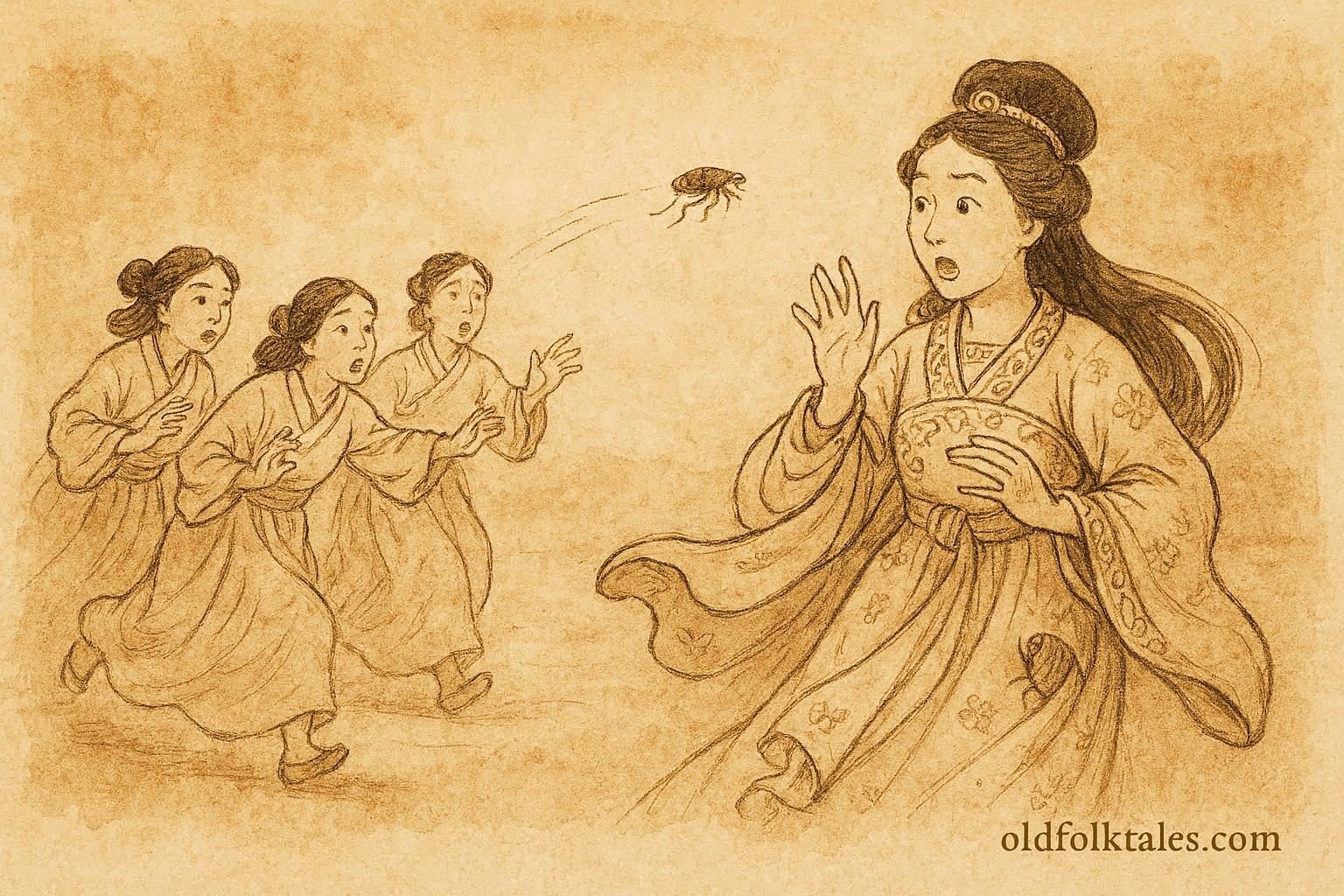
The flea, however, could not contain his curiosity in such a grand place. His eyes gleamed with mischief as he watched the king’s daughter move through the palace, her embroidered dress sweeping across the floor like a river of silk. To the flea, she seemed like a new world to explore, bright, beautiful, and irresistible.
“Stay here,” the louse whispered nervously. “This palace is dangerous. We must be careful.”
But the flea only twitched his legs with excitement. “Just one jump,” he said. “One little taste. No one will even notice.”
The louse pleaded softly, urging him to think, to be patient, to remember that danger always follows impulsive choices. But the flea, driven by his nature, leapt before she could stop him.
In a fraction of a heartbeat, he landed on the king’s daughter and bit her delicate skin.
The princess let out a sharp cry, unexpected, piercing through the palace corridors. Startled servants rushed forward, followed by guards with drawn weapons. The palace was thrown into chaos. Physicians examined her, attendants searched her clothing, and the king himself demanded answers.
“A creature has bitten my daughter!” he thundered. “Find it at once!”
Terrified, the flea fled back into the shadows, slipping away before anyone could see him. He hid behind a carved wooden chair, trembling yet relieved to have escaped.
But the louse, who had never left her warm hiding place, was not so lucky. A maid searching through the princess’s garments soon found her. With a gasp of disgust, she held up the tiny creature pinched between her fingers.
“Here is the culprit!” she cried.
Though the louse protested silently in her tiny, helpless way, there was no trial, no questioning, no chance to explain. The king’s command was swift and absolute. The louse was executed at once, crushed without mercy.
From his hiding place, the flea watched in horror as his gentle friend was killed for a crime she did not commit. His heart pounded with guilt, for he knew it was his bite, his reckless choice, that had caused her death. But nothing could be undone. The palace returned to calm, the princess forgot the sting, and only the flea remembered the price that had been paid.
From that day forward, the story spread from home to home across the mountains of Lebanon. Mothers told it to their children, and travelers shared it around evening fires: the tale of how a louse paid with her life for the recklessness of her companion. The story remained a warning to all who heard it.
For in this tiny tragedy lay a greater truth, that one’s closest companions can bring either safety or ruin, and that the mistakes of those we keep near may fall upon us as heavily as our own.
Moral of the Story
Be mindful of the company you keep. The actions of friends and companions can bring consequences, sometimes far greater than we expect.
Knowledge Check
1. What is the main lesson of “The Louse and the Flea”?
The story teaches that people often suffer for the mistakes of those they associate with.
2. Why does the palace erupt into chaos in the folktale?
The king’s daughter cries out in pain after being bitten by the flea.
3. Who actually bites the king’s daughter in the story?
The flea bites the princess, causing the uproar.
4. Why is the louse punished instead of the flea?
The louse is found during the search and wrongly blamed for the flea’s actions.
5. What personality traits distinguish the flea from the louse?
The flea is impulsive and restless, while the louse is cautious and steady.
6. What cultural message does this Lebanese folktale reflect?
It reflects traditional wisdom about personal responsibility and choosing trustworthy companions.
Source
Adapted from “The Louse and the Flea,” Folktales of Lebanon, Anis Frayha, 1953. Collected from Bsharri, North Governorate.