In the lush countryside of Laos, where the Mekong River winds through emerald valleys and bamboo groves whisper in the tropical breeze, there lived a humble couple in a small thatched hut. Their home was simple woven walls of dried grass, a dirt floor swept clean each morning, and a cooking fire that flickered weakly when they had fuel to burn. They owned almost nothing: a few clay pots, a sleeping mat worn thin by years of use, and threadbare clothes that had been patched so many times the original fabric was barely visible.
But what troubled them most was not their lack of possessions it was the gnawing uncertainty of where their next meal would come from. Some days they managed to gather enough wild vegetables from the forest. Other days, a kind neighbor might share a handful of sticky rice. But hunger was their constant companion, an unwelcome guest who never left their doorstep. The wife’s hands trembled from weakness as she tried to weave baskets to sell at the market. The husband’s ribs showed through his thin chest as he worked odd jobs for wealthier villagers, earning barely enough to keep them alive.
Despite their suffering, the couple maintained hearts as generous as the land around them was fertile. When Buddhist monks walked past their hut on their morning alms rounds, the couple always offered something, even if it was only a spoonful of rice or a few pieces of fruit they had foraged. When travelers passed through seeking directions or a place to rest, they were always welcomed, given whatever water or shade the couple could provide.
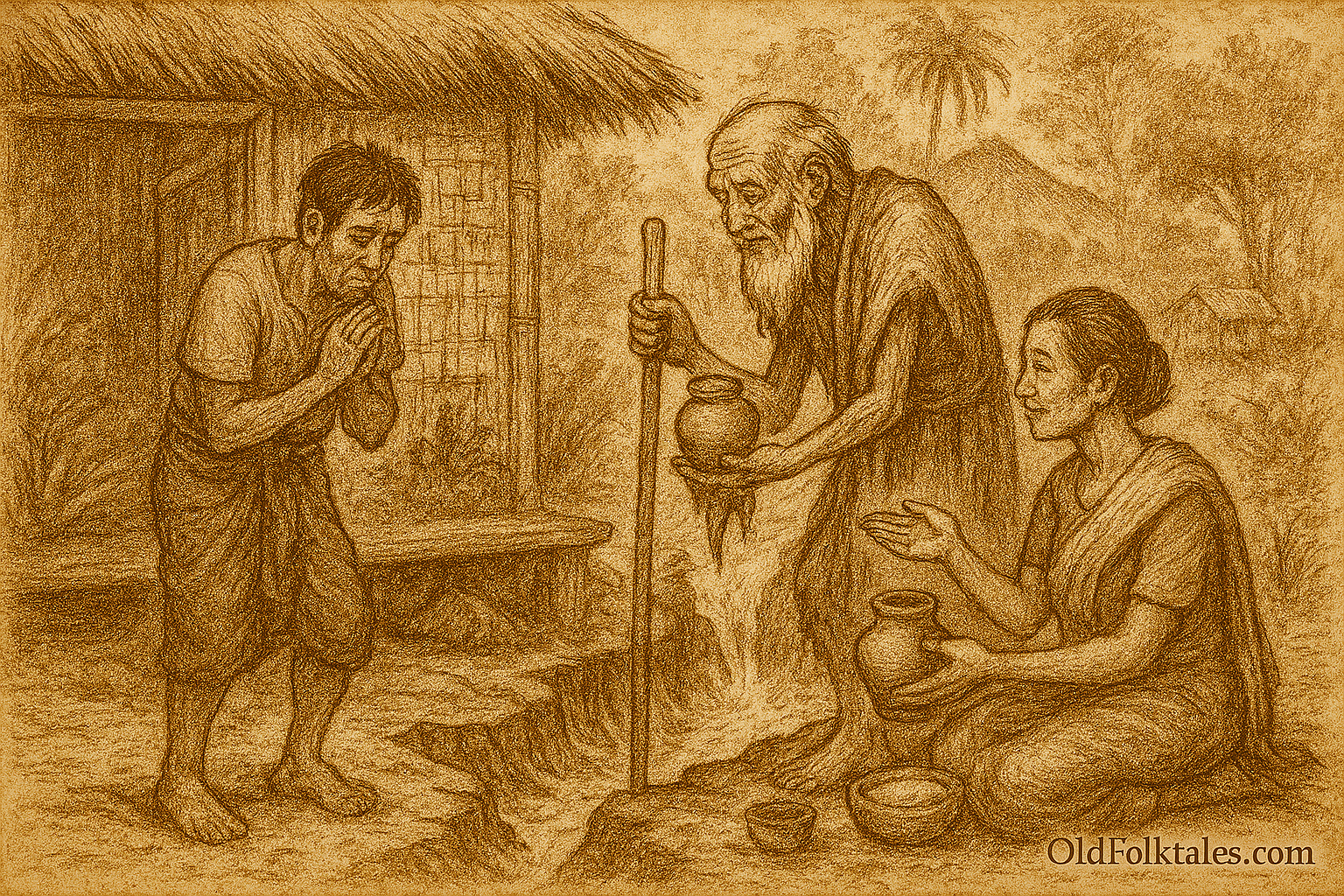
One sweltering afternoon, when the sun hung heavy in the sky and cicadas sang their shrill chorus, an old traveler appeared at their door. He was bent with age, his face creased like ancient leather, his clothes dusty from long roads. A worn wooden staff supported his weight as he approached.
“Honored elders,” the husband said, bowing respectfully despite the stranger’s humble appearance, “please come and rest in our shade. We have little, but what we have is yours.”
The wife hurried to bring him water in their only uncracked cup and offered him a small portion of rice nearly all they had left for their own evening meal. The old traveler accepted with a gentle smile that seemed to light his weathered face from within.
He ate slowly, savoring each grain, watching the couple with keen eyes that missed nothing not their sunken cheeks, not their threadbare clothes, not the bare cupboard in the corner. Yet he also saw something else: the genuine kindness in their gestures, the absence of resentment or expectation, the pure generosity that gave without counting the cost.
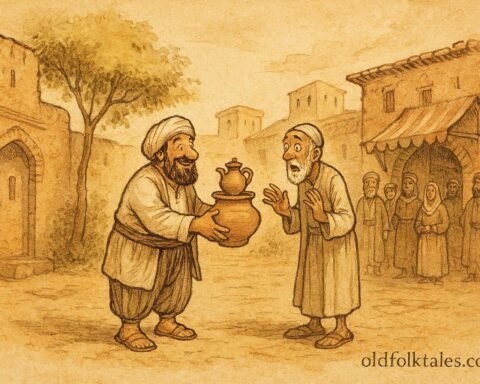
When he finished eating, the old man reached into his traveling bag and withdrew a simple clay jar. It was unremarkable in every way plain reddish-brown clay, rough to the touch, with no decorations or markings. It looked like something that might hold pickled vegetables or fermented fish paste, nothing more.
“You have shown me great kindness,” the traveler said, his voice suddenly stronger, resonating with an authority that seemed at odds with his frail appearance. “This jar is my gift to you. Use it only for cooked rice never for anything else. Place rice inside, and you will find it serves you well.”
Before the couple could properly thank him or ask questions, the old man rose, gathered his staff, and walked down the path. They watched him go, and in the shimmering heat, he seemed to fade like morning mist under the sun, disappearing far more quickly than his slow gait should have allowed. The wife clutched her husband’s arm. They both understood then that they had not entertained an ordinary traveler they had been visited by a phi, a spirit who walked among humans testing their character.
That evening, the wife cooked their last portion of rice with trembling hands. When it was ready, she spooned it into the clay jar as instructed, filling it perhaps halfway. Then, with her heart pounding, she reached in to serve her husband his dinner.
Her fingers touched rice warm, fragrant rice that filled the jar to its brim.
She scooped out two generous portions. The jar remained full. She scooped out more. Still, it refilled itself, the rice appearing as if by invisible hands, each grain perfectly cooked, steaming gently, smelling of jasmine and earth.
Tears streamed down both their faces. For the first time in years, they ate until their bellies were full. That night, they slept without the ache of hunger, and they woke to find the jar still brimming with fresh, warm rice.
The magic jar transformed their lives. The constant anxiety that had etched lines into their faces began to fade. The wife’s hands grew steady. The husband’s strength returned. But more importantly, their generous spirits could now fully flourish. They invited monks to eat at their home. They shared rice with hungry travelers. When neighbors fell on hard times, the couple appeared at their doors with baskets of warm rice. They never revealed the jar’s secret, but their reputation for kindness and charity spread throughout the village.
Months passed in this contented way. The couple remained humble, never seeking wealth or status, simply grateful for full bellies and the ability to help others.
But gradually, the atmosphere in the village shifted. Neighbors began to whisper. How could the poorest couple suddenly have so much rice? Where did their newfound abundance come from? Some felt gratitude for the couple’s generosity. Others felt envy, wondering why fortune had smiled on them and not on others equally deserving.
The whispers reached the husband’s ears. For the first time since receiving the jar, doubt crept into his heart. What if someone discovered their secret? What if thieves came in the night? What if envious neighbors reported them to authorities, accusing them of stealing or sorcery?
Fear took root where trust had once lived. And with fear came a dangerous thought: if the jar could produce rice endlessly, perhaps it could produce other things as well. Perhaps they should test its limits. Perhaps they should secure their future not just with food, but with wealth gold coins, silver ornaments, precious gems that could be hidden away, ensuring they would never face poverty again.
One night, while his wife slept, the husband carefully lifted the jar. The rice inside glowed faintly in the moonlight. His heart raced with a mixture of excitement and guilt as he emptied the rice and placed a small gold ornament inside something he had been given as payment for work.
He waited, barely breathing.
The jar grew cold beneath his fingers. A thin crack appeared along its side, barely visible in the darkness. Then another crack, and another, spreading like lightning across the clay surface.
With a sound like a sigh of disappointment, the jar split completely in half and crumbled into ordinary clay shards. The gold ornament clattered to the floor. The magic was gone, vanished as completely as the old traveler had disappeared down that dusty path.
The wife woke to her husband’s anguished cry. Together they knelt among the broken pieces, and understanding dawned with terrible clarity. The spirit had given them exactly what they needed sustenance, not wealth. The jar’s magic was meant to feed hungry bodies and generous hearts, not to satisfy greed or accumulate treasure beyond necessity.
In the days that followed, the couple returned to their simple life. They worked hard, shared what little they earned, and never again enjoyed the abundance the jar had provided. But they told their story to their children, and their children’s children, ensuring that future generations would understand the lesson woven into those broken clay shards: true magic lies not in endless accumulation, but in grateful hearts and generous hands. Blessings are fragile things, easily shattered by greed, but the memory of grace can sustain the spirit long after material gifts have crumbled to dust.
The Moral of the Story
This Laotian folktale teaches us that divine gifts are meant to meet our genuine needs, not fuel our greed. The magic rice jar provided sustenance and enabled generosity, fulfilling its sacred purpose. When the couple tried to exploit the blessing for wealth beyond their needs, they broke the spiritual contract that made the magic possible. The story reminds us to receive blessings with gratitude, use them for their intended purpose, and resist the temptation to transform gifts meant for survival into tools for accumulation. True security comes not from hoarded wealth but from grateful contentment and community generosity.
Knowledge Check
Q1: Who are the main characters in The Magic Rice Jar?
A: The main characters are a poor but generous Lao couple living in rural Laos who struggle with constant hunger, and an old traveler who is secretly a phi (spirit) testing their character through their treatment of strangers.
Q2: What is a phi in Lao culture?
A: A phi is a spirit in Lao Buddhist and animist tradition that can take human form and walk among people. Spirits often test humans’ moral character, rewarding virtue and punishing vice, and play an important role in traditional Lao spiritual beliefs.
Q3: How does the magic rice jar work?
A: When the couple places cooked rice inside the plain clay jar, it miraculously refills itself endlessly with warm, fragrant rice. The jar provides exactly what they need for sustenance and enables them to feed monks, travelers, and hungry neighbors.
Q4: Why did the couple receive the magic jar as a gift?
A: Despite their extreme poverty and hunger, the couple showed genuine generosity by welcoming the old traveler, offering him shade, water, and nearly all their remaining rice. The spirit rewarded their selfless kindness with the miraculous jar.
Q5: What caused the magic jar to break?
A: The jar shattered when the husband, motivated by fear and greed, tried to use it to multiply wealth instead of food. He placed a gold ornament inside, violating the spirit’s instruction to use the jar only for cooked rice and breaking the sacred purpose of the blessing.
Q6: What does this folktale reveal about Lao cultural values?
A: The story emphasizes Buddhist values of generosity, contentment, and gratitude. It reflects Lao respect for spirits and sacred gifts, the importance of feeding monks and helping others despite personal hardship, and the belief that blessings should be used for their intended purpose rather than exploited for personal gain.
Source: Adapted from Lao folktales collected by Carol Compton, Smithsonian Folklife Folklore Archive.
Cultural Origin: Lao people, Laos (Lao People’s Democratic Republic)