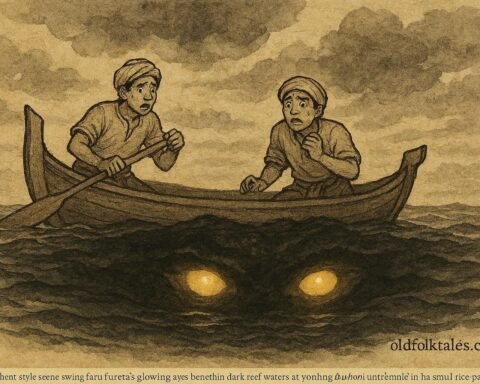
Long ago, when the islands of the Maldives were still young in memory and tradition, the people of Malé lived with a constant fear that rose from the deep ocean. The sea surrounded every island like a vast breathing creature, generous with its fish and calm breezes, but also capable of mystery and danger. Among its most feared mysteries was Rannamaari, a monstrous being said to dwell beneath the waves, a creature whose arrival was marked by trembling waters, strange winds, and a chilling silence across the atolls.
According to the islanders, Rannamaari was no ordinary sea-being. Some believed it to be a demon; others thought it a monstrous spirit of the ocean itself, an ancient presence angered by human settlements on the scattered coral lands. Whatever its true nature, the people believed it demanded something from them: a sacrifice offered at regular intervals to prevent disaster. The tradition, though terrifying, had become deeply rooted. Families whispered prayers, mothers held their daughters close, and the entire community bowed to a ritual they did not dare challenge.
Explore desert legends and palace tales in our Western Asian Folktales archive.
When the time appointed for Rannamaari’s return approached, the islanders prepared a chamber at the water’s edge. It was a solemn place, lit by simple lamps and softened with woven mats. The chosen maiden — always someone of youth, purity, or symbolic innocence in the community, would be prepared with respect and sorrow. Nothing harmful was inflicted upon her by the people; she was simply left alone in the chamber before nightfall. The rest was left to the mystery of the sea and the fear of the unknown.
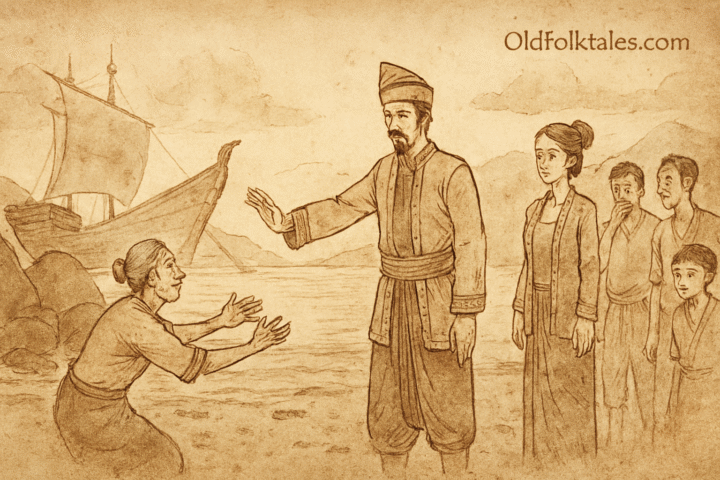
One season, as the ritual day approached again, travelers from distant lands arrived to Malé. Among them was a wise scholar, a foreigner of calm bearing and quiet learning. Unlike the islanders, he did not tremble at the mention of Rannamaari. Instead, he listened carefully, asked questions, and contemplated the meaning behind the ancient custom. The more he learned, the more he felt that fear had shaped the ritual more than truth.
When he realized another maiden was soon to be offered, he stepped forward with a request that shocked the island: he wished to enter the chamber in her place.
His words unsettled everyone. The people were grateful for his courage, but they also feared for him. What could a single man do against a being said to rise from the sea itself? Yet the scholar remained steady, and after long discussion, the islanders agreed. The young woman selected for the ritual was quietly escorted home, and the scholar prepared himself. He asked only for solitude, believing that knowledge and clarity of mind mattered more than fear.
That night, as the ocean murmured beyond the chamber, he recited sacred verses, words of wisdom, reflection, and spiritual strength. He waited through the long hours, listening to the tides shift and the wind grow restless. Outside, the villagers kept silent watch at a cautious distance, unsure what would unfold.
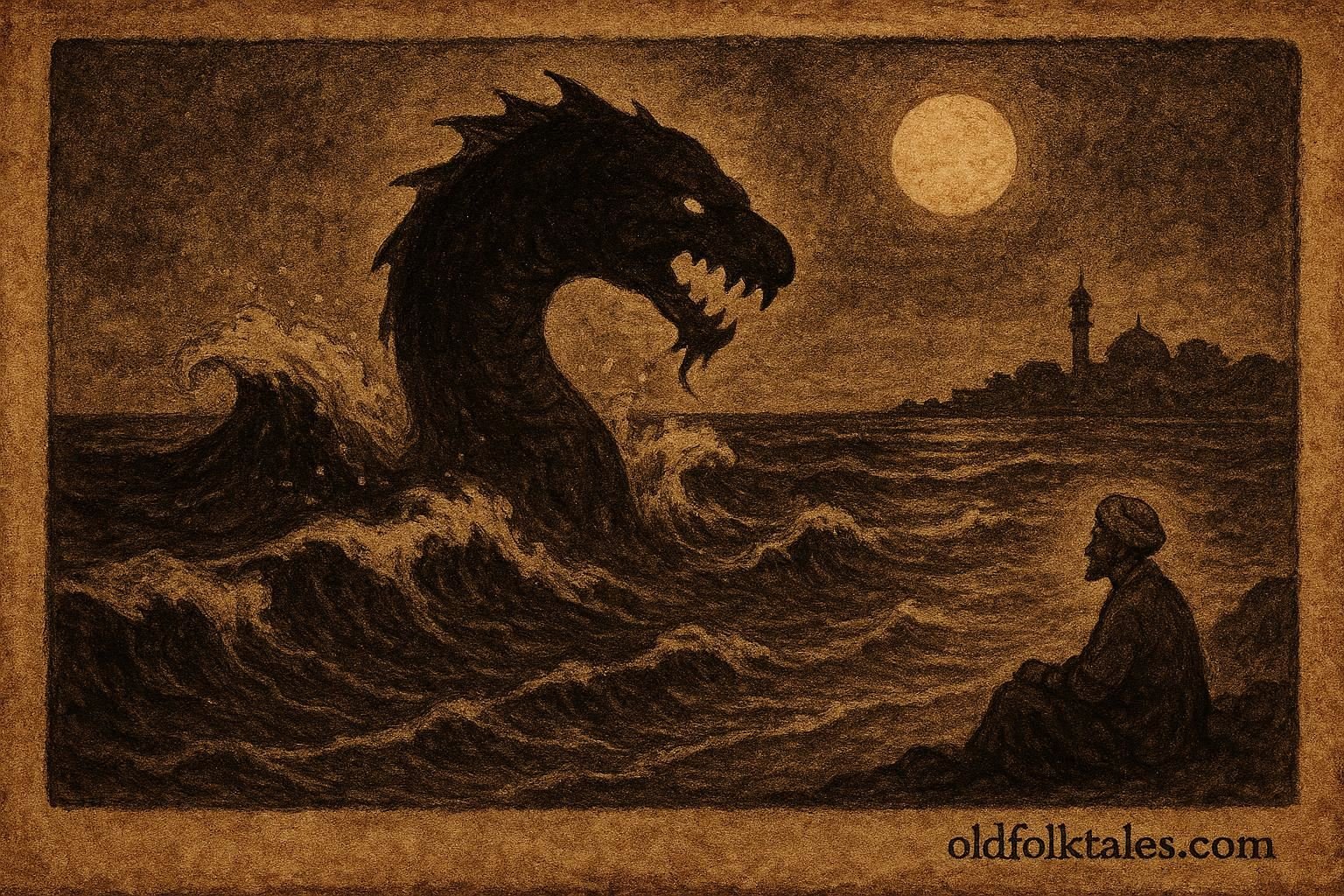
As the moon rose high, the sea began to stir. Waves rippled in unnatural patterns, and the surface darkened as though something immense moved beneath it. The water swelled and parted, revealing the shadow of a vast creature rising from the depths, the being they called Rannamaari. Its shape was monstrous but indistinct, formed of sea-mist, darkness, and the fearful imagination carried through generations.
Yet the scholar remained composed. He continued his recitation, letting the steady rhythm of the verses fill the chamber. The air trembled with tension as the creature approached, but something unexpected happened. The sound of the verses seemed to disrupt the presence before him. The monstrous shape flickered, wavered, and dissolved into the retreating waves. The ocean calmed, and the wind softened.
When dawn arrived, the scholar stepped out unharmed.
The villagers rushed to him in astonishment. They searched the shoreline for any sign of Rannamaari, but none remained. The sea was quiet, as though relieved of a long-held story. Word spread quickly across the islands: the ritual had ended, not by force or confrontation, but through insight, courage, and wisdom.
In time, the story of Rannamaari became a turning point in Maldivian history. Many tales link this moment with the islands’ conversion to Islam, symbolizing a shift from fear-bound traditions to new ways of belief and community. Whether told as legend, history, or moral teaching, the story remains one of the Maldives’ most powerful narratives, a reminder of how societies transform, how courage disrupts fear, and how communities can step forward into new chapters of identity.
Moral Lesson
The Rannamaari legend teaches that fear can shape traditions more strongly than truth. Courage, wisdom, and spiritual clarity can break harmful cycles and lead entire communities toward renewal and transformation.
Knowledge Check
1. Who is Rannamaari in Maldivian folklore?
Rannamaari is a legendary sea-monster or demon associated with fear, sacrifice, and the ocean’s mysterious power in Maldivian tradition.
2. What role does the foreign scholar play in the Rannamaari legend?
He replaces the chosen maiden in the sea-chamber, confronts Rannamaari with spiritual verses, and ends the feared ritual.
3. What cultural transformation is linked to the Rannamaari story?
Many versions associate the event with the Maldives’ conversion to Islam and the end of older fear-based traditions.
4. What lesson does the legend teach about fear and society?
It shows how fear can shape customs, and how wisdom and courage can bring change.
5. Why were maidens offered to Rannamaari?
The community believed the creature demanded periodic offerings to prevent disasters from the sea.
6. What symbolizes the community’s renewal in the tale?
The disappearance of Rannamaari and the end of the ritual mark a shift toward spiritual clarity and new belief.
Source: This version adapts known summaries from Folk Tales of the Maldives by Xavier Romero-Frias (public domain portions referenced as cultural material only).
Source Origin: Maldivian legend, Maldives