The drought had grown so merciless across the sands of Central Sharqiyah that even the oldest Bedouin elders could not recall a harsher jafaf. Day after day, the desert wind blew hot and empty, carrying only dust and the faint smell of thirst. The tribe’s tents sagged like tired lungs, and the date palms along the wadi had already surrendered their last shriveled fruits. Even the children, usually quick to run and play among the dunes, sat silently in the shade, their eyes hollow from hunger.
Their final camel, their wealth, their transport, their lifeline, had collapsed only days earlier. When it died, the tribe felt as though a door had closed between them and the world. Without milk, without meat, and with the well sinking lower each morning, fear crept through every household.
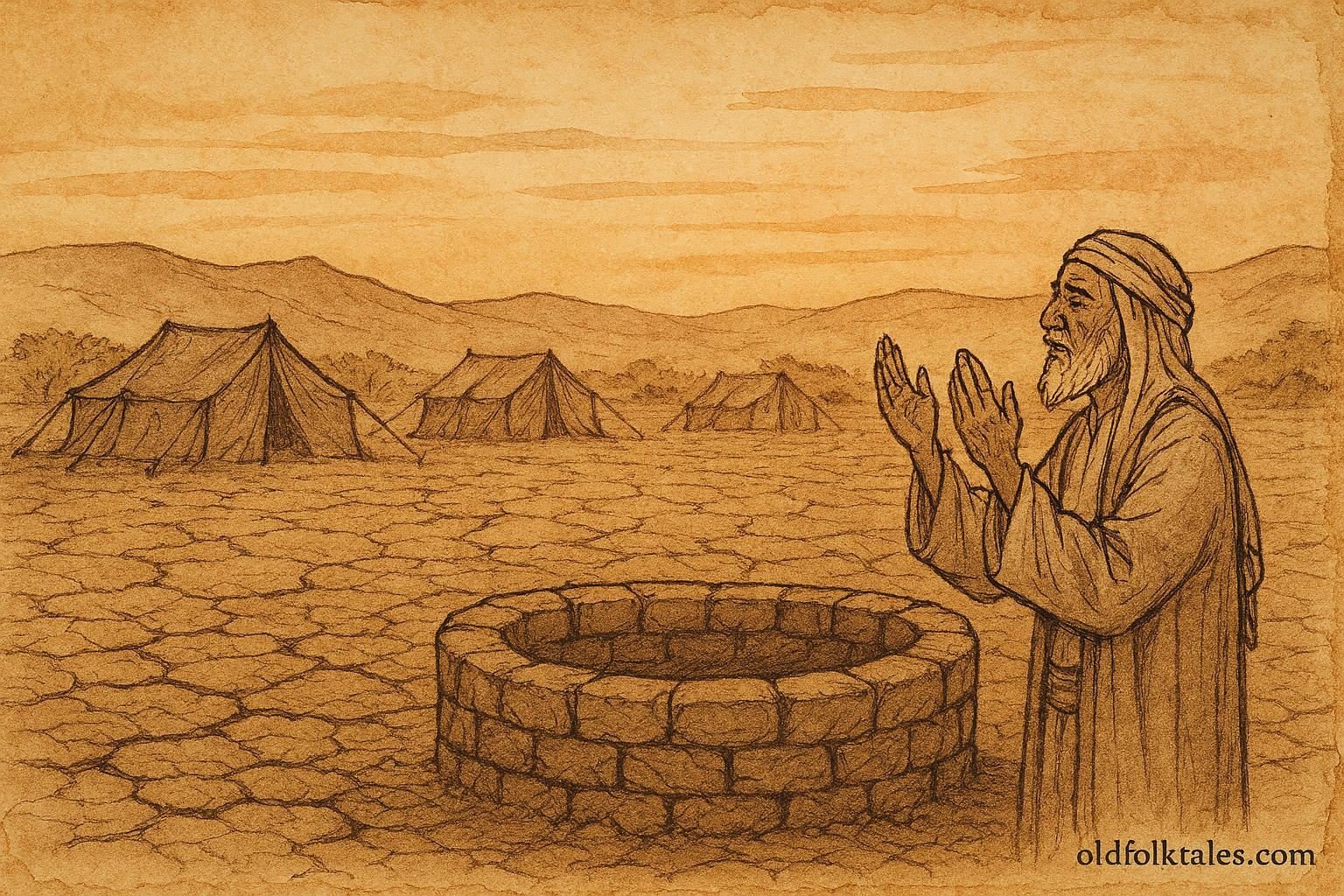
On the dawn of the fourth week, as the first pale line of fajr light crept across the dunes, the tribe’s elder, al-shaikh, a man respected for his wisdom and devotion, walked slowly to the well. His steps were deliberate, his heart heavy. The ground beneath him felt cracked and brittle, like pottery left too long in the kiln. He raised his hands toward the brightening sky and whispered a prayer for mercy. He prayed not for riches, nor for rain, but simply for survival, for a sign, a blessing, anything that would keep his people alive another day.
As the sun sank that same evening, painting the sky in soft orange and rose, something strange stirred on the horizon. A shape glimmered through the shifting heat. At first, the people thought it was a mirage, a trick of the thirsty desert. But as the form moved nearer, it took shape with unmistakable clarity.
A she-camel stood at the well.
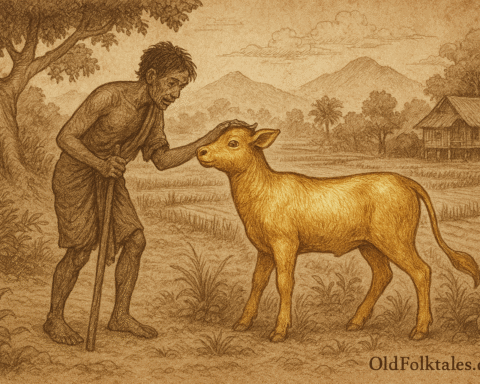
But she was unlike any camel they had ever seen. Her coat gleamed like polished sand, warm and gold under the fading light. Her eyes were deep and dark, “like dates dipped in night,” as one grandmother murmured. She moved with a calm grace, neither frightened nor wild, as though she had come with purpose.
When the tribe gathered cautiously around her, the she-camel lowered her head. Her voice, soft yet resonant, seemed to settle the trembling in their chests.
“My name is Bilad,” she said. “Milk me with shukr, gratitude, and never with tama, greed.”
Awed yet desperate, the tribe obeyed. The first stream of milk that filled their bowls was thick, warm, and impossibly sweet. It tasted of hope. It tasted of life. And there was so much of it, more than any camel, even at her strongest, could ever have given. They filled their clay jirar until every jar brimmed with the blessing she offered.
Bilad stayed.
Day after day, she knelt patiently at the well, offering milk that revived strength, soothed thirst, and replenished spirits. Under her quiet guardianship, the tribe’s cheeks grew round again, their steps lighter. The children laughed once more, racing each other to be the first to greet her each morning.
Word of the miraculous camel spread across the Sharqiyah sands, carried by travelers and traders. Most dismissed it as desert superstition, until a merchant from the coast arrived and saw Bilad with his own eyes.
His gaze sharpened with calculation.
“If her milk is this rich,” he whispered to a few young men, “imagine her meat. Imagine its flavor. Imagine the price you could sell it for in the markets.”
The words lodged in their minds like thorns. Greed is a quiet serpent; it coils slowly. These young men, strong but foolish, began to see Bilad not as a blessing, but as an opportunity. Over the next days, their whispers grew darker, their intentions heavier. The elder warned them. He reminded them of her condition: shukr, not tama. Gratitude, not greed. Blessing, not exploitation.
But greed, once awakened, is hard to silence.
One moonless night, when the camp lay sleeping, the young men gathered around Bilad with blades gleaming in the starlight. As they approached, she lifted her head and looked at them, not with fear, but with sorrow. Her voice trembled like wind through hollow reeds.
“You chose greed over gratitude,” she said. “Now, you will have neither.”
Her cry pierced the desert, long, mournful, ancient. The tribe woke with a start, rushing from their tents, but they were too late. For before their eyes, Bilad’s body shimmered, flickering like heat rising from the dunes. Then, with a final echoing wail, she dissolved into a mirage and vanished into the night.
When dawn returned, the well was dry.
Its water, once steady even through harsh seasons, had sunk into the ground without a trace. The drought pressed its weight upon the tribe once more, heavier, harsher, merciless. No camel came to save them again.
The elder stood by the empty well, tears tracing lines down his weathered face.
“Bilad was barakah,” he said softly. “A blessing from the land itself. We did not deserve her.”
And so, the Bedouins of Sharqiyah say this is why camels bear small udders, to remind humans that sustenance must be earned with gratitude, shared with humility, and never taken through greed.
Moral Lesson
Gratitude sustains blessings, but greed destroys them. What is given in mercy must be honored, or it disappears, leaving emptiness behind.
Knowledge Check
1. Who is Bilad in the Omani folktale?
Bilad is a miraculous she-camel who appears during a severe Sharqiyah drought to feed a starving Bedouin tribe.
2. What promise does the tribe make to Bilad?
They must milk her with gratitude (shukr) and avoid greed (tama), honoring the blessing she provides.
3. What cultural meaning does Bilad represent in Omani folklore?
Bilad symbolizes barakah—divinely sent sustenance that must be respected and never exploited.
4. Why do the greedy young men decide to kill Bilad?
A merchant convinces them that her meat would be more profitable than her milk, awakening greed.
5. What happens when Bilad disappears?
The well dries up, and the harsh drought returns, showing the consequences of betraying gratitude.
6. What lesson does this Sharqiyah folktale teach?
It teaches that greed destroys blessings, while gratitude preserves harmony and sustenance.
Source
Source: Adapted from Folktales from Oman by Sayyida Ghaliya Al Said.
Origin: Central Sharqiyah, Oman (Bedouin oral tradition).