Long ago, in the rugged hills and wide plains of the Pashtun lands between Afghanistan and Pakistan, a weary traveller made his way along a dusty trail. He carried little more than a satchel of provisions, a cloak to ward off the chill, and a restless spirit that sought comfort for the night.
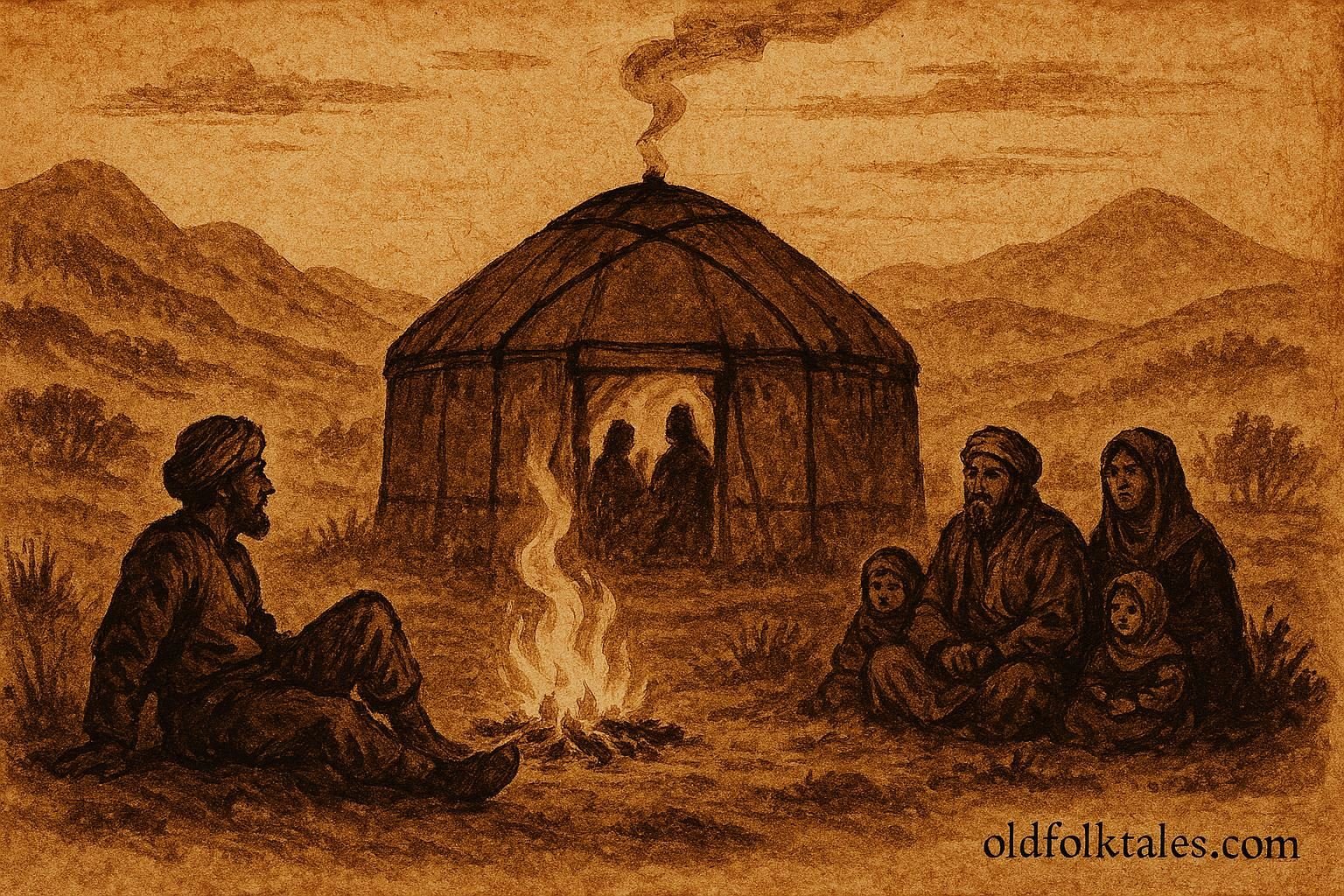
As the sun dipped below the jagged mountains, he came upon a small yurt, smoke curling gently from its hearth. Inside, a nomadic family had just finished their evening meal. The yurt, modest but warm, radiated a sense of care and tradition. The father, an elder known for generosity, welcomed all passersby.
“Come in, traveller,” the father said, gesturing to the low mat by the fire. “Rest here tonight. Eat with us and share your stories.”
Explore desert legends and palace tales in our Western Asian Folktales archive.
Though the family offered food and warmth, the traveller’s heart was not grateful. He mocked their simple meal, sneered at their blankets, and insulted the mother’s weaving. Even the children, shy and curious, received harsh words. The yurt’s warmth seemed to chill at his contempt.
The family endured in silence, a quiet reminder of their patience and adherence to the Pashtun code of hospitality, melmastia. They knew well that all guests should be treated with respect, yet the traveller disrespected this sacred trust.
As night deepened and the stars pierced the sky, the family retired, leaving the traveller to his rest. Outside, the wind howled through the hills, carrying the scent of sage and distant smoke. Inside, the fire crackled. The traveller, thinking himself clever and untouchable, laughed softly at the family’s simplicity.
But the night held justice. As the traveller slept, a strange disturbance stirred: shadows danced unnaturally across the yurt walls, and the fire flickered as though in warning. A heavy sense of dread filled the air. In his dreams, the traveller saw faces twisted in silent reproach, and the warmth of the yurt became an oppressive heat.
When he awoke, the yurt was empty, save for the smell of smoke and a soft echo of laughter. Terrified, the traveller fled into the dark hills. Every shadow seemed alive, every wind a whisper of warning. He ran through the night, tripping over roots and rocks, until dawn’s first light revealed a familiar village, yet he felt as if unseen eyes followed him still.
By day, the traveller reached another settlement, breathless and shaken. He told no one of what had happened but carried a deep unease, a lingering reminder of the consequences of disrespect.
Meanwhile, the nomadic family shared a quiet understanding. They continued their lives with caution, teaching the children that hospitality was sacred, but that discernment was necessary. Not every guest deserved trust, and honor could not be given blindly.
Thus, the tale of the faithless guest spread across the hills and valleys, a cautionary story for all travellers and hosts. It reminded the people that respect is the foundation of human connection, and that violating sacred trust invites consequences, whether from fate, the divine, or the natural order.
Moral Lesson
Respect for hospitality is sacred. Those who abuse the generosity of others will face swift consequences, while careful, honorable conduct ensures safety and trust in the community.
Knowledge Check
1. Who were the main characters in the story?
The weary traveller and the nomadic Pashtun family hosting him.
2. What cultural code does the family follow?
Melmastia, the Pashtun code of hospitality that requires treating all guests with respect.
3. How did the traveller behave toward his hosts?
He insulted their food, home, and family, showing arrogance and disrespect.
4. What form did the traveller’s punishment take?
Supernatural or fateful events in the night terrified him, forcing him to flee in fear.
5. What lesson did the family teach their children?
Hospitality is sacred, but discernment is necessary; not every guest can be trusted blindly.
6. What broader moral does this tale convey?
Disrespecting generosity and sacred trust brings consequences, while honor and courtesy preserve relationships and safety.
Source: Adapted from SOAS collection of short Pashtun folk tales.
Cultural Origin: Afghanistan–Pakistan (Pashtun Region)