In a small village at the edge of the Pashtun steppe, where the wind shaped the tall grasses and the mountains held secrets, there lived a humble miller and his only daughter, Laila. Their home was modest, the mill’s wheel turning slowly with the stream, and life was simple. Despite the poverty, Laila’s heart was generous, her laughter a spark in the quiet village.
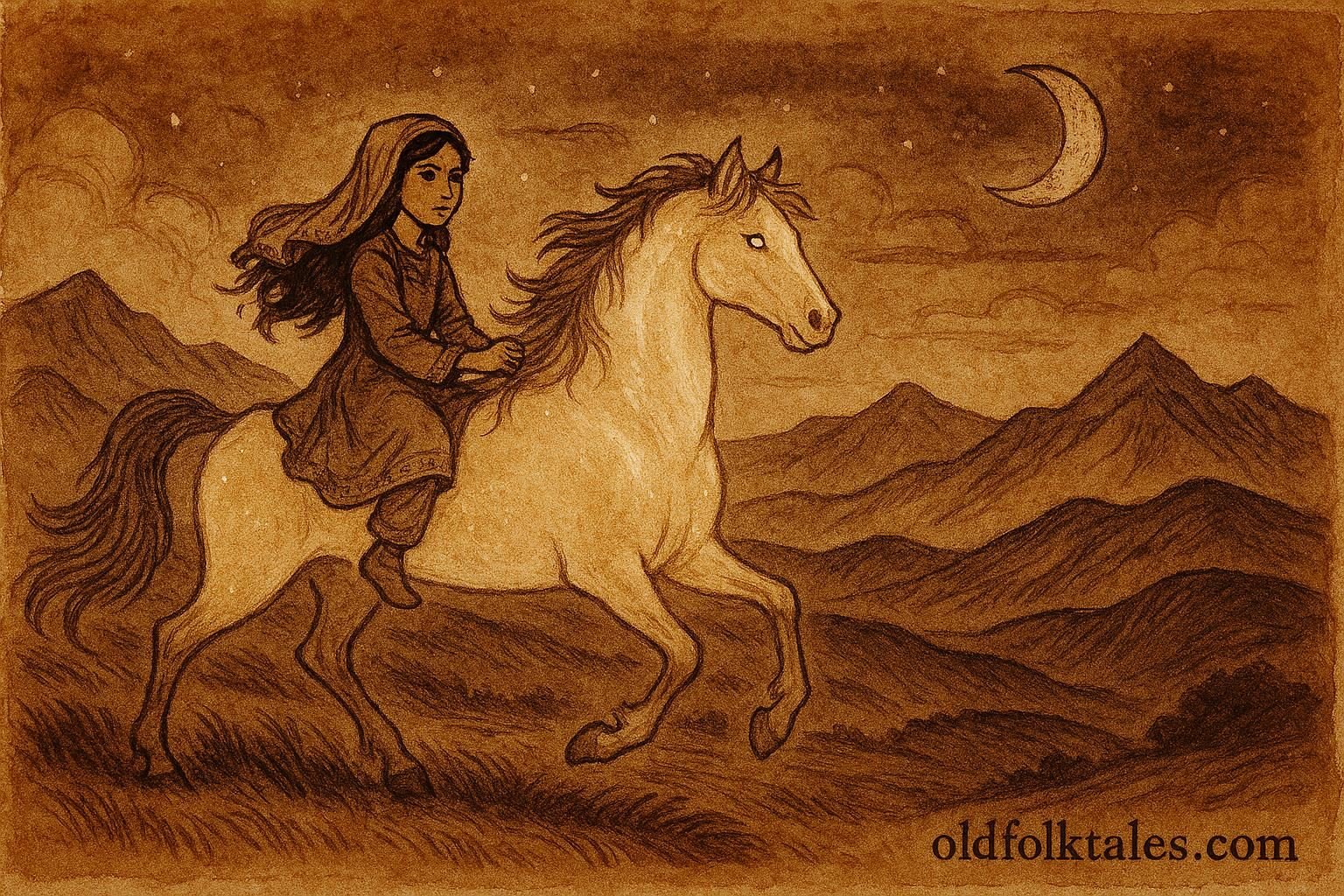
One day, as she walked along the dry riverbed gathering firewood, she noticed a magnificent horse trapped among rocks, its leg bleeding and wild eyes filled with fear. Its coat shimmered as if kissed by sunlight itself. Many villagers had passed by, wary of such a spirited creature, but Laila approached gently, speaking softly.
Discover the wisdom of Persian poets and Arabian storytellers in Western Asian Folktales.
“Don’t be afraid. I mean no harm,” she murmured. Using a cloth from her apron, she cleaned its wound and eased the horse free from its trap. The horse, sensing her kindness, lowered its head and allowed her to lead it home.
At first, her father worried. “It is a wild beast,” he said, “too dangerous for a miller’s daughter.” But Laila insisted. She cared for the horse day and night, feeding it and tending its wound. Slowly, the horse healed and grew calmer, yet it retained a noble and powerful presence that made everyone in the village take notice.
One evening, as Laila brushed the horse beneath the twilight sky, the animal stirred, speaking in a voice clear only to her: “Your heart has been true, and your bravery gentle. I am no ordinary horse. I am blessed by the mountains and the spirits of the steppe. Ride with me, and I will aid you in your trials.”
Though startled, Laila trusted her intuition and mounted the horse. Immediately, the world seemed to open, the hills stretching farther, the streams brighter, and a sense of possibility flooding her heart.
Soon, news arrived that the village was threatened: a nearby chieftain, known for cruelty, demanded tribute that the villagers could not pay. Fear spread quickly, and many despaired. Laila, with her magical horse, rode boldly to the chieftain’s camp. With courage and calm, she proposed a challenge: if she could complete three impossible tasks, her village would be spared.
The first task was to fetch water from a spring hidden high in the mountains, guarded by rocks and sheer cliffs. Mounted on her magical horse, Laila soared above obstacles, her heart steady and her mind focused. The horse leaped with uncanny grace, carrying her safely to the spring.
The second task required gathering a rare flower that bloomed only at midnight atop a cliff. The night wind roared, yet Laila and her horse reached the peak. With gentleness, she plucked the flower, honoring its beauty instead of tearing it recklessly, showing her respect for nature.
The final task was to carry a sack of grain across the river, swollen with spring melt. The river’s current threatened to sweep all away, but Laila, guided by her bond with the horse, found a safe passage, balancing caution with speed.
Impressed by her bravery, resourcefulness, and kindness toward the magical horse, the chieftain relented. He not only spared the village but declared that Laila’s courage and wisdom should be remembered as an example to all. The villagers celebrated her, and the miller’s humble home became a place of admiration and respect.
From that day, Laila continued to care for the magical horse, who remained her loyal companion. The horse’s magic did not lie in power alone, but in the way it responded to Laila’s honesty, compassion, and courage. Her story traveled across the steppe, a tale for children and adults alike: one’s character could summon extraordinary help in times of need.
Discover the wisdom of ancient India and the Silk Road in South & Central Asian Folktales.
Moral Lesson
Bravery, kindness, and perseverance unlock hidden possibilities. Respect and courage, paired with compassion, attract aid and fortune that mere strength cannot achieve.
Knowledge Check
1. Who are the main characters in the story?
Laila, the miller’s daughter, and the magical horse she rescues and bonds with.
2. What cultural values are highlighted in the tale?
Bravery, kindness, perseverance, and respect for nature, reflecting Pashtun ethics and steppe traditions.
3. How does Laila demonstrate courage?
By taming the wild horse, facing impossible tasks, and confronting the threatening chieftain.
4. What makes the horse “magical”?
It speaks to Laila, aids her in overcoming dangerous tasks, and responds to her good heart.
5. What lessons do the impossible tasks convey?
Cleverness, respect, and steady courage achieve what brute force or recklessness cannot.
6. What broader cultural significance does the story carry?
It reflects steppe folklore motifs: magical animals, trials, and social recognition for bravery and virtue in Afghan-Pashtun communities.
Source: Adapted from SOAS translated folk tales.
Cultural Origin: Afghanistan–Pakistan (Pashtun Region)