In the remote valleys of Tibet, beyond the high passes and near the snow-capped mountains, there lived a demon feared by all. Villagers called him Tsering, though few dared speak his name aloud. He was said to be large and terrifying, with eyes like burning coals and a voice that could shake the very rocks. Tsering roamed the valleys, scaring travelers, overturning carts, and frightening herds of yaks. For generations, people avoided the forests and cliffs where he was known to dwell.
Despite his fearsome nature, Tsering’s power was not absolute. Hidden in his heart was a weakness unknown to the villagers. Every act of genuine kindness diminished his strength. When someone performed a selfless deed, or spoke words of compassion, Tsering felt a painful weakness that he could neither endure nor explain. Yet he was too proud to seek help or change, so he continued his reign of terror, convinced that his power could only be maintained through fear.
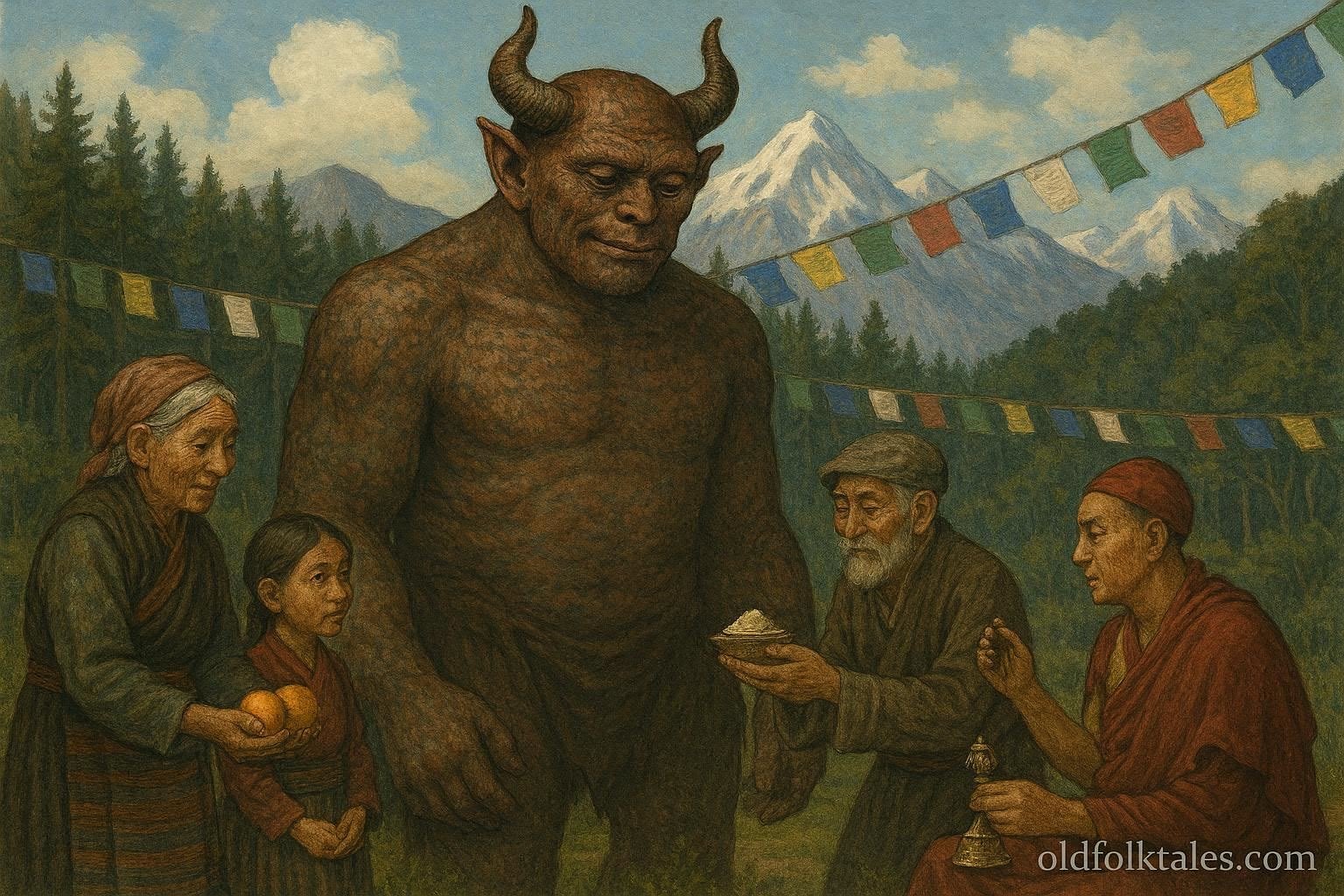
One spring, a traveling monk named Lobsang arrived in the valley. Lobsang was known for his gentle wisdom and deep compassion. Hearing of the demon’s terror, he resolved not to confront Tsering with weapons or anger but with kindness. Lobsang set up a small shrine at the edge of the forest and invited travelers and villagers to leave simple offerings of fruit, tea, and butter. He sang chants and spoke quietly about the value of patience, humility, and compassion.
Explore ancient tales from Thailand, Cambodia, and the Philippines in Southeast Asian Folktales.
The demon, curious but suspicious, observed from a distance. He noticed the villagers leaving food and the monk performing rituals. Tsering felt the familiar weakness growing inside him. He tried to roar and intimidate, but the power of the monk’s calm presence made him falter. Lobsang spoke softly to the demon, saying that fear and anger need not dominate, and that even creatures of darkness could change if they opened their hearts to goodness.
At first, Tsering was confused. He had never encountered anyone who approached him with no fear and no weapons. The kindness did not weaken the villagers or the monk, and it could not be confronted by force. Each day, as Lobsang offered blessings and shared meals with travelers, the demon felt his powers wane further. Over time, his anger lessened, and he began to observe the villagers from afar, noticing their acts of mutual care. Families shared food, repaired homes for neighbors, and treated injured animals with compassion.
One evening, Tsering followed a family tending a sick yak calf. They had left food for him, but instead of attempting to frighten them, he watched quietly. The child offered a small bowl of milk, and the demon’s heart softened. He realized that he could no longer harm them. For the first time, Tsering understood that his fearsome power came not from destruction but from terror, and that terror could be replaced by protection.
Weeks passed, and Tsering became more comfortable with his transformation. He no longer prowled the villages to frighten travelers. Instead, he guided herders away from dangerous cliffs, protected children crossing mountain paths, and helped mend broken carts that had fallen into ravines. Villagers began to notice an unseen guardian watching over them, and tales of the Demon Who Feared Kindness spread, but now the demon’s reputation was one of protection rather than fear.
The monk Lobsang explained that Tsering’s transformation was an example of how even those who seem irredeemable could change through compassion. He told villagers that acts of kindness are powerful, capable of weakening anger, greed, and cruelty. By approaching the demon without violence or anger, the community had not only protected themselves but also helped transform a source of terror into a guardian.
Generations later, parents in the valley told children the story of Tsering, teaching them that true strength comes not from intimidation but from the courage to act with compassion. The demon remained in the forests, but he became a silent protector, ensuring the safety of travelers, herders, and villagers alike. The story of the Demon Who Feared Kindness reminded everyone that transformation is possible for all, and that love and mercy can conquer fear.
Even today, travelers leave small offerings near the forest where Tsering is said to dwell, singing gentle prayers of gratitude. They speak his name with respect, not fear, remembering that kindness has the power to heal, protect, and transform the most formidable hearts. The valley, once a place of terror, had become a sanctuary where humans and spirits lived in balance, guided by the lessons of compassion that Tsering had learned.
Discover more East Asian Folktales from the lands of dragons, cherry blossoms, and mountain spirits.
Moral Lesson
Compassion and kindness have the power to transform even the most fearsome and destructive beings. True strength is measured not by force or fear but by the ability to show mercy, act with care, and cultivate positive change through patience and understanding.
Knowledge Check
- Who is Tsering in the story?
Answer: A fearsome demon who loses strength when kindness is shown. - How does the monk Lobsang approach the demon?
Answer: With compassion, offering prayers, blessings, and guidance without weapons or anger. - What causes the demon’s transformation?
Answer: Acts of genuine kindness and the monk’s compassionate presence weaken his anger and fearsome power. - How do the villagers contribute to Tsering’s change?
Answer: They perform selfless acts, care for each other and animals, and offer food and respect without fear. - What role does Tsering take after his transformation?
Answer: He becomes a protector of villagers, guiding and safeguarding them rather than causing harm. - What lesson does the story teach about power and fear?
Answer: True power lies in compassion and mercy, not intimidation or aggression, and kindness can bring lasting change.
Source
Adapted from Tibetan and Himalayan Library Children’s Folklore Archive, 2013.
Cultural Origin
Village oral tradition across Tibet.