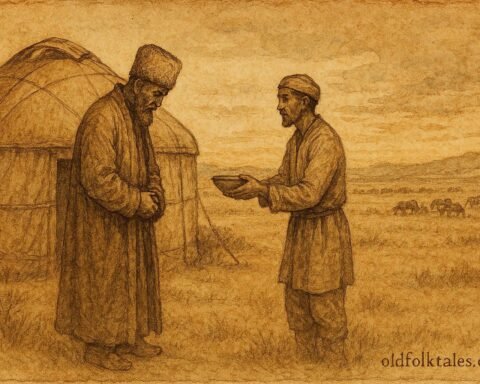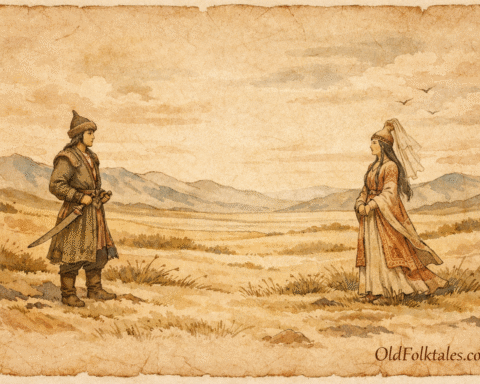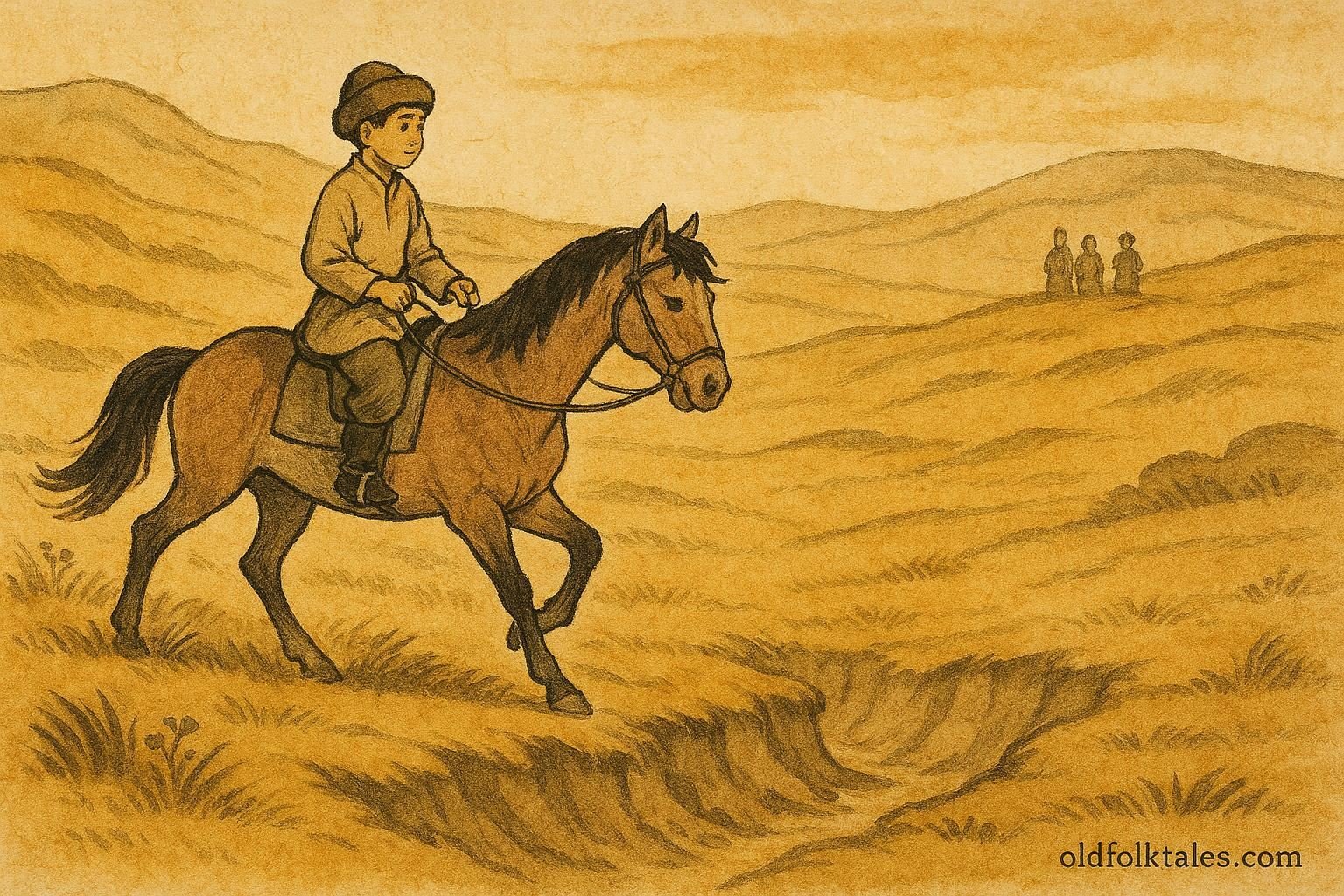
In a quiet village nestled among the endless Kazakh steppes, lived a boy named Kasykbay. Though his family owned very little, Kasykbay possessed a companion unlike any other: a horse with remarkable intelligence. Its eyes seemed to understand human thoughts, and it guided Kasykbay in ways no ordinary animal could. From the very first day, Kasykbay felt a bond that transcended master and steed, it was a partnership of trust, respect, and loyalty.
Life was not easy for the young boy. While other children played, he rose at dawn to tend to sheep, repair fences, and fetch water from the river. Yet every task felt lighter with his clever horse by his side. Villagers often underestimated him, seeing only a poor boy; they did not know that his horse carried the wisdom of the steppe winds and the instincts of the plains.
Discover more East Asian Folktales from the lands of dragons, cherry blossoms, and mountain spirits.
One day, as Kasykbay led his herd to distant pastures, a group of neighboring boys attempted to steal his few sheep. “Hand them over, Kasykbay!” they mocked. The boy’s heart raced, but his horse nudged him gently, signaling a plan. Kasykbay led the boys toward a shallow ravine. With the horse’s careful guidance, he moved along the safe path while the bullies slipped on loose stones. Kasykbay’s herd was safe, and the villagers marveled at his cleverness and the horse’s intelligence.
As he grew, the horse’s wisdom became vital. Local beys, wealthy landowners, often tested young men with impossible tasks. One winter, a bey demanded that Kasykbay deliver a heavy load of grain across frozen rivers before sunset. Alone, he could never have succeeded. But his horse guided him along a safer, longer route over the hill ridges. Kasykbay reached the estate just as the sun dipped below the horizon, impressing the bey and earning generous rewards.
Life’s hardships were not limited to human challenges. One summer, drought struck the steppe. The grass withered, rivers shrank, and animals grew weak. Kasykbay’s horse led him to hidden watering holes and resilient patches of grass unknown to others. Through patience, vigilance, and the bond he shared with his horse, Kasykbay nurtured his herd and earned the trust of the surrounding villages. People traveled miles to see the boy and his clever steed, learning lessons in perseverance, loyalty, and moral integrity.
The horse also taught Kasykbay important lessons of morality. Once, a stranger offered gold for the horse, claiming it was too clever to belong to a boy. Kasykbay refused, remembering the guidance, loyalty, and wisdom the horse had shared. Together, they continued to prosper through honest work, never relying on deception or shortcuts.
Over the years, Kasykbay became a respected figure. Farmers entrusted him with their livestock, merchants sought his counsel, and children admired his skill in taming both horse and circumstance. He remained humble, attributing his success to the horse and the lessons of the steppe. By the time he was a young man, Kasykbay had a thriving farm, a strong herd, and the respect of his community. The story of Kasykbay and his clever horse became a cherished Kazakh folktale, emphasizing the sacred bond between humans and animals and the virtues of diligence, trust, and integrity.
Journey through enchanted forests and islands in our Southeast Asian Folktales collection.
Moral Lesson
Loyalty, wisdom, and perseverance lead to lasting prosperity, and the bonds we nurture, whether with animals or people, guide us toward success and integrity.
Knowledge Check
-
Who is Kasykbay?
Kasykbay is a poor Kazakh boy who becomes successful through diligence and cleverness. -
What makes Kasykbay’s horse unique?
The horse understands human speech, guides him through danger, and offers clever solutions. -
Which virtues does the story emphasize?
Loyalty, perseverance, diligence, moral integrity, and trust. -
How does the horse help Kasykbay in challenges?
By suggesting safe routes, warning him of danger, and assisting with tasks set by local beys. -
What cultural values are reflected in the story?
The sacred bond between humans and horses in Kazakh nomadic life, and the importance of honesty and hard work. -
What is the ultimate moral lesson?
Success and respect come from loyalty, wisdom, and perseverance rather than greed or shortcuts.
Source: Traditional Kazakh ертегі (fairy tale), published in national folklore collections.
Cultural Origin: Kazakhstan (Kazakh folklore)