In the vast, windswept steppes of Kazakhstan, where the grasses sway like the sea and rivers glint under the sun, lived a proud and mighty wolf. He was stronger than most creatures of the steppe, feared by many, yet he lacked foresight and patience. Not far from his territory dwelled a fox, small but astute, known among the animals for her cleverness and quick wit.
One bright morning, the wolf spotted the fox gathering berries beneath a tree. “Those berries will feed me far better than my usual hunt,” he thought. With a smug grin, he approached. “Fox, share your food with me,” he demanded. The fox, unshaken by his strength, replied softly, “Dear wolf, you are strong indeed, but why reach for berries so low when I know of a tree laden with golden fruit far above?”
Explore timeless legends from China, Japan, and Korea in our East Asian Folktales collection.
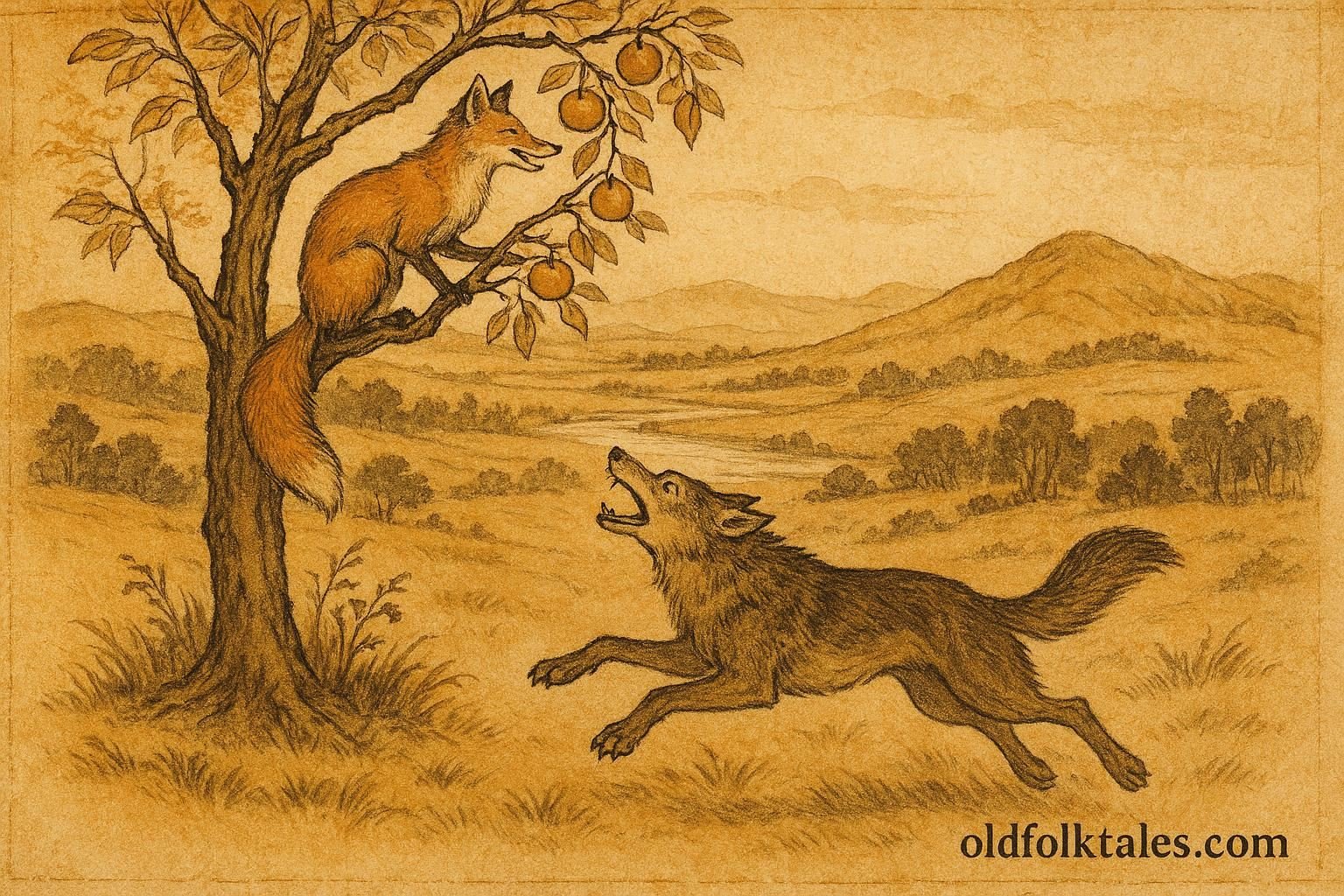
Intrigued but impatient, the wolf followed the fox to the towering tree. “Climb and pick the fruit,” she instructed, gesturing with a delicate paw. The wolf, imagining the treasure, strained to reach the high branches, leaping and snapping, but the fruit remained tantalizingly out of reach. Meanwhile, the fox nimbly climbed and collected a few ripe berries, filling her paws and escaping easily to a hidden hollow. The wolf, exhausted and humiliated, realized he had been tricked.
Days later, the wolf saw the fox again, this time near a riverbank. “There is a fat fish in the deep waters,” the fox called. “Only the strongest can catch it.” The wolf, eager to prove his might, plunged into the river, unaware that the fox had lured him to a swirling current. The fish darted past him, and the wolf struggled to keep his footing, finally returning to the shore empty-mouthed. The fox waited on the bank, calmly enjoying the fish she had caught earlier, and vanished before the wolf could react.
The steppe itself seemed to witness the unfolding of their rivalry. Open plains stretched for miles, dotted with forest groves, shallow rivers, and wildflowers. Animals observed in silence as the fox continually outwitted the wolf, not through strength, but through intelligence, patience, and careful planning. Even the wolf’s prideful nature could not compensate for his lack of foresight.
One autumn evening, the fox approached the wolf with a final challenge. “There is a tree where the ripest fruits hang from the tallest branches. Only one clever enough can take them safely,” she said. The wolf, now both hungry and stubborn, attempted once more. The fox guided him to the tree, but as he leapt recklessly, the branches swayed, and the fruit tumbled out of reach. The fox quietly climbed a nearby tree, gathering the fruits she desired, leaving the wolf to grumble in frustration.
In each encounter, the wolf learned the hard truth: strength alone cannot solve all problems. His arrogance blinded him to opportunities for careful thought, while the fox’s patience and cunning ensured success without confrontation. The animals of the steppe observed these lessons silently, understanding that wisdom and foresight often outweighed raw power.
By the end of the season, the fox thrived while the wolf grew hungrier and more restless. Though the wolf continued to rely on force, the fox’s reputation for cleverness spread across the plains. Tales of her cunning, patience, and clever escapes became legendary, reminding all who heard them that intelligence, patience, and strategic thinking can overcome brute strength and pride.
Explore ancient tales from Thailand, Cambodia, and the Philippines in Southeast Asian Folktales.
Moral Lesson
Brute strength and pride are no match for intelligence, patience, and cunning; foresight and clever planning lead to success.
Knowledge Check
-
Who are the main characters in the story?
The clever fox and the strong but prideful wolf. -
What does the fox represent in Kazakh folklore?
Cunning, intelligence, patience, and careful planning. -
What lesson does the wolf’s repeated failure teach?
That strength alone is insufficient without foresight and wisdom. -
How does the steppe environment contribute to the story?
Its forests, rivers, and open plains provide challenges and settings that highlight the fox’s cleverness and the wolf’s arrogance. -
Which moral virtues are emphasized in the story?
Patience, strategy, intelligence, and humility. -
What cultural significance does the tale hold?
It reflects the Kazakh oral tradition’s emphasis on wit over brute force, and teaches practical life lessons through animal fables.
Source: Kazakh animal fables recorded in oral storytelling cycles.
Cultural Origin: Kazakhstan (Kazakh folklore)