In the warm and fertile lands of the Isan region, where rice paddies stretch into the horizon and village drums echo across the hills, the people of Dan Sai prepare every year for one of the most vibrant and mysterious celebrations in Thailand. This festival is known as Phi Ta Khon, the festival of the playful spirits. It is a time when the living and the unseen world draw close, when voices of ancestors are believed to travel on the wind, and when masked figures parade joyfully through the streets in a mixture of reverence and playful mischief.
The story behind this festival begins long ago, during the time of a revered prince whose courage and wisdom shaped the destiny of the land. According to the villagers, the prince was sent away to undertake a dangerous journey. He traveled across mountains and forests, through river valleys and sacred places where spirits were known to dwell. The prince’s absence lasted far longer than anyone expected, and the people feared that they would never see him again. Many prayed each day for his safe return, offering flowers, rice, and candles at the local shrines.
One morning, after months of silence, a strange rumbling was heard in the distance. The sound rolled through the hills like thunder yet carried with it a joyful tone. The villagers rushed outside to see what was happening and witnessed a procession unlike anything they had ever seen. The prince had returned, and with him came a host of spirits who had accompanied him during his long and dangerous travels. They were spirits of the land, the forest, the water, and even the mischievous spirits who loved to play harmless tricks on humans. As the prince approached the village, the spirits danced and laughed, creating an atmosphere so joyful and loud that some people said even the sky brightened to welcome them.
Explore timeless legends from China, Japan, and Korea in our East Asian Folktales collection.
The villagers believed that the spirits followed the prince out of gratitude. They claimed that during his journey he had shown respect to every sacred place he encountered. He had never disturbed the resting places of unseen beings and offered prayers wherever he went. The spirits, moved by his kindness and reverence, decided to celebrate his return by showing themselves openly to the people. The villagers were so amazed by the sight that they began to dance and sing along with the spirits. The entire village erupted into laughter and music, and the celebration lasted for days.
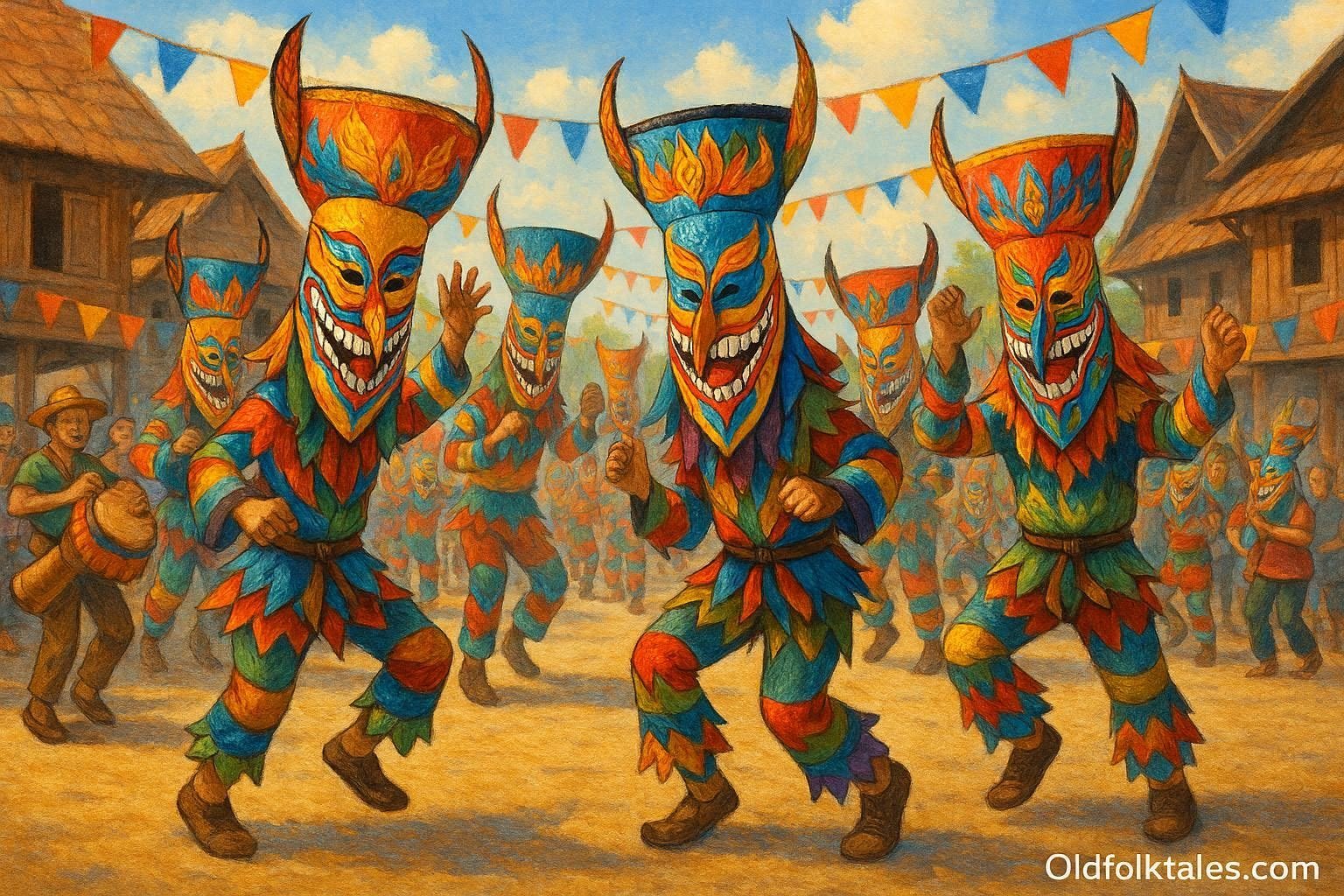
Over time this extraordinary event became a yearly tradition. The villagers chose to honor the spirits who once walked beside the prince by recreating the joyous procession. They carved elaborate masks using old rice husks, coconut leaves, and bamboo. The masks were painted with vivid colors, often with large smiling faces, tall pointed headdresses, and friendly yet mysterious expressions. Although the masks sometimes looked wild and strange, they were never meant to frighten. Instead, they symbolized the lively and playful nature of the protective spirits.
Each year, as the festival days draw near, villagers of all ages gather to prepare the masks and costumes. Elder artisans teach younger ones the traditional designs, reminding them that every brushstroke is a link to the past. Families cook meals together and decorate the streets with colorful banners. Musicians rehearse their rhythms until the sound of the drums becomes the heartbeat of the village. Children run around excitedly, imagining themselves wearing the tall masks and dancing among the spirits.
When the festival finally begins, the entire village comes alive in a burst of color and sound. Masked performers run, jump, dance, and tease the crowd in a friendly way, all while carrying wooden figures shaped like water buffalo, roosters, or mythical creatures. The people cheer them on, laughing while making wishes for good harvests, good health, and protection for the coming year. According to tradition, the playful spirits enjoy bringing blessings to those who welcome them with pure hearts and joyful spirits.
As the procession moves through the village, elders tell the old story to the younger ones. They explain that Phi Ta Khon is not merely entertainment but a sacred reminder of the bond between humans and the spirit world. The villagers believe that laughter and celebration are powerful offerings in themselves. They show gratitude not just through prayers but also by filling the air with joy, music, and positive energy. In this way they invite the spirits to join them once more and bless the village with abundance.
During the festival, monks also play an important role. They conduct ceremonies that retell ancient Jataka tales, which are stories of the Buddha in previous lives. This reminds everyone that while the spirits are playful and full of humor, the festival also carries deep spiritual meaning. It teaches the villagers to respect the unseen world and to recognize that fortune, protection, and harmony come from living with kindness and mindfulness.
As night falls, lanterns glow across the village, casting a warm golden light over the streets. The masked performers continue to dance, their shadows flickering like spirits moving between realms. The villagers feel as though the spirits are truly among them, unseen but present, sharing in the celebration. It is believed that when the festival ends and the first morning light appears, the spirits gently return to their world. Yet their blessings stay behind, settling in the fields, the homes, and the hearts of all who joined in the celebration.
Phi Ta Khon remains a beautiful reminder that joy has a sacred place in life. It teaches that even playful spirits carry wisdom, and that honoring the past brings harmony to the present. Each year the festival renews the bond between the villagers, their ancestors, and the protective spirits who once walked beside a beloved prince.
Journey through enchanted forests and islands in our Southeast Asian Folktales collection.
Moral Lesson
Phi Ta Khon teaches that joy, respect, and gratitude strengthen the bond between people and the unseen world. When communities celebrate together with sincerity, they create harmony that protects them for generations. It also reminds us that honoring ancestors, showing respect to sacred places, and carrying kindness into every journey bring powerful blessings and help guide our lives.
Knowledge Check
- Why did the villagers fear for the prince while he was away?
Answer: Because his journey was dangerous and he did not return for many months. - Why did the spirits follow the prince back to the village?
Answer: They were grateful for his respectful behavior at sacred places. - What materials are traditionally used to create Phi Ta Khon masks?
Answer: Rice husks, coconut leaves, and bamboo. - Why do villagers celebrate with laughter and music?
Answer: They believe joy attracts blessings from the playful spirits. - What role do monks play in the festival?
Answer: They tell Jataka tales and lead spiritual ceremonies. - What is the main purpose of the Phi Ta Khon celebration?
Answer: To honor the protective spirits and strengthen the bond between the living and the spiritual world.
Source
Adapted from Princess Maha Chakri Sirindhorn Anthropology Centre Digital Folklore Archive, 2011.
Cultural Origin
Isan Northeastern Thai spirit festival tradition.