
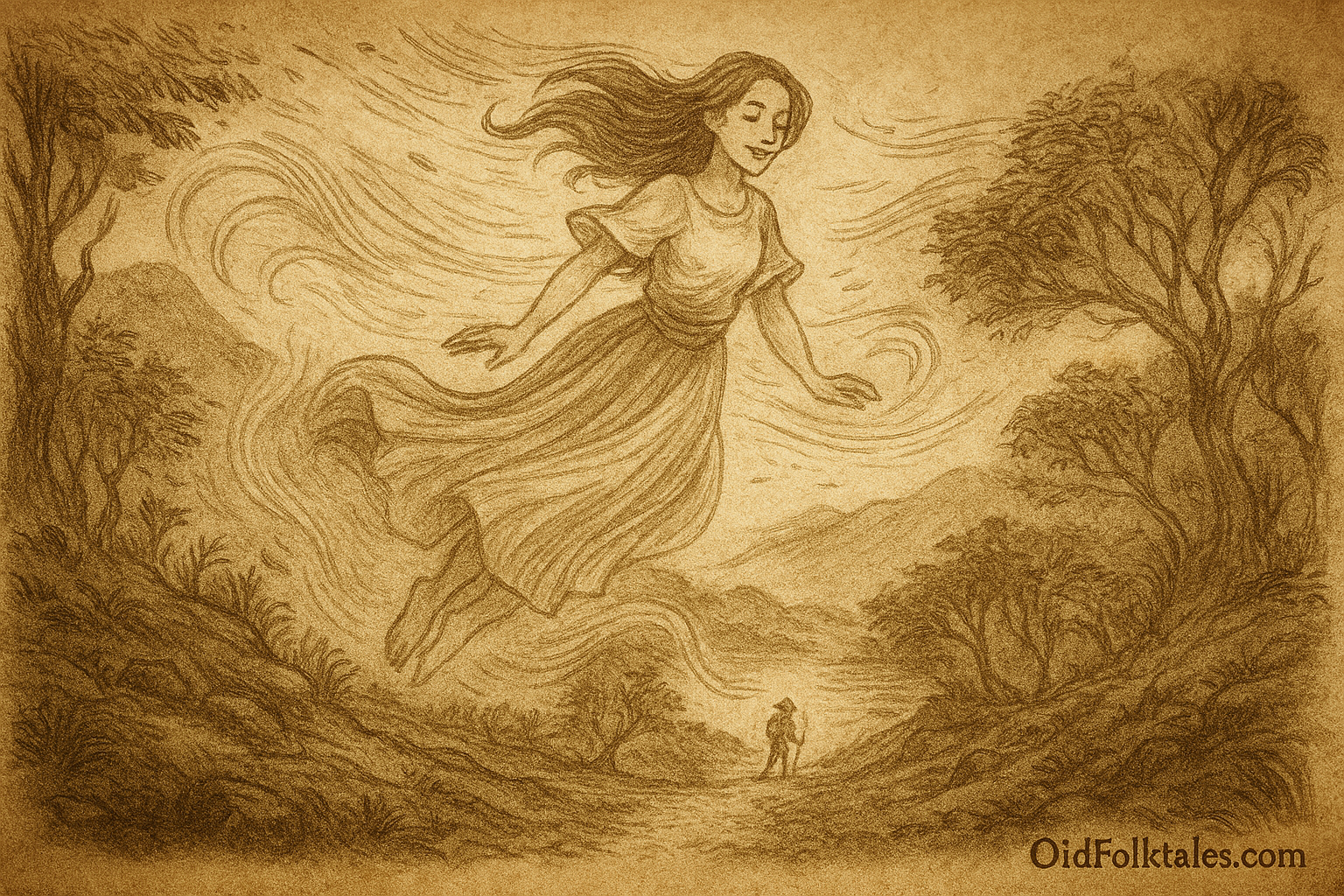
On the mystical island of Siquijor in the Visayas, where ancient balete trees twist their roots deep into volcanic soil and the air itself seems thick with enchantment, there once lived a young woman whose grace and lightness defied the natural world. Her name was Dalisay, which in the old Visayan tongue meant “pure,” and she was known throughout the island not for her beauty alone, but for the extraordinary way she moved through the world.
Dalisay lived in a small nipa hut at the edge of her family’s abaca fields, near the mountain paths that wound through Siquijor’s dense forests. From childhood, she had possessed an unusual gift her feet barely seemed to touch the ground when she walked. While other children trudged heavily through the mud during the rainy season, Dalisay would glide across the same paths without leaving so much as a footprint. When she danced at village fiestas, the old women would whisper among themselves, making the sign of the cross and murmuring prayers, for the girl seemed to float above the bamboo floor like morning mist rising from the rice paddies.
Click to read all East Asian Folktales — including beloved stories from China, Japan, Korea, and Mongolia.
“That child has the blessing of the wind spirits,” her grandmother would say, shaking her head with a mixture of pride and worry. “She moves like she belongs more to the air than to the earth.”
Indeed, Dalisay felt most alive when the wind blew. She would stand on the cliffs overlooking the Bohol Sea, her long black hair streaming behind her, her arms outstretched as if embracing an invisible lover. The stronger the wind, the more joyful she became. During typhoons, when other villagers huddled inside their homes with shuttered windows and barred doors, Dalisay would laugh and spin in the rain, her feet barely grazing the ground as the gales swirled around her.
The island of Siquijor was known throughout the Philippines as a place of magic and mystery. It was the home of mananambal traditional healers who gathered herbs under moonlight and whispered incantations passed down through countless generations. The mangkukulam, practitioners of both healing and darker arts, lived in the mountain villages where Spanish priests rarely ventured. The very air seemed charged with invisible forces, and the trees were said to house spirits both benevolent and capricious.
It was said that the wind spirits of Siquijor were particularly powerful. They lived in the highest peaks, dwelling within the ancient trees and moving through the mountain passes with voices that sounded sometimes like music, sometimes like crying, and sometimes like whispered warnings. The old folks taught their children to respect the wind, to never speak ill when the breezes blew, for the spirits heard everything carried on the air.
Dalisay, with her unusual gift, had always felt a connection to these spirits. Sometimes, when she walked the mountain paths alone, she would hear voices in the wind not frightening, but familiar, like old friends calling her name. She would answer them in song, her voice clear and sweet, and the wind would seem to respond, swirling around her in intricate patterns that lifted her hair and caressed her skin like gentle hands.
One evening during the Festival of San Isidro, as the entire village gathered for the celebration, Dalisay danced with such otherworldly grace that the music seemed to fade into silence. Everyone stopped to watch as she moved, her feet inches above the ground, her body turning and swaying as if guided by invisible partners. The wind picked up suddenly, despite the clear sky, and began to circle the clearing where she danced, creating a small whirlwind that lifted flower petals and scattered them around her like snow.
An old mananambal named Lola Ising, who had lived longer than anyone could remember, watched with knowing eyes. She recognized what was happening the wind spirits had come for Dalisay. They had watched the girl for years, enchanted by her lightness, her joy, her natural affinity for their realm. Now they were claiming her as their own.
“Child,” Lola Ising called out, trying to break the spell, but her voice was lost in the growing wind.
The whirlwind around Dalisay intensified, lifting her higher and higher off the ground. But there was no fear on the young woman’s face only joy and recognition. This was what she had been waiting for all her life, though she had never known it. The wind spirits were calling her home, and she was ready to answer.
Dalisay’s voice rose in song, a melody so beautiful and strange that those who heard it would remember it all their lives but never be able to recreate it. As she sang, her body became translucent, like smoke, like cloud, like morning mist. She looked down at her family and friends one last time, her smile radiant with happiness, and then she dissolved completely into the wind, her voice still singing as she ascended into the darkening sky.
The villagers stood in stunned silence as the wind died down and the normal sounds of evening returned crickets chirping, leaves rustling, the distant crash of waves against the shore. Dalisay was gone, taken by the wind spirits to be their bride, to live forever in the realm between earth and sky.
But she did not truly leave them.
From that night onward, whenever storms approached Siquijor, those with ears to hear could detect a woman’s voice singing above the treetops. The voice was Dalisay’s, clear and joyful, riding the wind as it swept across the island. She sang warnings of approaching danger, lullabies to calm the frightened, and songs of protection for those who traveled the mountain paths.
The mananambal and mangkukulam of Siquijor began teaching their people a new prayer. Before crossing the treacherous mountain paths, travelers should whisper Dalisay’s name to the wind, asking for her protection. Those who did so found their journeys strangely blessed rocks that should have caused them to stumble seemed to move aside, branches that might have struck their faces bent away, and even when heavy rains made the paths slippery and dangerous, those who had invoked Dalisay’s name walked sure-footed, as if invisible hands steadied them.
Lola Ising, the old healer, became the keeper of Dalisay’s story. She would sit with travelers before they set out on mountain journeys and teach them the proper way to call upon the Wind Bride’s protection.
“Speak her name softly,” Lola Ising would instruct, “with respect and love. Say: ‘Dalisay, bride of the wind, guide my steps and guard my path.’ She listens always, for she loves the people of this island still, even though she now belongs to the air.”
Years passed, then decades, then generations. The story of Dalisay became woven into the fabric of Siquijor’s rich tapestry of legends. Herbal healers gathering plants on mountain slopes would hear her voice singing in the wind and would smile, knowing they were protected. Children caught in sudden storms would listen for her song and find their fear dissolving into wonder. Lost travelers would whisper her name and suddenly see the path clearly, as if the wind itself was showing them the way home.
During particularly powerful typhoons, when the winds howled with voices that sounded almost human, the oldest residents of Siquijor would nod knowingly to each other. “Dalisay is dancing,” they would say. “She is dancing with her spirit husbands in the realm beyond the clouds.”
Some claimed to have seen her on moonlit nights a translucent figure gliding along the mountain ridges, her long hair flowing behind her like dark water, her feet never touching the ground, her face filled with the same joy she had shown on the night she ascended. Others said they had felt her presence as a sudden gentle breeze on hot, still days, carrying with it the scent of mountain flowers and the echo of distant singing.
The herbal healers of Siquijor, who still practice their ancient arts, maintain that Dalisay remains the most reliable guardian spirit of the island. Unlike other spirits who must be appeased with elaborate rituals and offerings, the Wind Bride asks only for respect and remembrance. Speak her name with love before embarking on a mountain journey, and she will ensure your safe passage. Honor her memory by moving through the world with grace and joy, and she will smile upon you from her home in the wind.
To this day, when the wind picks up suddenly on Siquijor’s mountain paths, locals will pause and tilt their heads, listening. And if the conditions are just right if your heart is open and your intentions pure you might hear what they hear: the voice of a young woman singing, joyful and free, forever dancing with the wind spirits who claimed her as their bride so many generations ago.
Click to read all Southeast Asian Folktales — featuring legends from Thailand, Indonesia, Vietnam, and the Philippines.
The Moral Lesson
The tale of Dalisay teaches us that some souls are too free and light for earthly constraints, and that accepting our true nature no matter how unusual leads to fulfillment and purpose. Her transformation reminds us that leaving the physical world doesn’t mean abandoning those we love; rather, we can continue to serve and protect in new forms. The story also emphasizes the importance of respecting natural and supernatural forces,and shows how calling upon benevolent spirits with genuine reverence can provide real protection and guidance. Finally, Dalisay’s story celebrates the idea that joy, grace, and purity of spirit never truly die but continue to bless the world in unexpected ways.
Knowledge Check
Q1: Who was Dalisay in Philippine folklore from Siquijor Island? A: Dalisay was a light-footed young woman from Siquijor who possessed the unusual gift of barely touching the ground when she moved. She had a natural affinity for wind and was eventually claimed by wind spirits to become their bride, transforming from a mortal woman into a protective spirit who guards mountain travelers.
Q2: What made Siquijor Island significant in Philippine mystical traditions? A: Siquijor Island in the Visayas is renowned throughout the Philippines as a center of magic and mystery, home to mananambal (traditional healers) and mangkukulam (practitioners of folk magic). The island is known for powerful wind spirits dwelling in mountain peaks and ancient trees, and for supernatural forces that permeate the land.
Q3: How did the wind spirits claim Dalisay as their bride? A: During the Festival of San Isidro, while Dalisay danced with otherworldly grace, a whirlwind formed around her and lifted her off the ground. As she sang a beautiful, haunting melody, her body became translucent and dissolved into the wind, ascending into the sky to join the wind spirits who had long been enchanted by her lightness and joy.
Q4: How does the Wind Bride protect travelers in Siquijor today? A: Travelers crossing dangerous mountain paths whisper Dalisay’s name before their journey, asking for her protection. Those who invoke her find their paths mysteriously safer obstacles move aside, branches bend away, and they walk sure-footed even on slippery terrain, as if invisible hands guide and steady them.
Q5: What role do mananambal (traditional healers) play in the Wind Bride legend? A: The mananambal of Siquijor became the keepers and teachers of Dalisay’s story. They instruct travelers on the proper way to invoke the Wind Bride’s protection, teaching them to speak her name with respect and love. Healers gathering mountain herbs hear her voice in the wind and feel protected by her presence.
Q6: What cultural values does the Wind Bride legend represent in Philippine folklore? A: The legend embodies Filipino values of respecting spiritual forces, honoring those who pass into the spirit realm, and maintaining connections between the physical and supernatural worlds. It represents the belief that pure-hearted individuals can become protective ancestral spirits, and that proper reverence and invocation can secure blessings and protection from benevolent supernatural beings.
Source: Adapted from El Folklore Filipino
Cultural Origin: Siquijor Island, Visayas region, Philippines








