Long ago, when the rivers of the land still spoke loudly to the mountains and the forests were thicker than memory itself, there lived a brother and sister in the region now known as Khammouane. They were young but resilient, raised by elders who taught them to respect the spirits of water, earth, and sky. Their village rested near a wide river that provided fish, fertile soil, and a rhythm for daily life. Each season followed its proper order, and the people believed the balance would last forever.
One year, however, signs of unrest appeared. Birds flew inland in great numbers, animals abandoned the riverbanks, and the elders dreamed of water rising higher than the tallest trees. The villagers gathered to perform rituals, offering rice and incense to calm the spirits. Yet the river did not listen. Dark clouds gathered for days without breaking, and the ground trembled as distant thunder rolled endlessly across the hills.
When the rain finally fell, it did not stop. Day after day, water poured from the sky, swelling the river beyond its banks. Fields disappeared first, then homes, then entire paths between villages. The elders ordered everyone to flee to higher ground, but the waters moved faster than fear. One by one, the voices of the village were swallowed by the flood.
Explore timeless legends from China, Japan, and Korea in our East Asian Folktales collection.
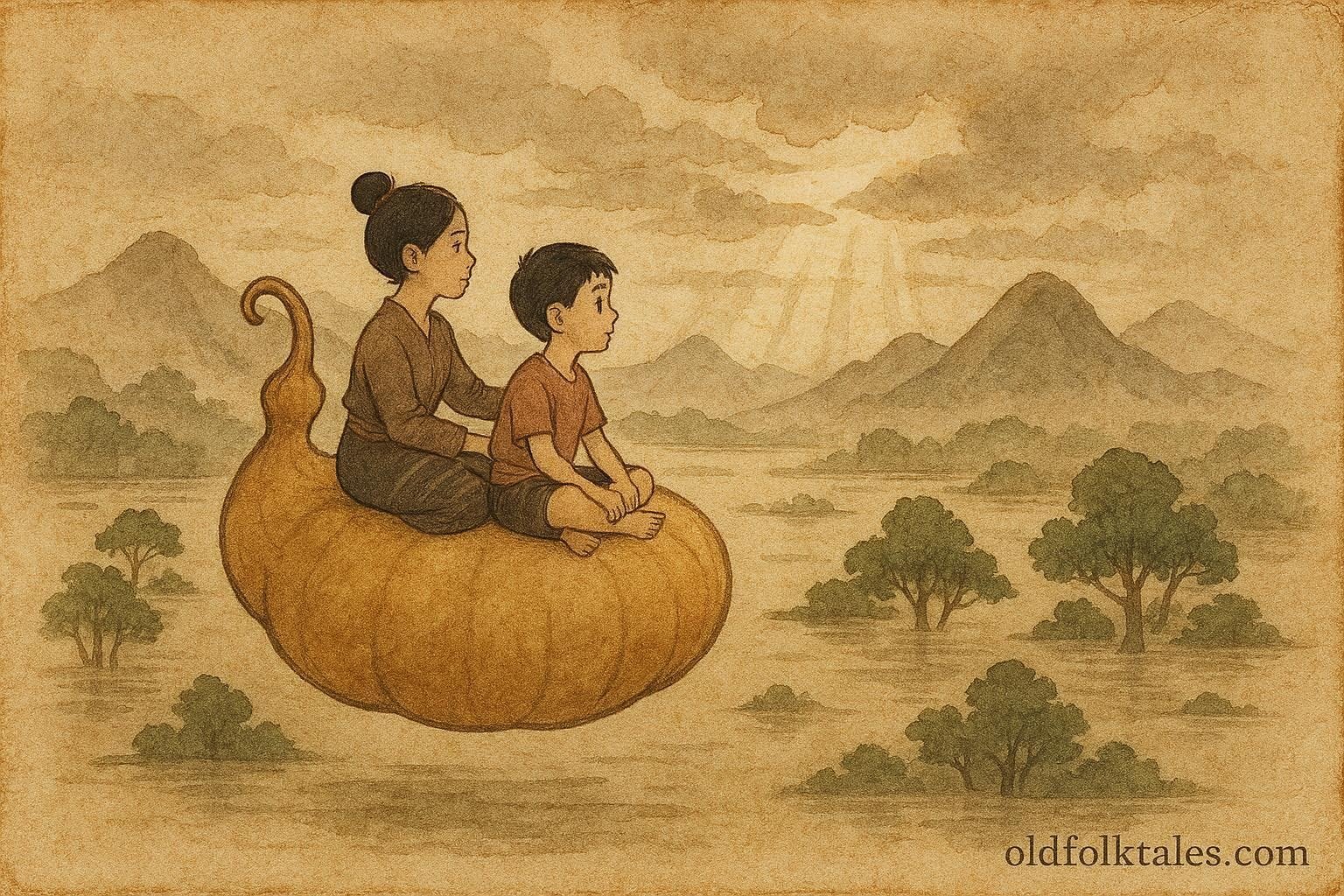
The brother and sister ran until they could run no longer. As the water rose around them, they remembered a gourd their grandmother had given them years earlier. She had warned them never to cut it open unless the world itself was breaking. The gourd was smooth and heavy, carved with faint symbols that glimmered when touched by moonlight. Trusting her words, the siblings placed the gourd upon the rushing water.
Before their eyes, the gourd began to expand. Its shell stretched wide and strong, forming a hollow vessel large enough to hold them both. The water did not break it. Instead, the flood carried them gently, lifting them above the destruction below. Holding onto each other, the siblings drifted across a world that had become endless water.
For many days and nights, they floated. They saw the tops of mountains disappear and heard the cries of animals seeking refuge. The sky remained gray, and time lost its meaning. The siblings spoke little, saving their strength and honoring the silence of survival. When they slept, the gourd remained steady, never tipping, never cracking.
At last, the rain ceased. Slowly, the waters began to withdraw, revealing land once more. The gourd settled upon a muddy plain surrounded by broken trees and scattered stones. When the siblings stepped out, they realized they were alone. No other humans remained. The world had been washed clean.
They wandered the land, calling out, but no answer returned. Understanding that they were the beginning of something new, the siblings built shelter and learned to live from the earth again. They planted seeds they found among the debris, fished in the shrinking waters, and gave thanks each morning to the spirits who had spared them.
As time passed, they created new customs to honor survival. They sang songs to remember the flood, taught their children never to disrespect the river, and used gourds in rituals as symbols of life and protection. From them came many descendants, spreading across the land and forming villages once more.
The people taught that the gourd was not merely a vessel but a reminder. Life could be destroyed, but it could also begin again through humility and respect. The river that once erased the world became a source of wisdom. Each flood season thereafter was met with offerings and careful balance, for the people remembered what happened when harmony was forgotten.
To this day, elders in Khammouane tell of the siblings and the magic gourds. They say the shape of the gourd holds the memory of the world before and after the flood. When rain falls heavily, the story is repeated, not as a warning of fear, but as a lesson of renewal. The land was born again from water, and so were its people.
Moral Lesson
This story teaches that survival is not only about strength but about wisdom, remembrance, and respect for nature. When humans forget their place within the balance of the world, destruction follows. Yet even in great loss, renewal is possible when humility guides action. The magic gourd represents preservation of knowledge and tradition, reminding future generations that cultural identity is born from shared trials and collective memory.
Knowledge Check
- Who survived the great flood in the story?
The brother and sister were the only humans who survived the flood. - What object saved the siblings from the rising waters?
A magical gourd given to them by their grandmother saved them. - Why was the gourd important beyond survival?
It became a symbol of renewal, memory, and cultural identity. - What caused the destruction of the old world?
Endless rain and flooding caused by imbalance between humans and nature. - What new customs did the siblings create?
They honored the river, used gourds in rituals, and taught respect for nature. - What lesson did later generations learn from the flood?
That harmony with nature preserves life and ensures renewal.
Source
Adapted from Khammouane Provincial Folklore Research Records, 2012.
Cultural Origin
Central Lao creation folklore.