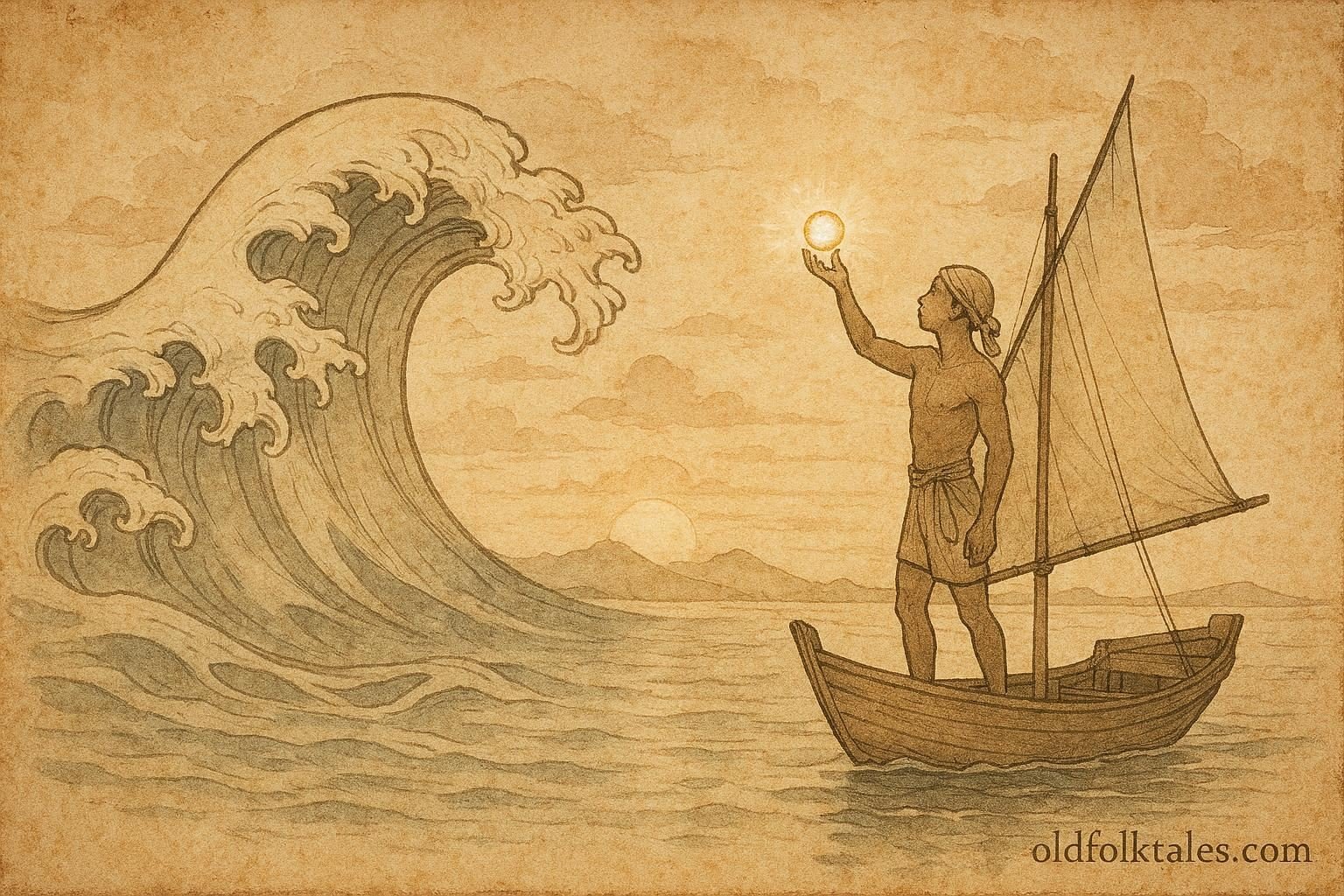
Along the warm, shallow waters of the Arabian Gulf, before oil transformed the land and fortunes rose from sand, the people of Kuwait lived by the rhythm of the sea. Each year, when the pearl diving season arrived, boats set out at dawn, their sails catching the light wind as prayers were whispered for safe return. Among the divers was a poor man named Khalaf, a ghawwas (غواص) whose life was shaped by salt water, rope burns, and long hours beneath the waves.
Khalaf owned little beyond his diving knife, his worn nose clip, and a small pouch of dates and water. Yet he was known among the crews for his patience and quiet respect for the sea. He believed the waters were alive with unseen forces and that arrogance had no place where breath itself was borrowed.
One morning, as the sun rose pale and steady over the horizon, Khalaf descended into the sea from his wooden dhow. The water wrapped around him, cool and dim, as he followed the rope downward to the oyster beds. Fish scattered like flashes of silver. His hands moved carefully across the seabed, opening shell after shell with practiced ease.
Then he saw it.
Nestled among the rocks was an oyster larger than any he had encountered. Its shell was thick and ancient, scarred by time. When Khalaf pried it open, his breath caught. Inside lay a giant pearl, smooth and luminous, glowing softly even in the muted light of the sea. He knew at once that such a pearl could change his life, lifting him from poverty forever.
As Khalaf rose toward the surface clutching his find, the water around him darkened. A powerful current circled him, and from the depths emerged the Jinni of the Sea (عفريت البحر). Towering and radiant, formed of water and shadow, the Jinni’s voice echoed through the deep.
“That oyster bed is mine,” the Jinni declared. “What you have taken belongs to the sea and to me.”
Fear tightened Khalaf’s chest, but he did not struggle or shout. Instead, he steadied himself and listened. He remembered the teachings of older divers, that the sea was not conquered, only endured.
When he reached the surface and climbed back onto the dhow, the Jinni rose beside the boat, towering above the waves. The other men trembled and backed away, but Khalaf stepped forward. Without raising his voice, he set down the pearl and reached into his pouch. He offered the Jinni his dates and water, the only provisions he had brought for the long day.
“I did not know the oyster bed was claimed,” Khalaf said humbly. “Share what I have, as I would with any fellow traveler.”
The Jinni paused. The waters stilled. Never before had a diver answered him without greed or fear. Khalaf’s simple act of generosity, given freely and without expectation, touched something ancient within the spirit of the sea.
“You have chosen respect over possession,” the Jinni said at last. “For this, I will not take from you, but give.”
The Jinni returned the pearl to Khalaf and placed a blessing upon him. From that day forward, Khalaf’s dives were safe and fruitful. He found pearls where others found none, yet he never took more than he needed. His prosperity grew steadily, not through sudden wealth, but through trust, skill, and goodwill. He shared his success with his fellow divers, ensuring that no family went hungry during the season.
When Khalaf grew old, he taught younger men the same lesson he had learned beneath the waves: that the sea rewards those who approach it with humility, generosity, and respect.
Moral Lesson
This folktale teaches that respect and generosity are greater than greed. True prosperity comes not from claiming everything for oneself, but from honoring the balance between human need and the forces of nature.
Knowledge Check
1. Who was Khalaf in the story?
Khalaf was a poor Kuwaiti pearl diver known for his humility and respect for the sea.
2. What remarkable object did Khalaf find while diving?
A giant, perfect pearl hidden within an ancient oyster.
3. Who claimed ownership of the oyster bed?
The Sea Jinni (عفريت البحر), a powerful spirit of the waters.
4. How did Khalaf respond to the Jinni?
He shared his dates and water instead of fighting or arguing.
5. What reward did the Jinni give Khalaf?
Safe diving, steady prosperity, and continued success at sea.
6. What cultural value does this story emphasize?
Ethics, generosity, and respect for the dangers and spirits of the sea.
Source & Cultural Origin
Source: Recorded in the Kuwaiti Heritage Society archives; also found in From the Past: Pages from Kuwait’s Social History by Yacoub Al-Hijji.
Origin: Kuwait, a traditional pearl-diving folktale emphasizing moral conduct, camaraderie, and reverence for the sea.