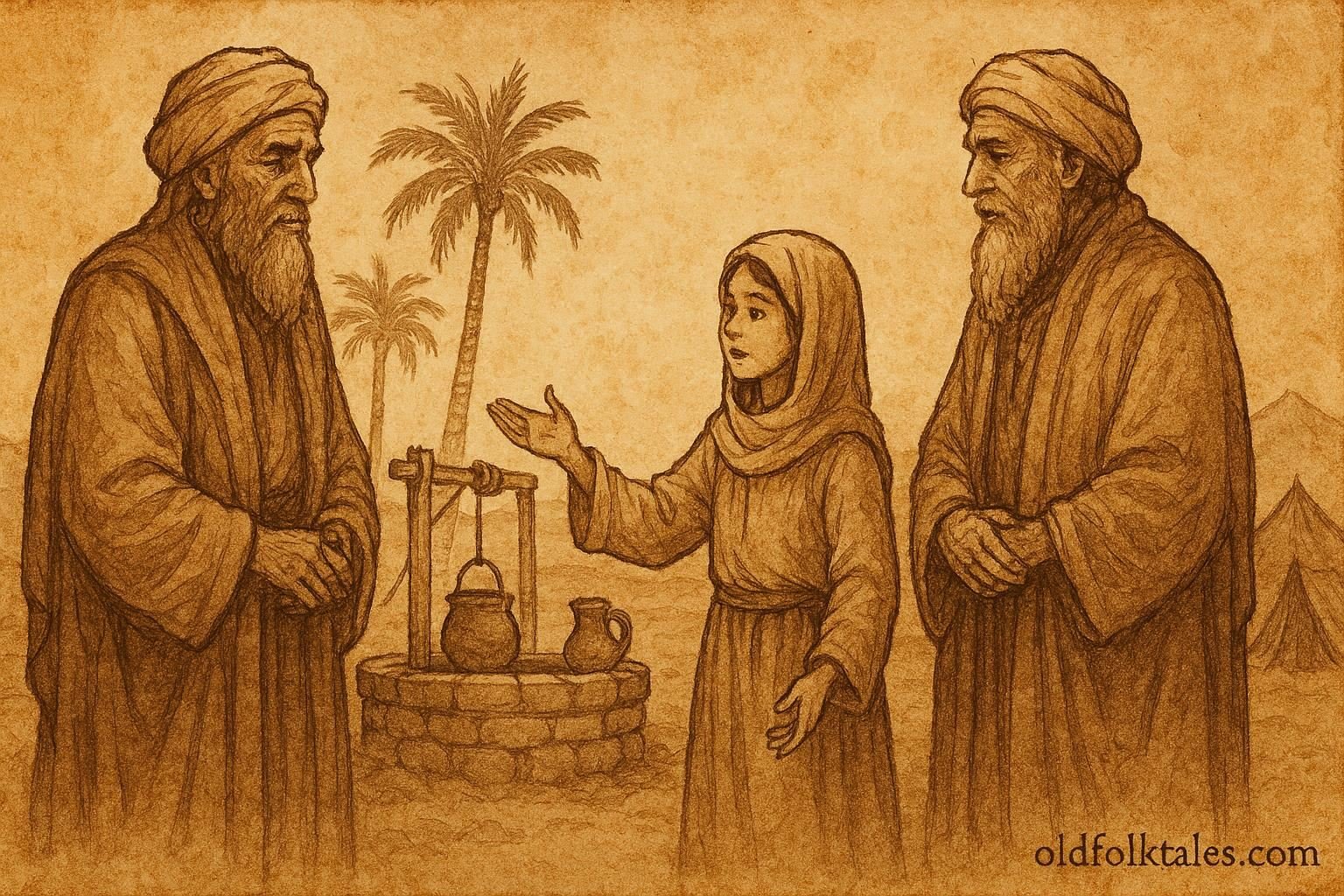
In the wide deserts surrounding the Al Ain and Liwa oases, where date palms rose like blessings from the sand and wells determined life or death, wisdom was valued as highly as courage. Tribes moved with the seasons, guarded their water fiercely, and resolved disputes through counsel rather than bloodshed, at least when reason prevailed.
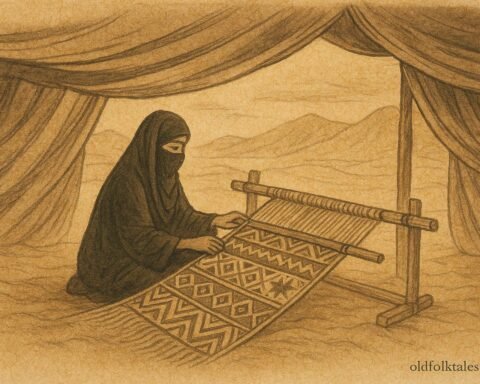
It was in this land that a young Bedouin girl lived, known not for her wealth or lineage, but for her sharp mind and calm manner. She listened more than she spoke, observed more than she judged, and learned from the elders without ever challenging them openly. Though she was still young, her words carried clarity, and her thoughts were shaped by deep understanding of people and desert life.
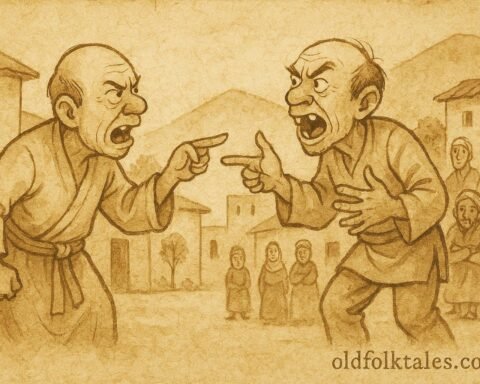
One year, during a harsh season, tension rose between two neighboring tribes who depended on a single well. The water, once clear and life-giving, had become poisoned. Livestock fell ill, children weakened, and fear spread quickly through both camps. Each tribe accused the other of sabotage, claiming deliberate poisoning to drive rivals away. Old grievances resurfaced, and angry voices replaced careful dialogue.
The elders gathered, but their discussions led nowhere. Each side defended itself, and tempers flared. Some young men began to sharpen weapons, believing conflict was inevitable. The desert had seen such disputes before, and everyone knew how easily they could turn deadly.
The girl listened as the arguments echoed through the tents. She heard not only the accusations, but the fear beneath them, the terror of thirst, the desperation to protect family and tribe. After days of fruitless debate, she approached her father and asked permission to speak before the elders. He hesitated, knowing how unusual such a request was, but he trusted her wisdom and agreed.
When she stood before the council, silence followed. Some elders frowned, others looked curious. Calmly, she asked questions instead of offering blame. She requested details about when the water first changed, who had drawn from it, and whether animals from both tribes were affected equally. Her voice remained steady, her manner respectful.
Then she made her proposal.
Rather than arguing over guilt, she suggested they examine the well together. She reasoned that if one tribe had poisoned it, the effects would favor one side over the other. But both tribes suffered equally. She pointed out recent heavy winds that had swept through the region, carrying debris and dead animals into uncovered wells. She reminded them that neglect, not malice, could be just as dangerous.
Her words shifted the mood. The elders considered her reasoning and realized the truth of it. Together, both tribes cleaned the well, purified the water, and set shared rules for its protection. Weapons were set aside, and relief replaced anger.
Impressed by her wisdom and fairness, the elders took an unprecedented step. By unanimous agreement, they appointed the girl as a temporary judge and peacemaker, entrusting her to oversee reconciliation between the tribes. Though such a role was rarely given to a woman, especially one so young, they recognized that wisdom did not belong to men alone.
Under her guidance, the tribes reaffirmed bonds of cooperation and shared responsibility. The desert returned to its quiet balance, and the story of the girl who became a leader spread across the oases, carried by travelers and campfire storytellers alike.
She did not rule by force or authority, but by insight, listening, and justice. Long after her role ended, her example remained, a reminder that leadership is earned through wisdom, not position.
Moral Lesson
This folktale teaches that true leadership arises from wisdom, patience, and fairness. Knowledge and insight know no gender, and peaceful resolution is stronger than conflict.
Knowledge Check
1. Where does the story originate?
From Bedouin oral traditions of the Al Ain and Liwa Oases region in the UAE.
2. What caused the conflict between the two tribes?
A poisoned well that both tribes depended on for water.
3. How did the girl resolve the dispute?
By using logic and observation to show the poisoning was not deliberate.
4. Why was her appointment unusual?
Because women rarely served as judges or peacemakers at that time.
5. What cultural value does the story highlight?
Sulh, or peaceful conflict resolution through wisdom and dialogue.
6. What is the central message of the tale?
That wisdom and leadership transcend age and gender.
Cultural Source
Source: Recorded in Mona Al Khaja’s Emirati Narratives: Voices from the Desert, بيت الحكمة – Sharjah.