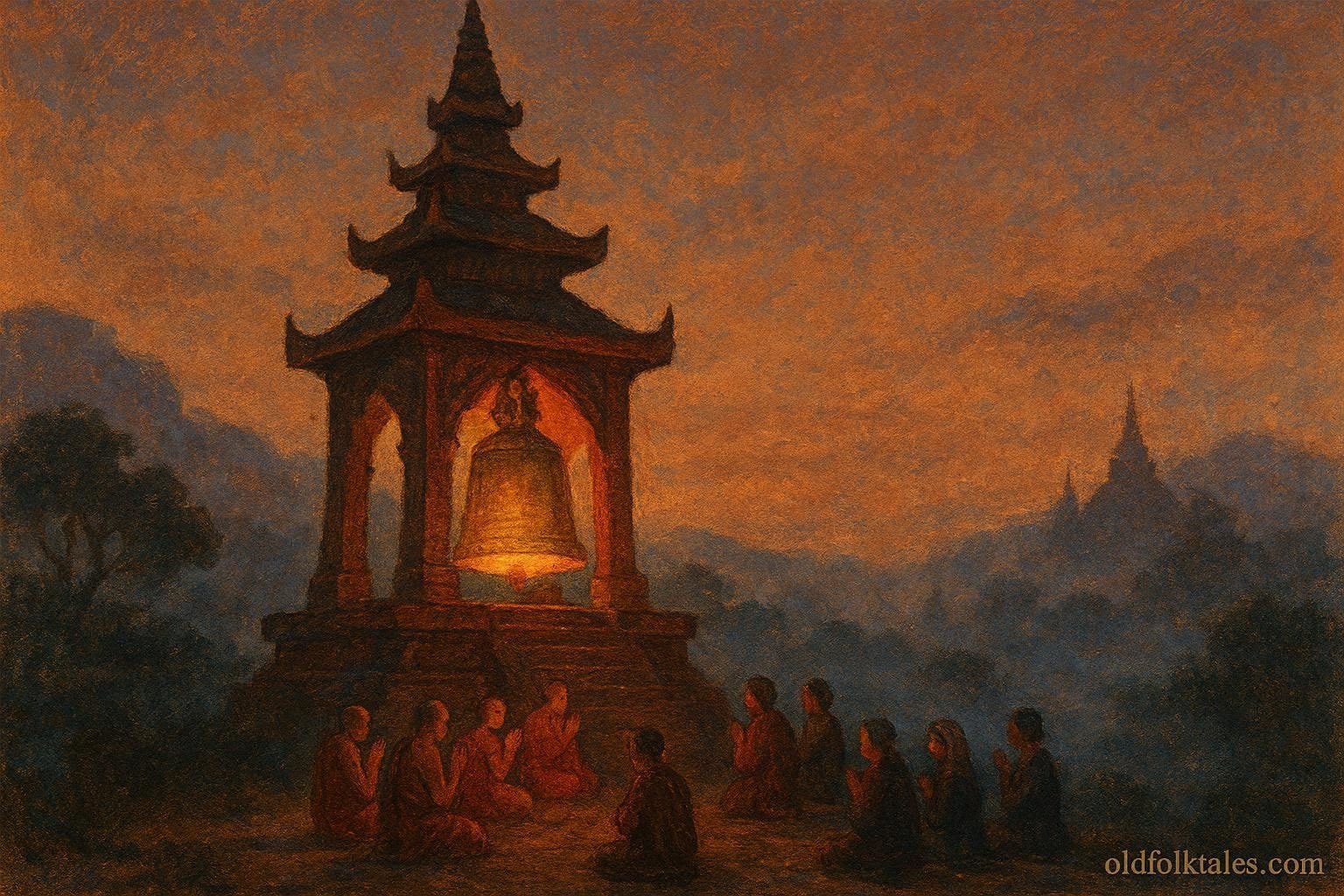
Morning light filtered gently through the banyan trees surrounding the hilltop pagoda, casting soft shadows across the stone steps that led to its ancient bell. The bell had hung there for generations, darkened by time and rain, yet revered by every villager who lived below the hill. It was said to have been cast during a period of great devotion, when the people worked together with pure hearts and steady hands. Since then, it rang only when summoned by monks during prayer ceremonies. Never had it been known to move or sound on its own.
The village beneath the pagoda had once been peaceful and closely bound. Families shared harvests, elders were honored, and temple offerings were made with sincerity. Over time, however, small changes crept into daily life. Neighbors began to argue over land boundaries. Merchants cheated customers with false weights. Offerings at the pagoda grew fewer, and some villagers stopped attending communal prayers altogether. Though no single act seemed severe, together they slowly weakened the harmony that once defined the community.
One night, as thick clouds gathered and the air grew heavy with silence, a sound echoed across the valley. It was deep, trembling, and sorrowful. The pagoda bell was ringing. Not once, but again and again, its tone uneven and filled with a strange sadness. Doors flew open, lamps were lit, and frightened villagers rushed outside. No monk had climbed the hill. No ceremony had been announced. Yet the bell continued to sound, as if weeping.
Discover more East Asian Folktales from the lands of dragons, cherry blossoms, and mountain spirits.
At dawn, the village elders gathered and climbed the stone steps together. When they reached the pagoda, they found the bell swaying gently, though the air was still. No rope had been pulled. No hand had touched it. The monks stood in silent prayer, sensing that something was deeply wrong. One elder remembered an old teaching passed down through generations. Sacred objects, when bound to great merit, could respond to the moral state of the people.
That same afternoon, troubling signs appeared. The river that nourished the rice fields began to recede. Fish floated lifeless near the banks. Crops wilted under a sun that seemed harsher than before. A child fell gravely ill, and travelers reported landslides along the mountain paths. Fear spread quickly, but so did reflection.
The bell rang again at sunset, its sound heavier than before. This time, villagers did not scatter in confusion. Instead, they gathered at the foot of the hill, listening in silence. Many felt shame rise within their hearts. They remembered harsh words spoken, promises broken, and offerings withheld out of greed or laziness. The bell seemed to echo not just across the land, but within their own chests.
That night, the village leader called for a gathering. People spoke openly, admitting wrongs they had hidden for months or even years. A farmer confessed to stealing water from his neighbor’s field. A trader admitted to cheating travelers. Others bowed their heads, realizing how far they had drifted from compassion and responsibility. No one was forced to speak. The sound of the bell had already done that work.
The following morning, the villagers climbed the hill together. They cleaned the pagoda grounds, repaired cracked stone, and placed fresh flowers before the shrine. Monks led prayers not only for protection, but for forgiveness and clarity of mind. Children watched quietly, sensing that something important was being restored.
As days passed, the bell fell silent. The river slowly returned to its banks. New shoots appeared in the fields. The sick child recovered. More importantly, the village changed in ways that could not be measured by harvests alone. Disputes were settled peacefully. Work was shared. Offerings returned, not out of fear, but from renewed faith.
Years later, elders would tell children that the bell did not ring to threaten punishment, but to awaken conscience. It had wept because the people had forgotten their duty to one another. They taught that faith was not only prayer, but action, honesty, and care for the community.
The bell still hangs in the pagoda, unmoving and silent. Yet every villager knows that if hearts grow careless again, its voice will return. Not as a curse, but as a reminder that unity and responsibility are sacred bonds that must never be neglected.
Moral Lesson:
Faith is not limited to rituals or sacred spaces. It lives in daily actions, honesty, and responsibility toward others. When communities forget compassion and unity, even sacred symbols may cry out to awaken conscience. True repentance begins with humility and shared effort to restore harmony.
Knowledge Check:
- Where was the sacred bell located
Answer: In a hilltop pagoda overlooking the village - What caused the bell to ring by itself
Answer: The moral decline and loss of communal responsibility - What signs of disaster appeared after the bell rang
Answer: Dried rivers, failing crops, illness, and landslides - How did the villagers respond to the warning
Answer: They confessed wrongs, restored faith, and worked together - Why did the bell stop ringing
Answer: The villagers renewed unity and sincere devotion - What lasting lesson did the elders teach
Answer: Faith must be lived through actions and community care
Source:
Adapted from Yangon University Buddhist Folklore Manuscripts, 2014.
Cultural Origin:
Burmese Buddhist temple folklore.