In the lands where desert winds carry old songs and stories pass from one generation to the next, there is a folktale long told around evening fires and shaded courtyards. It is the story of a bird whose feathers shone like living gold, a creature said to hold beauty beyond measure and power beyond ordinary understanding.
In some tellings, the bird’s feathers were believed to heal illness; in others, they brought prosperity or divine favor. What never changed was this: whoever sought the bird would be tested, not by strength, but by character.
In one version of the tale, a father had three sons. The eldest two were clever in speech and quick to judge their worth above others. The youngest was quiet and thoughtful, known more for kindness than ambition. When word reached their household of the Bird of the Golden Feather, the brothers were seized by desire. They believed that capturing such a creature would bring honor and reward beyond imagining.
The father, though wary, allowed them to go. One by one, the sons set out.
The elder brothers traveled first, confident and proud. Along the road, they encountered creatures in need, an injured animal, a hungry traveler, a voice asking for help. Each time, they turned away, unwilling to be delayed. Their thoughts were fixed only on the golden prize ahead.
When they finally reached the place where the bird was said to dwell, they failed. Some say the bird vanished at their approach; others say their traps broke, or their courage faltered. Ashamed, they returned empty-handed, offering excuses but no wisdom gained.
At last, the youngest son began his journey.
He traveled the same roads but walked with open eyes and a patient heart. When he encountered an animal in distress, he stopped to help. When asked for food or water, he shared what little he had. It was during one such moment that his kindness was answered.
An animal, small in size but keen in spirit, offered guidance. This helper, bound by the unseen rules of the world, knew the path the bird would follow and the way to approach it without fear or greed.
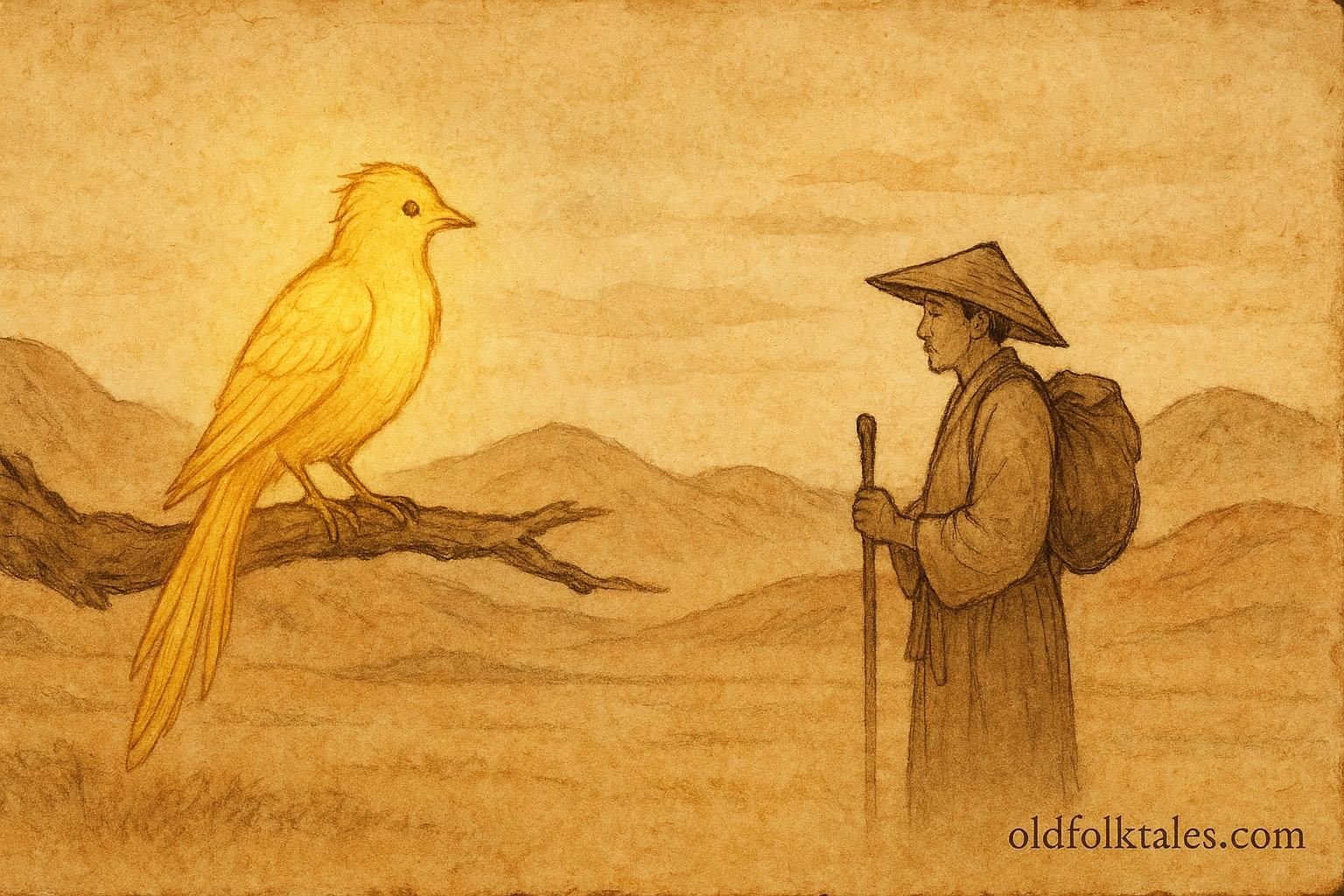
Following this guidance, the young man reached the place where the Bird of the Golden Feather rested. The bird did not flee. Its feathers glowed softly, not blinding, but warm, as though lit from within. Rather than rushing forward, the young man stood still, showing respect. He spoke gently, acknowledging the bird’s beauty and freedom.
Moved by his manner, the bird allowed a single golden feather to fall. It was enough. In some versions, the bird went free; in others, it was safely carried without harm. In all tellings, the act was guided by restraint and humility.
When the young man returned home, the golden feather brought healing and prosperity, not just to his family, but to those around them. The elder brothers, witnessing the result, felt envy burn within them. Yet the tale does not end in revenge. Instead, it ends with understanding: reward comes not to those who grasp, but to those who act with care.
The Bird of the Golden Feather was never meant to be owned. It was meant to reveal what already lived in the hearts of those who sought it.
Moral Lesson
This folktale teaches that true reward is earned through kindness, patience, and respect for the natural and supernatural worlds. Greed blinds, but humility opens the path to lasting fortune.
Knowledge Check
1. What makes the Bird of the Golden Feather special?
Its radiant feathers symbolize beauty, healing, and divine favor.
2. Who succeeds in approaching the bird?
The kind-hearted hero who acts with patience and humility.
3. Why do the other seekers fail?
Their envy and impatience prevent them from understanding the bird’s nature.
4. What role does the animal helper play?
It guides the hero as a reward for kindness, following a common folktale motif.
5. Is the bird meant to be captured?
No; the story emphasizes respect over possession.
6. What cultural value does this tale reflect?
The Arabic tradition of moral storytelling that rewards ethical conduct.
Cultural Source
Source: Adapted from The Bird of the Golden Feather and Other Arabic Folktales by Gertrude Mittelmann, collected from Arabic oral tradition, with variants recorded in Syria and neighboring regions.