Morning always arrived quietly in the village of Thayet Chaung. Roosters crowed. Smoke rose from cooking fires. Yet for Ko Min who lived at the edge of the village beside a broken fence and a leaking roof morning also arrived with hunger. His parents had died when he was young leaving him with only a small hut and the work of carrying water gathering firewood and helping farmers whenever they allowed him. Though poor he was known for honesty. He never took what was not given and he spoke gently even to those who mocked him.
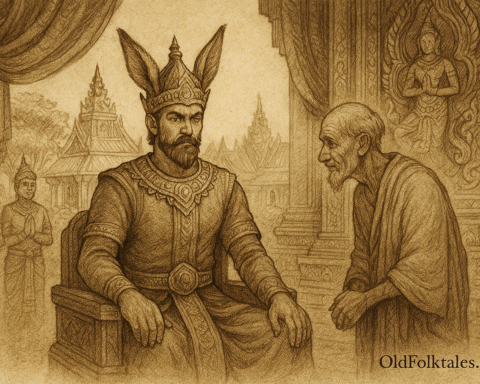
The village itself was not peaceful. The headman and two elders controlled the rice store the taxes and the land records. They demanded more grain each season than the law allowed. When villagers complained the elders blamed drought or river spirits. Anyone who argued lost their fields. Fear spread like smoke in closed rooms.
One afternoon Ko Min was sent by an old widow to gather firewood near the banyan grove beyond the rice fields. The grove was avoided by most villagers because it was said spirits lingered there. As Ko Min chopped fallen branches he heard a hollow sound not from wood but from beneath the earth. Curious he cleared leaves and soil and uncovered a small drum wrapped in faded red cloth.
Explore timeless legends from China, Japan, and Korea in our East Asian Folktales collection.
The drum was light smooth and warm as if it had been played moments before. When Ko Min touched its surface a clear voice spoke from within. It did not shout. It did not threaten. It simply said do not be afraid. Ko Min dropped the drum and fell backward. His heart raced but the voice continued calmly. It said I speak only when struck by truth. Carry me and I will help those who are wronged.
Ko Min hesitated. He was poor not foolish. Yet the voice felt steady and kind. He lifted the drum and carried it home wrapped again in cloth. That night as rain tapped the roof he struck the drum softly with his fingers. The voice returned and asked what burden weighed upon the village. Ko Min spoke of the headman the stolen rice and the fear. The drum answered then bring me where lies are spoken.
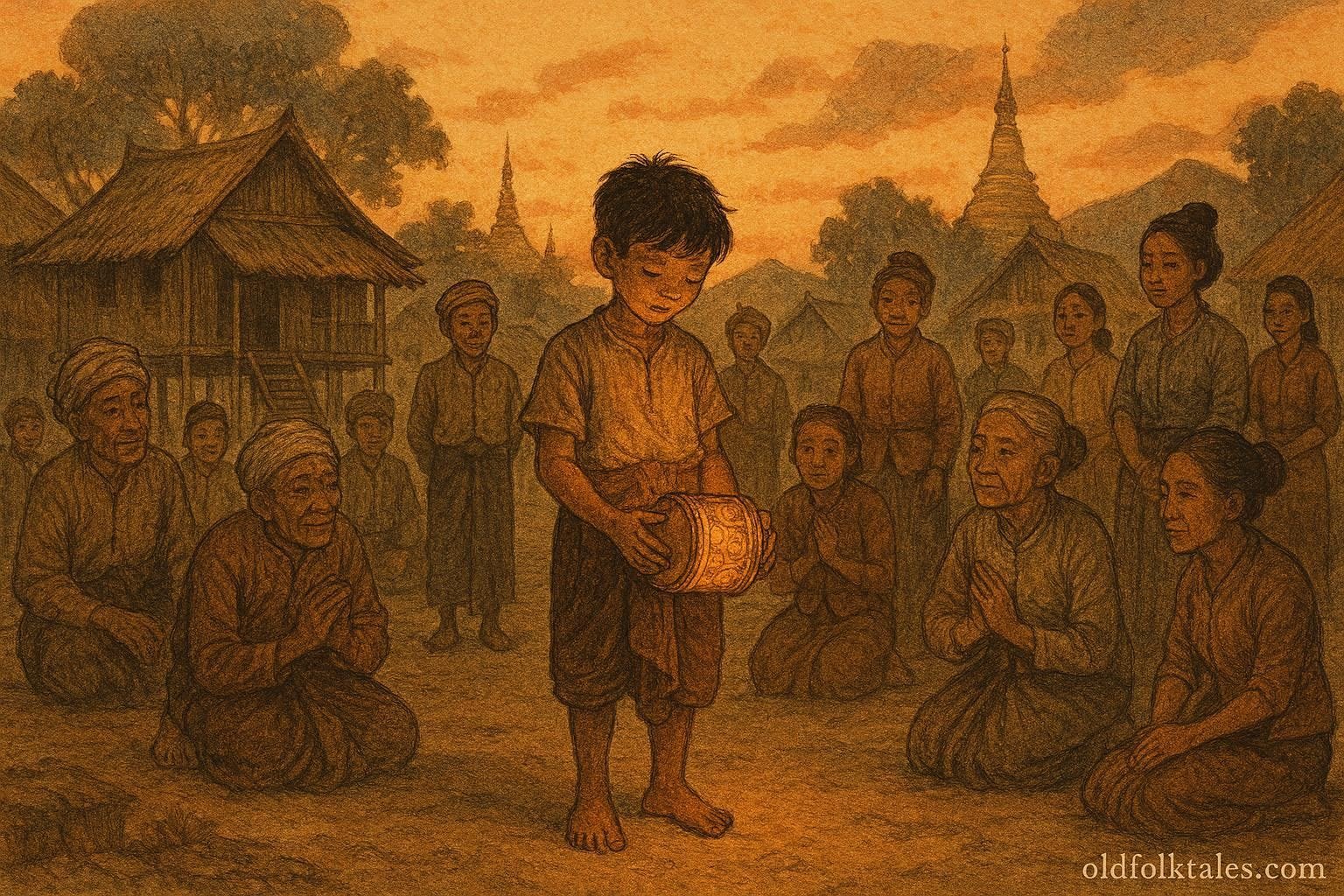
Days later the headman announced a public gathering. Taxes would increase again. Villagers gathered silently their eyes lowered. Ko Min stood at the back holding the drum beneath his arm. When the headman spoke of fairness and sacrifice Ko Min stepped forward trembling yet determined. He asked permission to speak. Laughter rippled. A poor orphan had no place among leaders. But the headman allowed it amused.
Ko Min struck the drum.
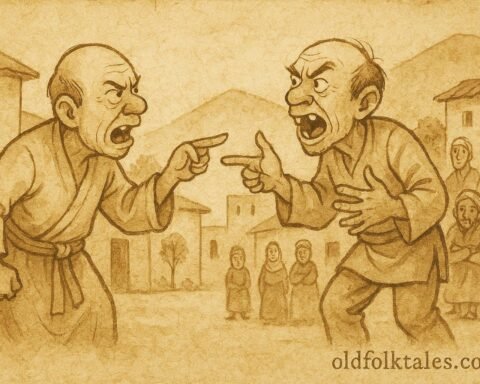
At once the drum spoke loud and clear. This man speaks falsehood. Gasps filled the air. The headman shouted and accused Ko Min of witchcraft. He demanded proof. Ko Min struck the drum again and asked the headman where last year’s rice had gone. The drum answered that it was hidden beneath the elder’s granary. Murmurs grew. Villagers rushed to check and found the stolen sacks buried deep.
The elders tried to flee but the drum revealed each lie as it was spoken. Where silver was hidden. Which records were altered. How land was taken unjustly. With every truth the drum sounded stronger. With every lie it rang like thunder.
By sunset the elders were bound and the village gathered not in fear but in clarity. The monks were called. They listened to the drum and confirmed the truth. The corrupt leaders were removed and sent away to face judgment in the district town.
In the days that followed the village changed. Taxes were reset. Rice was returned. The widow who had fed Ko Min received her land back. People smiled more freely. They invited Ko Min to live among them and offered him work and food. Yet Ko Min did not become proud. He remembered the drum’s words that truth must serve not rule.
One evening Ko Min returned to the banyan grove. He thanked the drum and asked if it would remain. The voice replied that when justice is restored the drum grows silent. Ko Min struck it one last time. No voice came. The drum was only wood again. He buried it beneath the banyan tree and returned home.
Years later when children asked how fairness returned elders told them of a poor boy who listened to truth and a drum that spoke only when struck by honesty. And they taught them that justice begins with courage even in the smallest hands.
Moral Lesson:
Justice does not depend on wealth or rank but on courage and truth. When ordinary people stand firmly against dishonesty corruption loses its power. Moral truth when spoken clearly can restore balance even in the most fearful communities.
Knowledge Check:
- Why was Ko Min respected despite being poor
Answer: Because he was honest and kind - What role did the talking drum play
Answer: It revealed lies and exposed corruption - Why were villagers afraid to speak before
Answer: Corrupt leaders punished anyone who protested - How did the drum know when to speak
Answer: It spoke only when truth was struck - What happened to the corrupt elders
Answer: They were exposed removed and sent for judgment - Why did the drum fall silent in the end
Answer: Because justice had been restored
Source:
Adapted from Mandalay University Folklore Studies Archive, 2015.
Cultural Origin:
Burmese village moral folklore.