In the bustling markets of the Gulf, where the scent of incense mingled with dust and the cries of merchants rose with the heat of the day, stories were traded as freely as goods. Among these stories, none was repeated with more amusement, and more caution, than the tale of Dhalilah.
Dhalilah was known across caravan routes and coastal towns as a woman of uncommon intelligence. She was not praised for virtue, nor condemned outright for deceit. Instead, she occupied a space that unsettled listeners: admired for her wit, questioned for her morals, and remembered for her ability to survive by words alone.
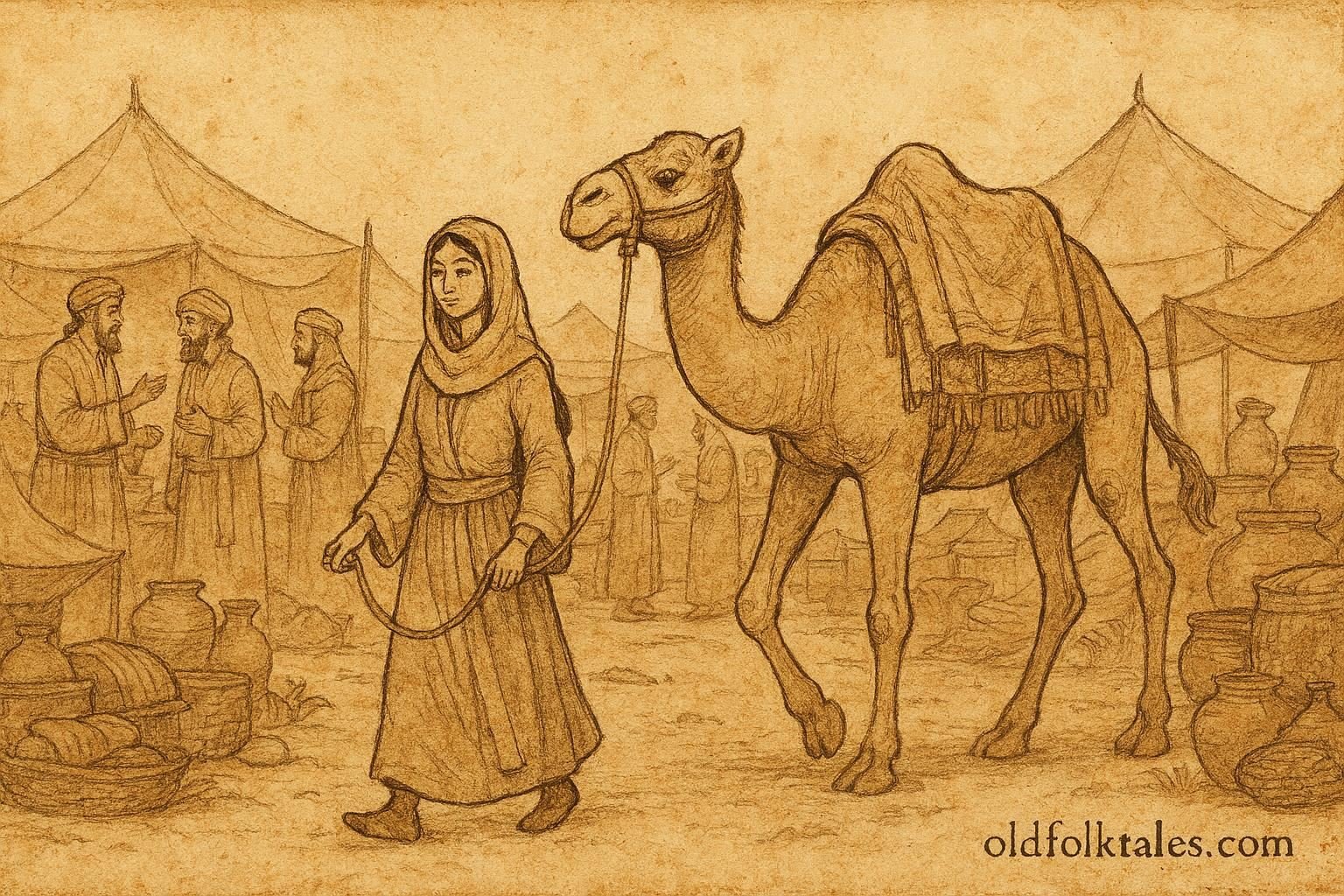
One of the most famous stories told about her took place during a crowded market day, when traders from distant regions gathered to buy, sell, and bargain beneath makeshift awnings. On that day, Dhalilah arrived leading a camel of remarkable beauty. Its coat was well kept, its gait steady, and its eyes calm and alert. Such a camel promised wealth, strong enough for trade caravans, valuable enough to elevate its owner’s standing.
Dhalilah tethered the camel near the market entrance, where foot traffic was heavy. She spoke little at first, allowing curiosity to draw attention. Soon, a merchant approached, inspecting the animal with practiced care. Dhalilah praised the camel modestly, never exaggerating, never appearing eager. When the merchant named a price, she accepted without argument. They agreed to finalize the exchange before sunset.
Before the deal could be sealed, another buyer arrived, this one a traveler preparing for a long journey. To him, Dhalilah spoke of the camel’s endurance and calm nature, ideal for harsh terrain. Again, a price was named, slightly higher than the first, and again she agreed, setting a later hour to conclude the sale.
As the day unfolded, Dhalilah repeated this pattern. To each buyer, she tailored her words carefully, never lying outright, but shaping truth to fit expectation. Each agreement was made in good faith, supported by social custom: a verbal promise carried weight, and it was considered improper to press too hard in public.
By late afternoon, several men believed they had purchased the same camel.
Dhalilah, meanwhile, moved through the market with ease. She greeted acquaintances, shared tea, and listened more than she spoke. As sunset approached and the call to prayer echoed across the stalls, buyers returned one by one to claim what they believed was rightfully theirs.
Confusion followed.
Voices rose. Accusations flew. Each man insisted on his agreement, each certain of his claim. When they turned to Dhalilah for explanation, they found the space beside the camel empty. The rope lay loose on the ground. Dhalilah, and the camel, were gone.
Some said she vanished into the alleys of the town. Others claimed she joined a departing caravan before anyone noticed. However she left, she did so without confrontation, leaving the buyers to argue among themselves, bound by their own assumptions and haste.
In the days that followed, the story spread quickly. In some tellings, the merchants laughed at their own foolishness. In others, the tale carried sharper edges, warning of pride, greed, and misplaced trust. Dhalilah herself became larger than the act, transformed into a symbol of clever survival in a world governed by rigid customs and unspoken rules.
She was neither hero nor villain. Her story endured because it reflected a truth many recognized: intelligence can liberate, but it can also unsettle the balance between right and wrong.
Moral Lesson
The legend of Dhalilah teaches that wit and eloquence are powerful tools, capable of both survival and harm. It cautions listeners to think critically, question appearances, and recognize that cleverness without conscience leaves consequences behind.
Knowledge Check
1. Who is Dhalilah in Gulf folklore?
A cunning trickster figure known for intelligence and social manipulation.
2. What object is central to the story?
A prized camel sold multiple times in one day.
3. How does Dhalilah succeed in her scheme?
By exploiting social norms, verbal agreements, and tailored speech.
4. Why do the buyers fail to detect the deception?
They rely on assumptions and do not verify claims collectively.
5. Is Dhalilah portrayed as purely immoral?
No; she is depicted as complex, reflecting survival and satire.
6. What cultural lesson does the tale convey?
The need for caution, awareness, and ethical judgment in trade and life.
Cultural Source
Source: Analyzed in a scholarly paper by Markaz al-Dhafra for Studies and Research, comparing Emirati and Omani variants of the Dhalilah folktale cycle, rooted in Gulf oral tradition and souq culture.