Across the wide Kazakh steppe, where the land stretches endlessly beneath the sky and wealth is measured by honor rather than gold, strange wonders are said to appear to test the hearts of humankind. Among these wonders, none is more remembered than the Golden Yurt, a dwelling that shone like the sun and revealed the true nature of those who approached it.
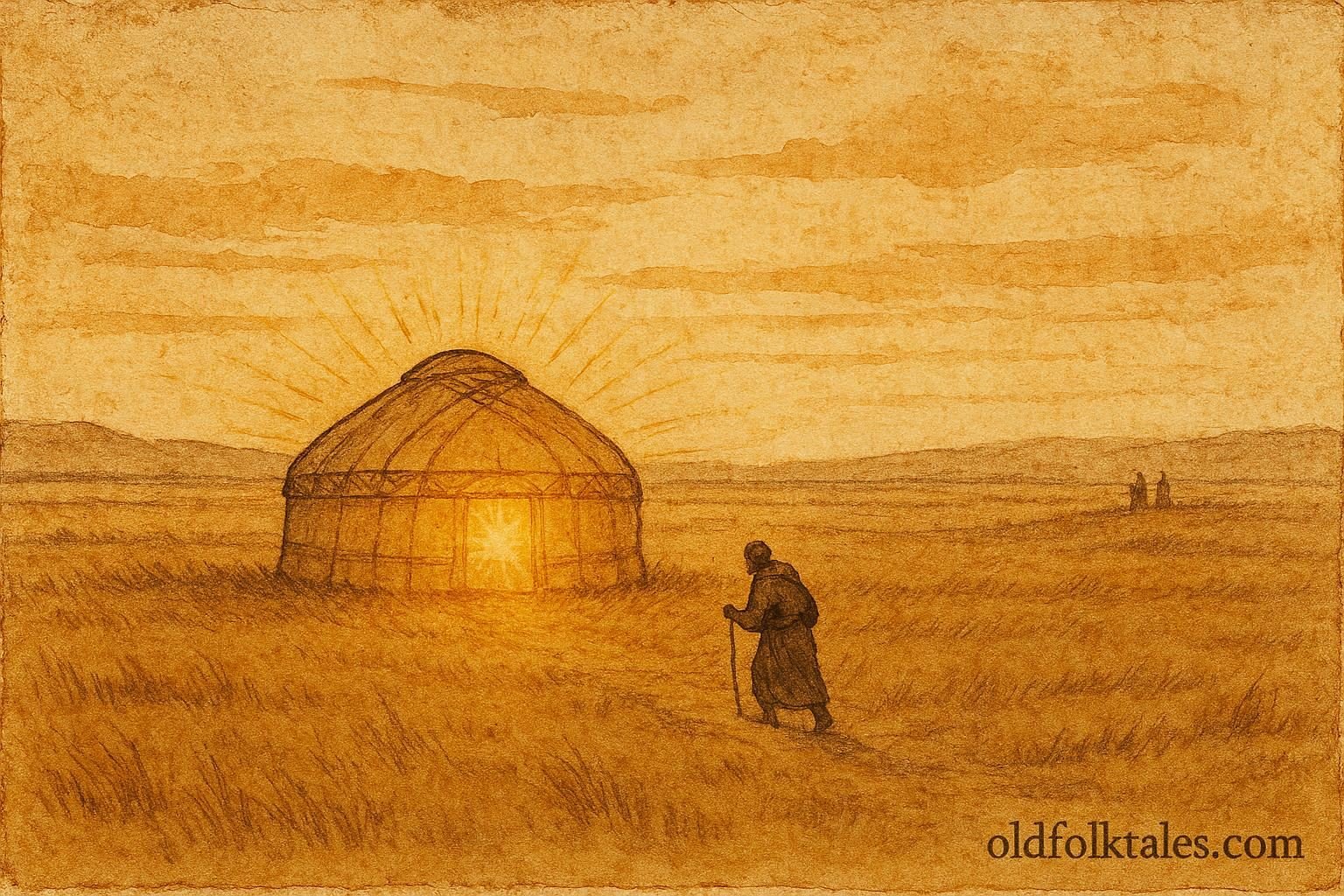
One morning, as herders guided their animals across familiar grazing grounds, a dazzling sight appeared where only empty land had stood the night before. At the center of the plain rose a yurt unlike any ever seen. Its frame gleamed as if forged from light itself, and its felt walls shimmered like molten gold. From afar, it reflected the sky so brightly that travelers shielded their eyes.
Word of the Golden Yurt spread swiftly across the steppe. People whispered that such a dwelling could only belong to spirits or contain treasures beyond measure. Greedy men, wealthy traders, ambitious warriors, and cunning opportunists, abandoned their camps and raced toward it, each believing the yurt would grant riches and power to whoever claimed it.
The first to arrive approached boldly, already imagining himself its master. Without offering respect or greeting, he pushed aside the entrance flap and stepped inside. At once, the ground trembled. The golden walls darkened, the roof groaned, and before he could retreat, the yurt collapsed into dust, leaving him alone on bare earth, humiliated and shaken.
Others followed, convinced the failure lay with the man, not with their intent. One after another, they entered with thoughts of ownership and gain. Each time, the yurt reacted the same way, vanishing, crumbling, or dissolving like mist, leaving no trace behind. The steppe itself seemed to reject their greed.
As days passed, the Golden Yurt continued to appear at dawn and disappear by sunset, resisting all attempts to possess it. Fear replaced excitement. Some claimed it was cursed; others insisted it demanded strength or cleverness. Yet none paused to question their own desires.
One evening, as the sun dipped low and the wind cooled the land, a poor traveler approached the plain. His clothes were worn, his horse thin, and his journey long. He had heard rumors of the Golden Yurt, but he did not come seeking wealth. He sought only shelter from the cold night and a place to rest his tired body.
When he reached the yurt, he stopped at a distance. Instead of rushing forward, he bowed his head in respect, as one would before entering any dwelling on the steppe. Softly, he spoke words of gratitude, for the land, for the journey, and for whatever refuge might be offered.
He entered the yurt without expectation.
Inside, there were no piles of gold, no jewels, no hidden treasure. Instead, the space was warm and peaceful. A fire burned gently at the center, food appeared enough to satisfy hunger, and blankets offered rest. The traveler slept deeply, undisturbed by dreams of gain.
At dawn, golden light filled the yurt. The traveler awoke to silence and stepped outside. The yurt still stood, radiant yet calm. As the first rays of sun touched it, the structure slowly faded, dissolving into the morning air. Where it had stood remained only the open steppe, unchanged and eternal.
The traveler continued his journey, carrying no gold, but something far greater. He had learned that true gifts are given, not taken, and that worth is measured by character rather than possession. Those who heard his story remembered the Golden Yurt not as a source of wealth, but as a mirror that revealed the hearts of men.
And so, among nomadic people, the tale endured, a reminder that the land offers shelter to those who respect it, and emptiness to those ruled by greed.
Moral Lesson
This folktale teaches that greed blinds the heart, while humility opens the door to true value. Wealth gained without respect is fleeting, but character rooted in gratitude brings lasting fulfillment.
Knowledge Check
1. What does the Golden Yurt symbolize in the story?
It symbolizes temptation and the testing of human character.
2. Why does the yurt collapse for greedy visitors?
Because it rejects selfish intent and desire for ownership.
3. Why does the poor traveler succeed where others fail?
He enters with humility and gratitude, not greed.
4. Does the yurt contain material treasure?
No, it offers shelter, warmth, and wisdom instead.
5. What cultural value does the story reflect?
Respect for hospitality, humility, and balance with the land.
6. How does the tale reflect nomadic ethics?
It teaches that survival depends on character, not possession.
Source: Kazakh moral-magical tales from nomadic oral literature
Cultural Origin: Kazakhstan (Kazakh fairy-tale tradition)