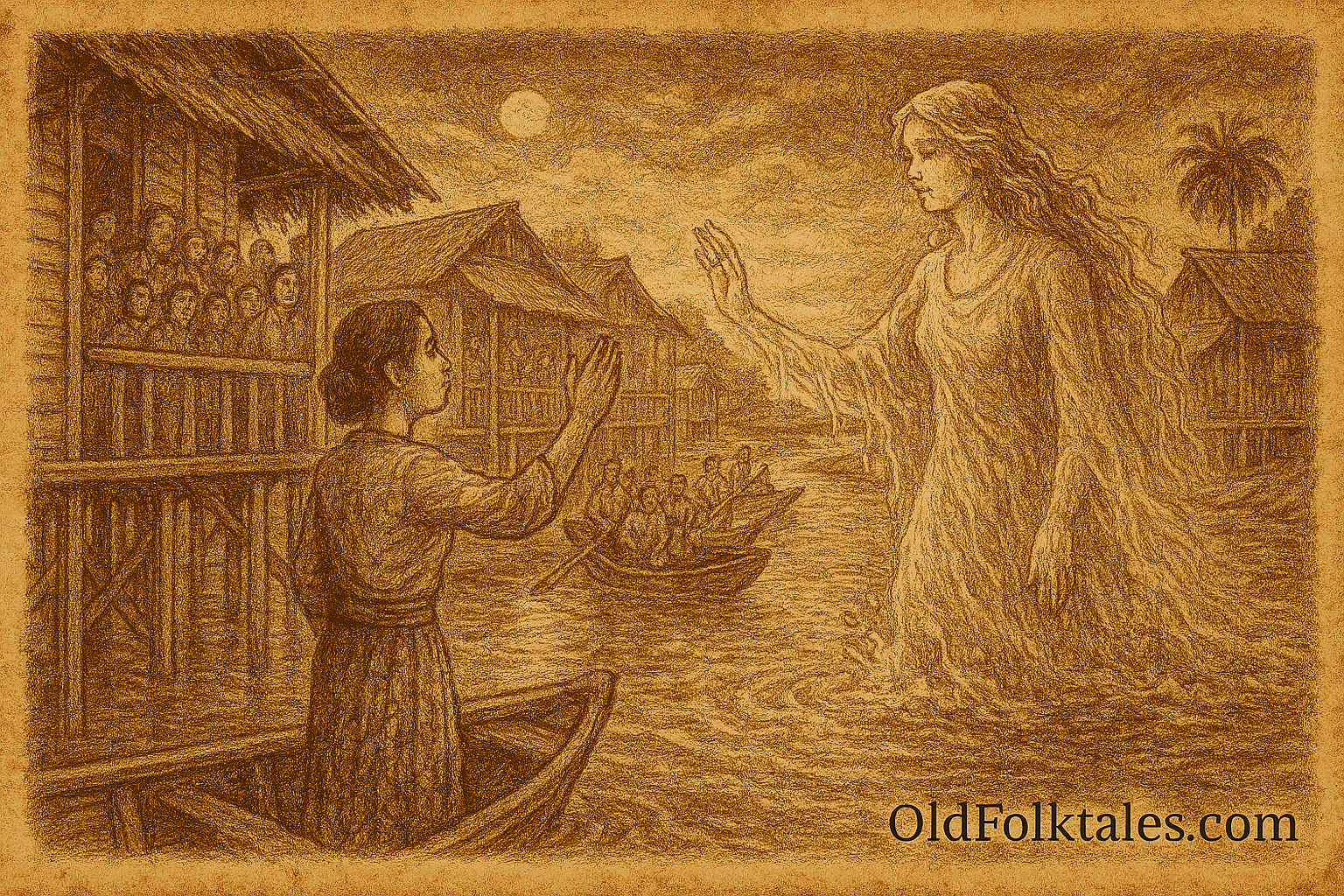
In a village along the winding Brunei River, where houses stood on stilts above the water and boats served as pathways between homes, the people lived in intimate connection with the currents that sustained them. The river provided fish for their meals, water for their crops, routes for their commerce, and coolness during the humid tropical days. For generations, the villagers had honored the river, understanding it as more than mere water but as a living presence that deserved respect and gratitude.
But as years passed and the village grew prosperous, something changed in the hearts of the people. They began to take the river for granted, treating it as an endless resource that would forever provide without need for reciprocal care. Fishermen would discard their broken nets and damaged traps directly into the water rather than repairing or properly disposing of them. Families would toss their refuse from their stilted homes, watching it splash into the river below without a second thought. Palm oil waste from upstream processing began to cloud the once clear waters.
Click to read all East Asian Folktales — including beloved stories from China, Japan, Korea, and Mongolia.
The elders noticed the change and spoke warnings. “We must respect the river,” they said, their voices carrying the weight of traditional wisdom. “There are spirits who dwell in these waters, and they will not tolerate such disrespect forever.” But the younger generation, confident in their modern ways, dismissed these concerns as old superstitions. The river was large, they reasoned. It would cleanse itself. There was no harm in their actions.
Then, on a night when the moon hung like a silver coin in the velvet sky, something extraordinary occurred. A fisherman named Ahmad was returning late from checking his traps when he heard it: a sound so mournful, so filled with grief, that it seemed to emanate from the very soul of sorrow itself. It was crying, a woman’s voice weeping as if her heart had shattered into a thousand pieces.
Ahmad stopped his boat, his paddle frozen in mid stroke. The sound came from the river itself, seeming to rise from beneath the dark surface. It echoed across the water, carrying through the night air to reach the sleeping village. One by one, people awakened, drawn from their beds by the haunting sound of inconsolable weeping.
Families emerged onto their verandahs, looking out over the river with confusion and growing fear. The crying continued, rising and falling like waves, sometimes barely a whisper, sometimes swelling into wails that made children clutch their parents and strong men feel their skin prickle with supernatural dread.
“What is this?” people whispered to one another. “Who cries with such sorrow?”
The elders, however, knew. Their faces grave, they gathered the villagers as the first light of dawn began to paint the sky. “It is the Puteri Air,” they said solemnly. “The Water Princess. She is the guardian spirit of our river, and she weeps for what we have done to her home.”
For three nights, the crying continued. Each evening, as darkness fell, the mournful sound would begin again, filling the village with unease. Mothers could not comfort their children. Fishermen found their catches dwindling to nothing. The water itself seemed to grow more turbid, as if the river shared in the spirit’s grief.
On the fourth night, a young woman named Siti, who had always been sensitive to the unseen world, stood at the edge of her family’s platform and called out to the darkness. “Puteri Air,” she said, her voice trembling but determined, “please show yourself. Tell us what we must do to ease your suffering.”
The crying stopped. The silence that followed was so profound that the villagers could hear their own heartbeats. Then, from the center of the river, a soft glow began to emerge. It grew brighter, forming the shape of a woman whose beauty was both ethereal and terrible. Her form seemed made of water itself, flowing and shimmering in the moonlight. Her face was a mask of sorrow, and tears like liquid diamonds ran down her translucent cheeks.
“Look what you have done to my home,” the Water Princess said, her voice like water flowing over stones. “Once, this river ran clear and pure. Fish swam freely in waters that sustained life. But now you treat it as a dumping ground for your waste and disregard. You have broken the ancient covenant between your people and my waters. You have forgotten the taboos, the sacred prohibitions that maintained balance and respect.”
She gestured, and the villagers saw their river as she saw it: choked with debris, clouded with pollution, the fish struggling and dying, the water plants withering. They saw how their carelessness had accumulated over months and years, transforming a living waterway into a dying one.
“I weep,” the Princess continued, “because I am bound to this river. When it suffers, I suffer. When it dies, I will fade away, and with me will go the blessings that have sustained your village for generations. Is this what you wish? To destroy the very source of your life through thoughtless disrespect?”
Shame washed over the assembled villagers like a wave. They saw clearly how far they had strayed from the wisdom of their ancestors, how their prosperity had bred carelessness, and how they had mistaken the river’s generosity for invulnerability.
Siti stepped forward again, speaking for her community. “Forgive us, Puteri Air. We have been blind and foolish. Tell us how to make amends. We will do whatever is necessary to restore your home and honor the old ways.”
The Water Princess regarded them with eyes that held both sorrow and hope. “Clean the river,” she said. “Remove the waste you have thoughtlessly discarded. Observe the old taboos: do not throw refuse into the water, do not waste what the river provides, give thanks for each fish you catch, and teach your children that the river is sacred. Do this, and my tears will cease. Fail, and I will weep until there is no water left to cry.”
With that, she dissolved back into the river, leaving only ripples that caught the moonlight.
The next morning, the entire village mobilized. Young and old worked together, using nets and boats to remove debris from the river. They recovered discarded items, cleared tangled waste, and worked until their hands were raw and their backs ached. They established new practices: designated areas for waste disposal away from the water, regular cleaning schedules, and renewed teaching of the old taboos that governed proper river conduct.
The elders taught the children the sacred prayers and rituals of gratitude. Families once again gave small offerings of flowers and rice to the river, acknowledging its spirit and expressing thanks for its gifts. The fishermen promised to take only what they needed, to use sustainable practices, and to treat every creature from the river with respect.
That night, when darkness fell, the village waited with bated breath. But no crying came. Instead, there was only the peaceful sound of water lapping against stilts, the gentle gurgle of current, and the normal night sounds of a healthy river ecosystem. In the following days, the water began to clear. Fish returned in greater numbers. The river seemed to flow more freely, as if relieved of a great burden.
Sometimes, on nights when the moon is full, villagers claim to see a shimmering figure moving through the water, but instead of weeping, she seems to be dancing, her form graceful and joyful. The Puteri Air no longer mourns, for her home has been restored, and the people have remembered the sacred bond between human community and the natural world that sustains it.
Click to read all Southeast Asian Folktales — featuring legends from Thailand, Indonesia, Vietnam, and the Philippines.
The Moral Lesson
This Bruneian folktale teaches the vital importance of environmental stewardship and collective responsibility for natural resources. It emphasizes that bodies of water are not merely resources to exploit but living ecosystems deserving respect and care. The story reflects the traditional Southeast Asian understanding that nature possesses spirit and consciousness, responding to human treatment with either blessing or withdrawal of favor. It shows that prosperity must never lead to carelessness, that ancient wisdom about environmental taboos exists for crucial reasons, and that communities must work together to repair damage they have collectively caused.
Knowledge Check
Q1: Who is the Puteri Air and what is her role in this Bruneian folktale?
A: The Puteri Air, or Water Princess, is the guardian spirit of the Brunei River. She is a supernatural being made of water itself who is spiritually bound to the river’s wellbeing. When the river suffers from pollution and disrespect, she suffers as well, and her crying serves as both an expression of grief and a warning to the villagers.
Q2: What changes in the village lead to the pollution of the river?
A: As the village grows prosperous, people begin taking the river for granted. Fishermen discard broken nets and traps into the water, families throw refuse directly from their stilted homes into the river below, and palm oil waste from upstream processing clouds the waters. The younger generation dismisses the elders’ warnings about respecting the river as old superstitions.
Q3: How do the villagers first become aware that something is wrong with the river?
A: A fisherman named Ahmad hears haunting crying coming from the river late at night. The mournful weeping continues for three nights, waking the entire village and filling them with fear. The sound is so profound and sorrowful that it affects everyone, with fish catches dwindling and the water growing more turbid.
Q4: What does the Water Princess reveal when she appears to the villagers?
A: When Siti calls out to her, the Puteri Air appears as a glowing woman made of water, showing the villagers how their carelessness has polluted the river and caused suffering to both the ecosystem and herself. She explains that she is bound to the river and when it dies, she will fade away, taking the river’s blessings with her.
Q5: What specific actions must the villagers take to stop the Princess from crying?
A: The villagers must clean the river by removing all waste, observe the old taboos including not throwing refuse into water, not wasting what the river provides, giving thanks for each fish caught, teaching children that the river is sacred, and establishing sustainable practices with proper waste disposal away from the water.
Q6: What does this tale teach about Bruneian culture and environmental responsibility?
A: The story reflects the river centered nature of traditional Bruneian life and the cultural belief that natural features possess spirits deserving respect. It teaches that prosperity must be balanced with stewardship, that traditional taboos serve important environmental purposes, and that communities must work collectively to protect natural resources. It emphasizes reciprocal relationships with nature and the understanding that human actions have spiritual and ecological consequences.
Source: Adapted from Bruneian oral folklore traditions.
Cultural Origin: Bruneian Malay tradition, Brunei Darussalam (Southeast Asia)