In the time when the land of Malaya was still young and settlers ventured inland seeking fertile ground to build their lives, a group of families traveled along a winding river that cut through the dense jungle. They were tired from their long journey, their belongings heavy on their backs, their children weary from walking. They sought a place where the soil was rich, the water plentiful, and the land generous enough to sustain their dreams of a new community.
After many days of travel, they came upon a remarkable place where the river curved in a dramatic bend. Here, the water moved with extraordinary force, churning and flowing with a power that created a constant, rushing sound. The current was strong and purposeful, carving channels through the earth with relentless energy. The Malay word for this forceful flowing was “pancur,” and the settlers watched in awe as the water demonstrated its might.
Click to read all East Asian Folktales — including beloved stories from China, Japan, Korea, and Mongolia.
The location seemed ideal in many ways. The bend in the river created flat land perfect for building. The soil along the banks was dark and rich, fed by the river’s seasonal deposits. Fish were abundant in the waters. The jungle behind provided timber for construction and game for hunting. To the travel worn families, it appeared to be exactly what they had been searching for: a place where they could put down roots and establish a thriving settlement.
Among the travelers were village elders, men and women whose hair had gone gray with the accumulation of years and wisdom. They had lived through many seasons, witnessed many floods, and understood the ways of rivers in a manner that only experience can teach. As the younger settlers began enthusiastically planning where to build their homes, the elders gathered to observe the river more carefully.
They noted the high water marks on the trees, the patterns of debris caught in branches well above the current water level, and the way the land sloped toward the river. They studied the force of the current and imagined what it might become during the monsoon rains. After much discussion among themselves, they called the community together.
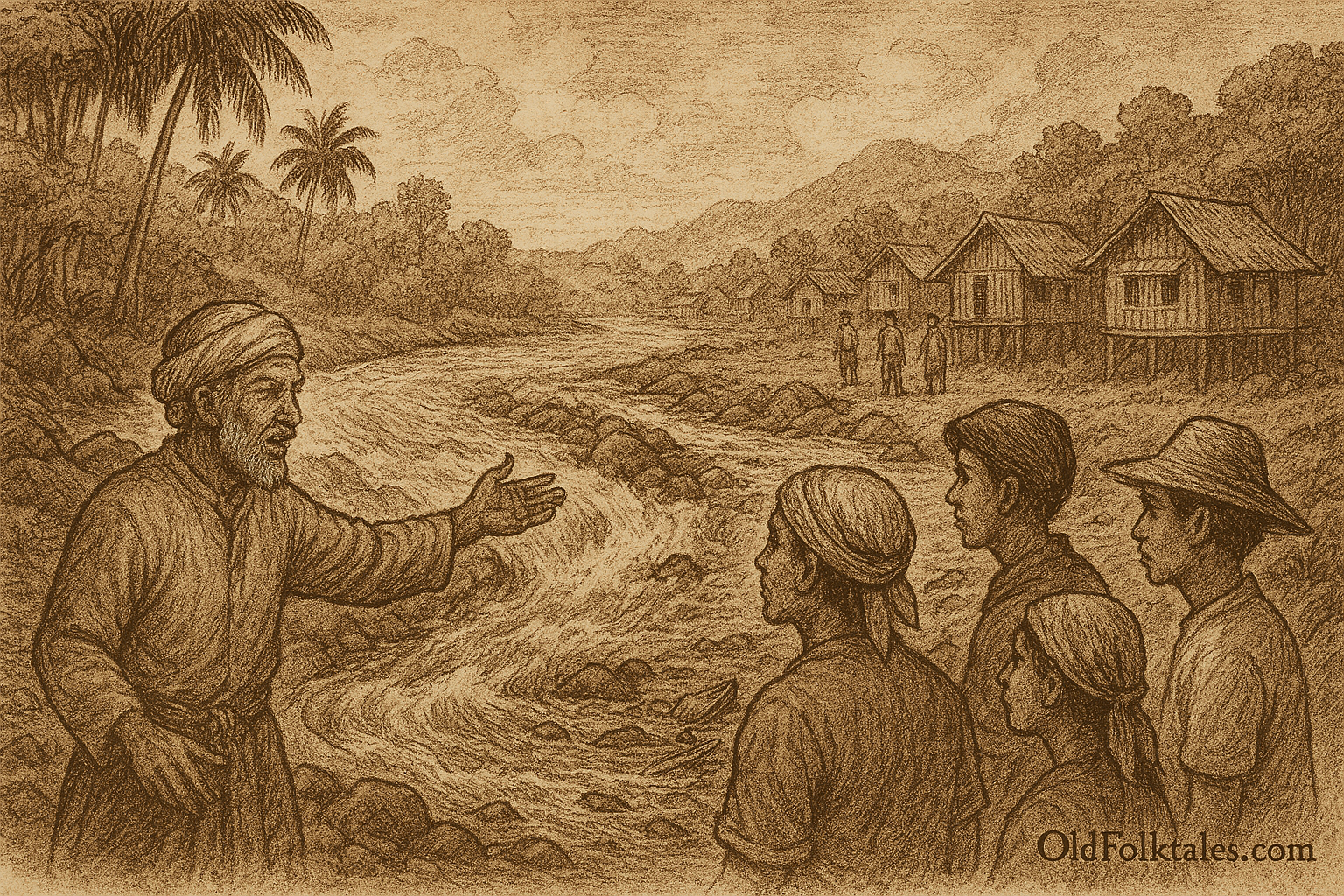
“Listen carefully,” said Pak Hassan, the eldest among them, his voice carrying the authority of age and experience. “This place has much to offer, but it also holds danger. See how powerfully the water flows? This is not a gentle river. During the rainy season, it will swell and rage. If we build too close to the water’s edge, we will lose everything when the floods come.”
He pointed to marks on the trees and explained their meaning. “Build your homes here,” he said, indicating higher ground set back from the river bank. “Yes, it means walking further to fetch water and reach your boats. Yes, it requires more effort. But when the rains come, you will be safe, and your homes will stand.”
Many of the younger settlers listened respectfully, nodding their agreement. But others, eager to begin their new lives and impatient with what they saw as excessive caution, began to whisper among themselves. The river looked peaceful enough now. The elders were being overly fearful, they said. Why should they build so far back when the riverbank was so convenient? They could have their homes right at the water’s edge, making fishing easier, boat access simpler, and water collection effortless.
“The old ones worry too much,” said a young man named Razak, his voice full of confidence. “Look at the river now. It is strong, yes, but not dangerous. We are wasting good land by building so far back.”
Others agreed with him. A group of about ten families decided they would build their homes closer to the water, ignoring the elders’ counsel. They chose spots right along the riverbank where the land was most convenient, where they could step from their doorways almost directly into their boats.
The remaining families, some from respect for the elders and others from natural caution, followed Pak Hassan’s advice. They built their homes on higher ground, set back a safe distance from the river’s edge. It required more work, more carrying of water and goods up and down the slope, but they trusted in the wisdom of those who had lived longer and seen more.
For several months, both groups lived peacefully. The families near the river enjoyed their convenient location, often teasing their neighbors who had to walk further. “See?” Razak would call out cheerfully. “We have everything right here. The elders worried for nothing!”
Then came the monsoon season. The rains began gently at first, soft showers that nourished the newly planted crops. But as weeks passed, the rainfall intensified. Day after day, heavy clouds rolled in from the sea, releasing torrents that drummed on roofs and turned paths into streams. The jungle soil, already saturated, could absorb no more.
The river began to rise. What had been a strong current became a raging torrent. The water level climbed higher each day, swelling beyond its banks with a force that was both magnificent and terrifying. The sound of the water grew from a steady rush to a roar that made conversation difficult and sleep impossible.
The families who had built near the water watched with growing alarm as the river crept closer to their doorsteps. They began moving their belongings to higher shelves, then to their roofs. But the water kept rising, flowing with the same powerful force that had given this place its character, now magnified tenfold by the monsoon rains.
One night, with thunder crashing overhead and rain falling in solid sheets, the river claimed what the elders had warned it would take. The homes built too close to the water were swept away by the flood. Families who had been sleeping scrambled onto their roofs, then had to abandon even those as the structures broke apart under the assault of water and debris. They swam and waded to higher ground, losing everything they had built but grateful to escape with their lives.
The homes built on higher ground, following the elders’ advice, stood firm. The water rose high, lapping at their foundations, but did not reach their floors. The families there opened their doors to the flood refugees, sharing what they had and offering comfort to those who had lost so much.
When the floods finally receded and the sun returned, the community gathered to rebuild. This time, there was no debate about where to construct homes. Every family built on the higher ground, following exactly the guidance the elders had originally provided. The land near the river was used for gardens and boat landings, but never again for dwellings.
As they worked together to establish their village properly, someone suggested they needed a name for their new home. Pak Hassan smiled, his eyes twinkling with a mixture of sadness for the lesson learned so harshly and satisfaction that wisdom had ultimately prevailed.
“We shall call it Kampung Panchor,” he said. “The Village of Forceful Flow. Let the name remind us always of the power of this river and the importance of respecting the wisdom of those who came before us. Let it teach our children and our children’s children that nature’s power must be respected, and that the counsel of elders, born from experience, should not be dismissed lightly.”
And so Kampung Panchor received its name, a settlement built not just of timber and thatch, but of hard learned lessons about humility, respect for natural forces, and the invaluable worth of ancestral wisdom. The village stood for generations, its homes safely positioned, its people mindful of the river’s power and grateful for the guidance that had saved them.
The Moral Lesson
This Malaysian origin tale teaches the critical importance of respecting ancestral wisdom and heeding the counsel of elders who possess knowledge gained through lived experience. It demonstrates that what may appear as excessive caution is often prudent foresight, especially regarding natural forces that younger generations may not have witnessed in their full power. The story emphasizes that convenience and immediate gratification should never override safety and wisdom, and that pride or impatience can lead to devastating consequences.
Knowledge Check
Q1: Why do the settlers choose the river bend as a location for their village?
A: The settlers choose the river bend because it offers flat land perfect for building, dark and rich soil fed by the river’s deposits, abundant fish in the waters, and nearby jungle providing timber and game. The location appears ideal for establishing a thriving settlement, with the powerful flowing water (pancur) providing resources and the land seeming generous.
Q2: What warnings and advice do the village elders give to the settlers?
A: The elders, particularly Pak Hassan, warn that despite the river’s current peaceful appearance, it will become dangerous during monsoon season. They point to high water marks on trees and debris patterns showing previous flood levels. They advise building homes on higher ground set back from the river, even though it means more effort to access water and boats.
Q3: Why do some families ignore the elders’ advice about where to build?
A: A group led by young Razak dismisses the elders as overly fearful and worrying too much. They prioritize convenience, wanting homes right at the water’s edge for easier fishing, boat access, and water collection. They see the river as strong but not dangerous and believe they are wasting good land by building far back as the elders suggested.
Q4: What happens during the monsoon season to prove the elders right?
A: Heavy rains cause the river to swell into a raging torrent that rises far beyond its banks. The homes built too close to the water are swept away by the flood. Families lose everything they built and barely escape with their lives, while the homes built on higher ground following the elders’ advice stand firm above the floodwaters.
Q5: What is the meaning and significance of the name Kampung Panchor?
A: Kampung Panchor means “Village of Forceful Flow,” referring to the powerful current of the river. Pak Hassan chooses this name to serve as a permanent reminder of the river’s power, the importance of respecting nature, and the value of listening to ancestral wisdom. The name teaches future generations not to dismiss the counsel of elders.
Q6: What cultural values does this Malaysian folktale emphasize about elders and wisdom?
A: The story emphasizes traditional Southeast Asian and Malaysian values including deep respect for elders whose experience provides invaluable knowledge, the importance of heeding ancestral wisdom over youthful impatience, understanding that caution born from experience is prudence rather than fear, and recognizing that convenience should never override safety. It teaches humility in the face of natural forces and the value of learning from those who have observed patterns over many years.
Cultural Origin: Malay tradition, Malaysia (Southeast Asia)