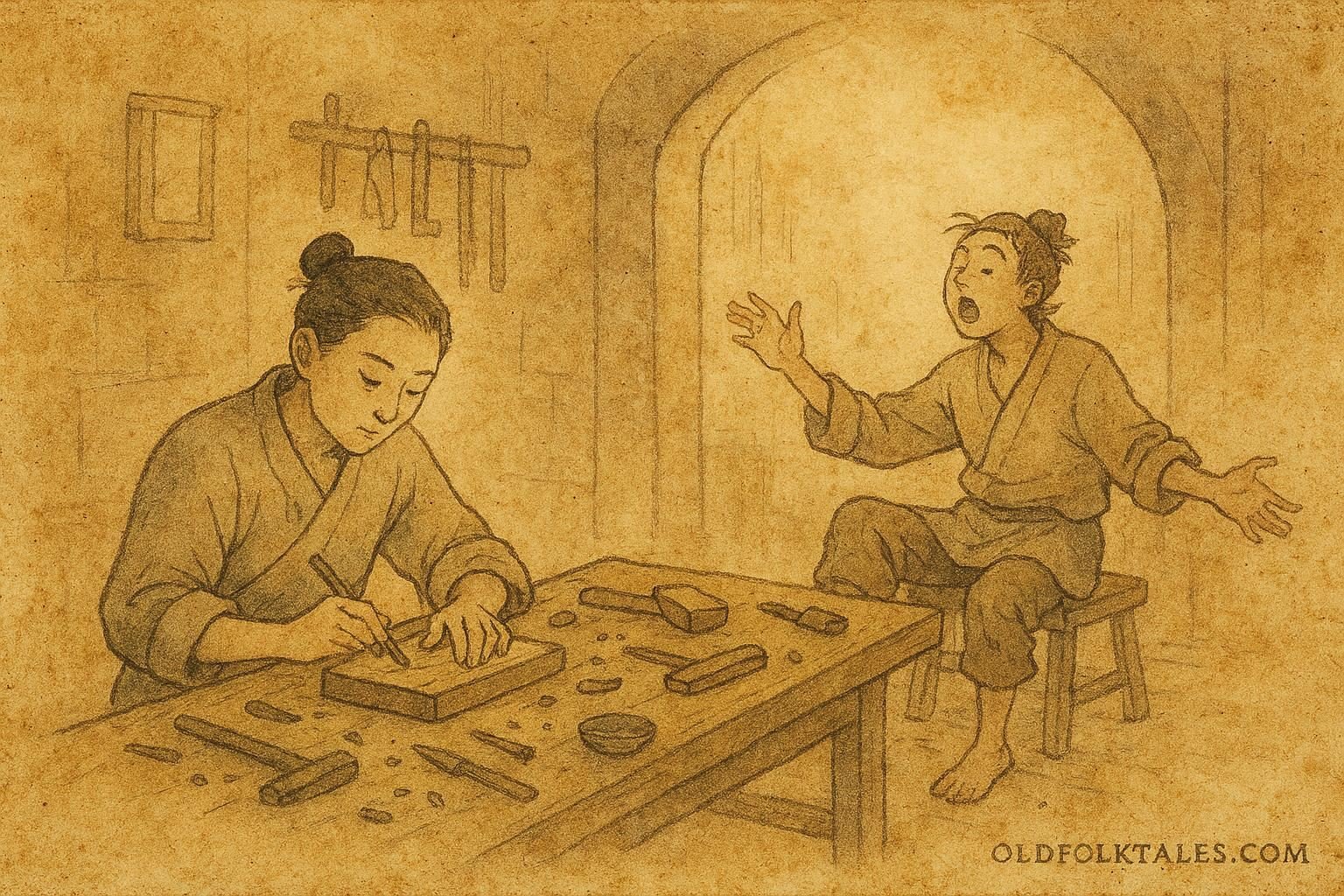
In a Syrian town known for its skilled artisans, where narrow streets echoed with the sounds of looms, hammers, and patient instruction, there once lived a master craftsman respected for both his work and his conduct. His workshop stood near the market, open to light and air, and those who passed could see careful hands shaping raw materials into objects of beauty and use. It was said that the master valued honesty and diligence as much as skill, for he believed a craft carried the character of the one who practiced it.
To this master came two young apprentices. Some said they were brothers; others said they were unrelated youths brought together by circumstance. What mattered was that both were given the same opportunity. They ate the same food, slept beneath the same roof, and learned from the same teacher. Each morning they swept the workshop floor, prepared the tools, and listened to the master’s instructions as he demonstrated the techniques of the trade.
The first apprentice approached his work with care and patience. He listened closely, asked respectful questions, and practiced long after the day’s tasks were finished. When his hands faltered, he corrected himself without complaint. He treated customers politely and shared what little he had with travelers and neighbors who passed the workshop door. Hospitality, he believed, was part of good work, for a craft existed to serve others.
The second apprentice behaved differently. Though he learned quickly when watched, he avoided effort whenever possible. He rushed his tasks, hid his mistakes, and resented correction. When customers arrived, he grew impatient, seeing them as obstacles rather than people. He mocked the kindness of the first apprentice, calling it foolish generosity that would bring no reward.
Time passed, and the master observed both youths in silence. He praised neither openly nor punished harshly, believing that conduct reveals itself without force. Eventually, circumstances required the apprentices to leave the workshop and seek their fortunes. Before they departed, the master gave each a small sum and a simple blessing, reminding them that skill alone could not sustain a person without honor.
The good apprentice traveled first. Along his road, he encountered strangers in need, an elderly man, a tired traveler, a household seeking help with honest work. Each time, he offered assistance without bargaining for gain. In return, he received guidance, shelter, or introductions to those who valued his craft. Wherever he went, his reputation grew, for his work was careful and his manner respectful. He found employment, then partnership, and eventually established his own workshop, where he trained others as he had been taught.
The bad apprentice followed a different path. He guarded his small wealth jealously and refused help to those who asked. When offered work, he demanded more than his skill deserved and blamed others when his results disappointed. His hurried craftsmanship led to broken goods and dissatisfied customers. Doors closed to him, one after another, until even those who once offered kindness turned away.
In time, both apprentices returned to the town of their training. The good apprentice arrived with modest prosperity, not displayed through excess, but evident in his calm confidence and the respect shown to him by others. The bad apprentice returned with little more than what he had carried away, worn by frustration and resentment.
The master welcomed them both. He listened to their stories without interruption. Then, without harsh words, he explained what each had already learned through experience: that a craft flourishes only when guided by integrity, and that generosity strengthens skill rather than weakens it. The good apprentice was invited to work alongside the master as an equal. The bad apprentice was offered shelter and food, but no position of trust, until he chose to change his ways.
Thus, the town remembered the lesson embodied by the two apprentices. One prospered because he honored his craft, his community, and the customs of hospitality. The other failed not for lack of talent, but for lack of character. The story was told to young learners thereafter, as a reminder that skill opens doors, but conduct determines how long they remain open.
Moral Lesson
This folktale teaches that diligence, honesty, and hospitality bring lasting success, while laziness and deceit ultimately lead to failure and isolation.
Knowledge Check
1. Who taught the two apprentices their craft?
A respected Syrian master craftsman known for skill and integrity.
2. What distinguished the good apprentice from the bad?
His patience, diligence, and commitment to hospitality and honest work.
3. How did hospitality influence the good apprentice’s success?
Acts of kindness led to trust, opportunity, and a strong reputation.
4. Why did the bad apprentice fail despite having skill?
He lacked discipline, integrity, and respect for others.
5. What role did the master play in the outcome?
He allowed experience to teach the apprentices rather than forcing judgment.
6. What cultural value does the story emphasize?
The Levantine belief in craft-honor, social reciprocity, and moral conduct.
Source
Adapted from Syrian variants of moral-apprentice tales in Arab Folktales by Inea Bushnaq, documented in Levantine folkloric tradition. Internet Archive.