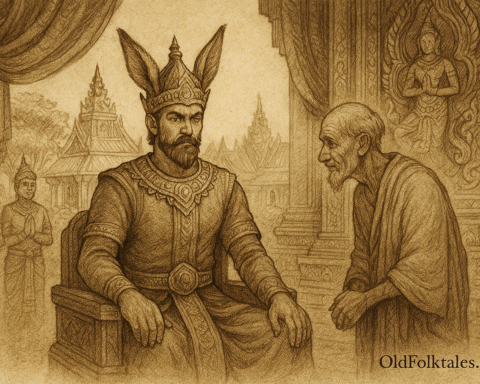
In a bustling kingdom nestled among the rolling steppes and fertile valleys of Uzbekistan, life thrived amid bustling markets, lively caravans, and sun-drenched courtyards. Yet beneath the vibrant streets, a troubling pattern had emerged: dishonesty. Citizens, merchants, and even minor officials told lies with casual ease, seeking advantage, wealth, or status. The king, though wise, found it difficult to manage the growing tide of deception.
Among the people was a young man of keen intellect, known not for wealth or status but for his sharp wit and unshakable integrity. Observing the kingdom, he noticed how lies tangled through daily life, like vines choking the roots of truth. Each exaggeration, white lie, or deliberate falsehood added to a culture of mistrust. He realized that mere admonishment would fail; he needed a plan both clever and memorable.
One morning, the young man gathered the townspeople in the central square, beneath the shade of an ancient mulberry tree. His voice rang clear: “I propose a contest of truth and lies. For every falsehood told, the speaker must answer with the truth—but beware! I follow the principle of forty lies for one lie. Deception will no longer hide in silence.”
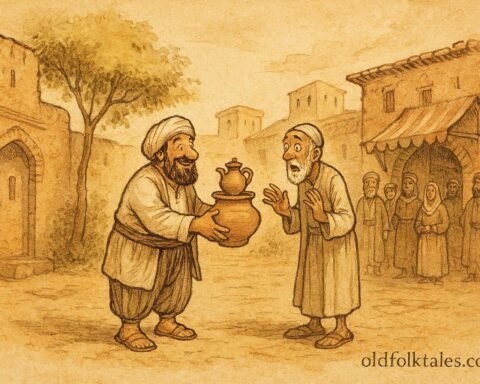
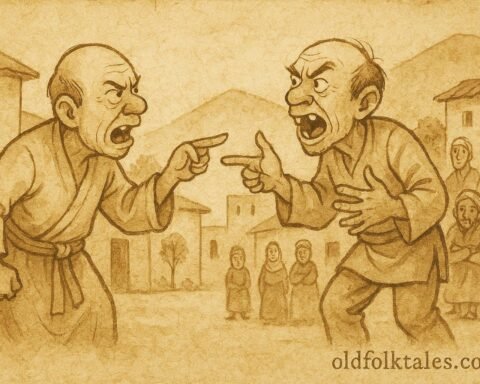
The crowd murmured, intrigued and apprehensive. Among them were boastful merchants, jealous neighbors, and officials accustomed to bending the truth. One by one, he posed riddles, questions, and challenges designed to reveal inconsistencies. A merchant claimed his silks came from the fabled markets of Samarkand, but the young man’s questions exposed the reality of local weaving. A villager boasted of slaying a wild wolf alone, only for the young man to uncover the humble truth of a shared hunt. Each exposure was met with gasps, laughter, and a growing sense of amazement.
The young man’s method was simple but brilliant: every lie demanded accountability. For every single falsehood uttered, he insisted on forty truths to balance it. The math, absurd on the surface, created a spectacle impossible to ignore. People scrambled to remember facts, to confess small exaggerations, and to weigh their words carefully. Humor interwove with discipline, as petty boasts unraveled and secret misdeeds surfaced. Some villagers laughed at their own folly; others reddened with embarrassment.
Over time, the kingdom began to shift. Citizens realized that dishonesty no longer provided advantage. The young man’s system exposed hypocrisy while reinforcing the value of honesty and transparency. Leaders who once relied on embellishment now practiced clarity. Merchants measured trade honestly, and neighbors grew cautious of false claims. The marketplace, once filled with dubious boasts, became a forum of truth.
The young man, though clever, also displayed patience and compassion. He did not humiliate or punish beyond necessity. Instead, he allowed the lessons to teach themselves through exposure, encouraging people to reconcile with truth willingly. Humor softened the sting of public accountability, making the moral lesson enduring and culturally resonant.
The story of the “forty lies for one lie” spread throughout the kingdom, told in markets, teahouses, and caravanserais. Parents recounted it to children as a reminder that deception, though tempting, inevitably leads to exposure and shame. Scholars discussed it in courts and councils, praising the young man’s ingenuity. Even the king lauded him, seeing in the clever youth the spirit of justice and communal integrity essential to governance.
Through cleverness, observation, and humor, the young man transformed his kingdom. Lies lost their power, and truth regained its value, not through fear alone, but through wit, patience, and ethical example. The kingdom flourished anew, founded on honesty, respect, and shared accountability.
Moral Lesson
This tale teaches that honesty prevails over deception. Lies may provide temporary advantage, but integrity ensures lasting respect and social harmony.
Knowledge Check
1. Who is the protagonist of the story?
A clever young man who observes and addresses widespread dishonesty in his kingdom.
2. What problem plagues the kingdom?
Citizens and officials frequently tell lies for personal gain.
3. What strategy does the young man use to reveal lies?
He implements a contest where forty truths are required for each lie told.
4. How do people respond to the contest?
Some are embarrassed, others laugh, but ultimately, they begin to value honesty.
5. What qualities of the young man help him succeed?
Cleverness, patience, observation, ethical integrity, and a sense of humor.
6. What cultural values does the tale emphasize?
Honesty, communal accountability, ethical conduct, and clever problem-solving in Uzbek society.
Source: Collected in Uzbek folk story compilations; widely referenced in oral storytelling traditions
Cultural Origin: Uzbekistan (Uzbek moral folk tale)