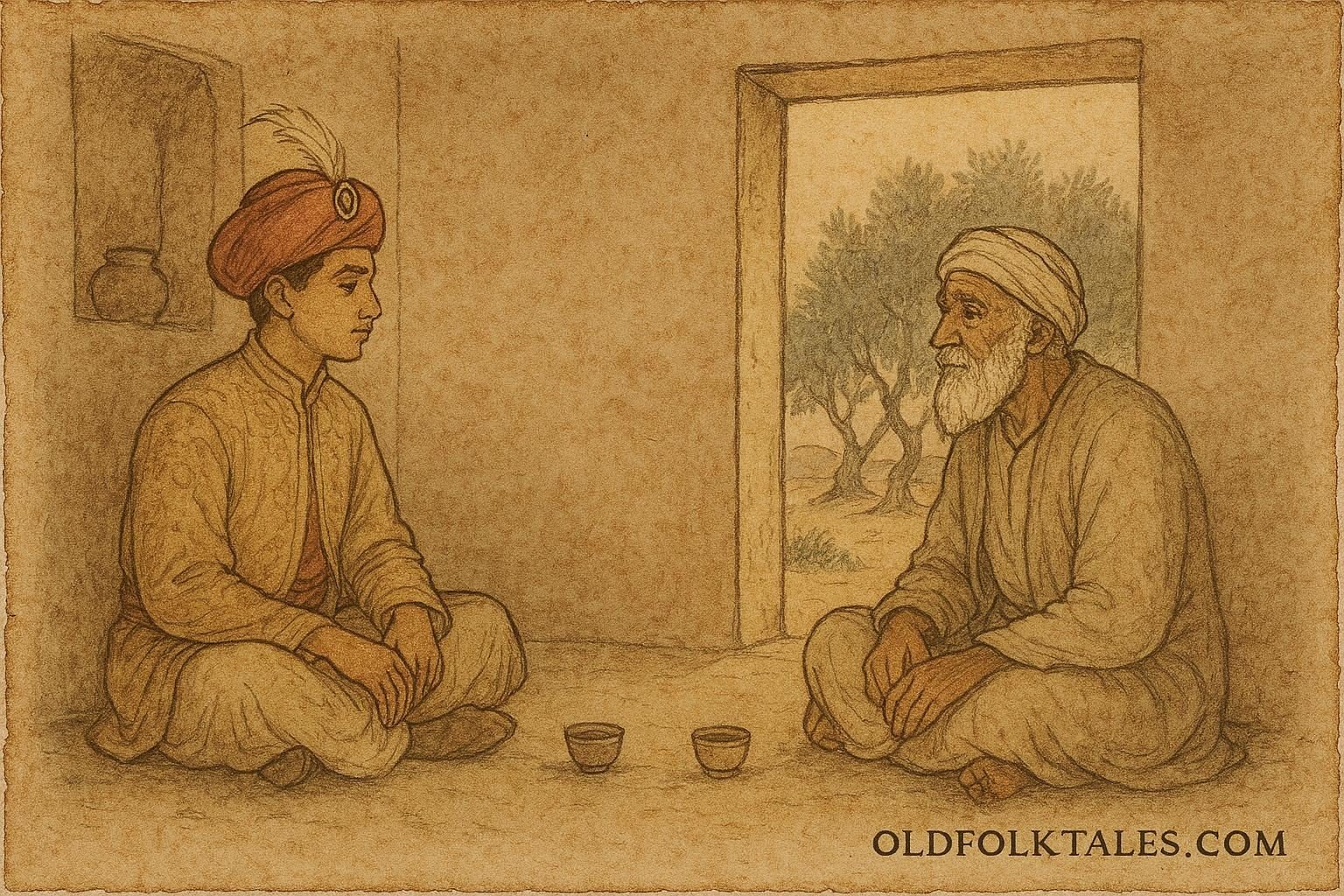
In the southern lands of Jordan, where hills of stone rise above valleys of olive trees and the wind carries both heat and memory, there ruled a young Sultan whose authority was unquestioned. He had inherited the throne early, before patience had fully settled in his heart. Though intelligent and energetic, he was quick to anger and eager to prove his strength through firm decrees. His word traveled swiftly from the palace to the most distant villages, and few dared to question it openly.
One year, during a season of hardship, the Sultan issued a harsh decree. It demanded strict tribute from the countryside and imposed penalties on those who failed to comply. The decree was announced in markets and mosques, read aloud by officials whose voices echoed against stone walls. Fear spread quickly among farmers and herders, for the burden was heavy and the time unkind.
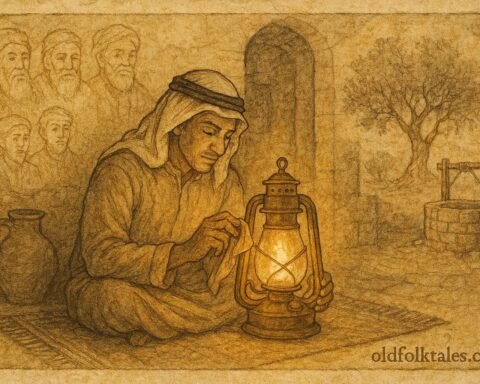
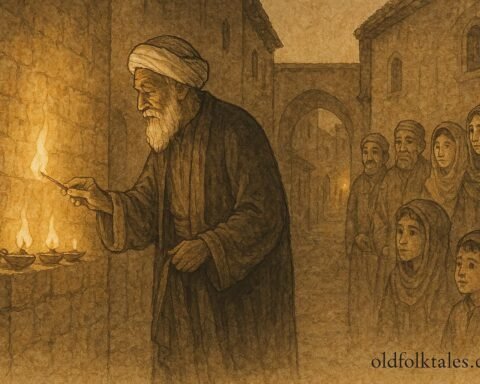
In a small village near Al-Karak lived a revered elder known as al-Shaykh al-Aqil, the Wise Old Man. His beard was white, his back bent by years, and his eyes calm with understanding. For decades he had served as a mediator in disputes, a keeper of stories, and a voice of restraint. When the villagers brought him news of the decree, they expected him to protest or send a message of complaint.
Instead, the Shaykh listened in silence. He nodded slowly, his fingers resting on a worn wooden staff. At last, he said only this: “Harsh words harden hearts. Wisdom bends them.”
Rather than challenge the Sultan publicly, the Shaykh sent a respectful invitation. He asked the Sultan to visit his humble home and share coffee, as was customary among honorable men. The invitation was framed not as criticism, but as hospitality and respect. Curious and confident in his authority, the Sultan accepted.
When the Sultan arrived, he found no signs of protest. The Shaykh welcomed him warmly, offering thick, cardamom-scented coffee and a place on simple cushions. The air was quiet, broken only by the sound of wind brushing the trees outside. For a time, they spoke of ordinary matters: the land, the people, the weight of leadership.
Only after the cups were refilled did the Shaykh begin to speak more deeply.
“Your Majesty,” he said gently, “may I tell you a small story?”
The Sultan nodded, intrigued.
The Shaykh spoke of two trees growing side by side on a hill. One was tall and rigid, proud of its strength. The other was slender and flexible, bowing easily to the wind. When a great storm came, the rigid tree resisted the wind with all its might. It snapped and fell. The flexible tree bent low, survived the storm, and stood tall again when calm returned.
The Shaykh fell silent. He did not mention the decree. He did not accuse the Sultan. He simply looked into the young ruler’s eyes.
The Sultan understood.
He sat quietly, the parable settling in his mind like dust after a storm. He realized that his decree, though powerful, risked breaking the very people he was meant to protect. Strength without wisdom could destroy trust. Authority without compassion could invite rebellion.
When the Sultan rose to leave, he thanked the Shaykh sincerely. Within days, the decree was softened. Penalties were reduced, timelines extended, and mercy emphasized. The villages breathed again.
From that time on, the Sultan ruled with greater care. He learned that true power was not in forcing obedience, but in earning loyalty through wisdom.
Moral Lesson
This folktale teaches that wisdom, patience, and gentle counsel are often more powerful than force. True leadership listens before it commands and bends before it breaks.
Knowledge Check
1. Why was the Sultan’s decree considered harsh?
It demanded strict tribute during a time of hardship, placing heavy burdens on villagers.
2. Who is al-Shaykh al-Aqil?
A respected village elder known for wisdom, mediation, and gentle diplomacy.
3. Why does the Shaykh invite the Sultan for coffee?
To counsel him respectfully without public confrontation.
4. What does the parable of the two trees symbolize?
The contrast between rigid authority and flexible wisdom.
5. How does the Sultan change after the visit?
He softens his decree and rules with greater compassion and reflection.
6. What cultural value does this story emphasize?
Al-hikma, wisdom expressed through restraint, respect, and indirect counsel.
Source and Cultural Origin
Source: Adapted from a Jordanian folktale collected in southern Jordan.
Origin: Al-Karak and Tafilah regions, reflecting Bedouin and village traditions of elder mediation.