In a quiet village tucked among the rolling hills of Jordan, where the evening wind rustled through olive groves and the air carried the scent of thyme and dust, a young child fell mysteriously ill. His small body shivered at night, eyes wide with a fear he could not speak, and his cries echoed through the simple stone house. The family was deeply worried, for no ordinary sickness seemed to cause this sudden weakness.
The child’s grandmother, a wise and respected woman whose knowledge of herbs, prayers, and old tales was known across the village, sensed the cause immediately. She knew of Umm al-Subyan, a female jinn said to trouble children during the night, drawing their strength and unsettling their spirits. Though fearsome in stories, Umm al-Subyan was not invincible; those who followed the old ways could protect their children.
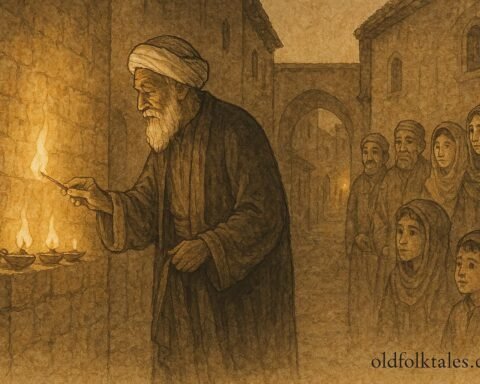
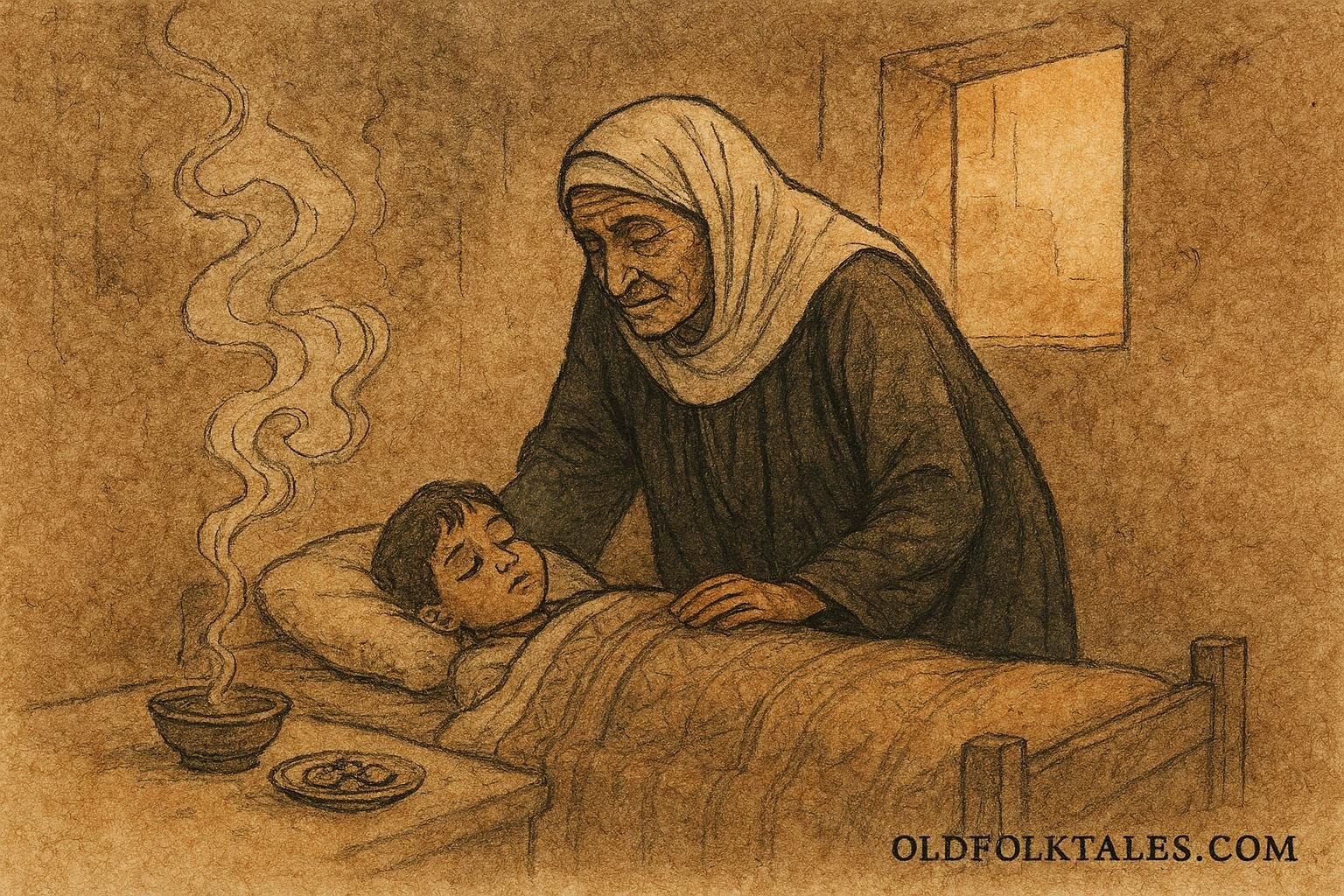
That evening, as the sun dipped behind the hills and shadows crept across the courtyard, the grandmother began the ritual. She first gathered a bundle of wild rue, its bitter scent strong and protective in the folk tradition. With careful hands, she burned the herb over a small clay brazier, letting its smoke curl around the child’s bed.
She then recited specific verses from the Quran, her voice low and steady, weaving words of protection and blessing. The child’s sobs softened as the grandmother moved through each phrase, the sacred rhythm filling the room. The ritual was not only a remedy but also a reassurance, connecting the family to their faith and the long line of ancestors who had passed down such knowledge.
Finally, the grandmother prepared a symbolic offering: a small piece of sweetened dough, delicately shaped, placed on a wooden plate. It was intended not to bribe, but to appease and honor the unseen presence, asking Umm al-Subyan to depart without harming the child. As she placed the offering, she whispered the final words of her prayer, and the house fell silent except for the gentle crackle of burning rue.
By morning, the child’s fever had broken, and his color returned. His wide eyes were no longer clouded with fear, and the household sighed in relief. The grandmother’s careful observance of tradition, combining protective herbs, sacred recitation, and symbolic offering, had safeguarded the child from harm. The story of that night would later be shared with neighbors and relatives, reinforcing the blend of faith, folklore, and communal wisdom that bound the village together.
Umm al-Subyan remained a presence in stories, a reminder of the unseen forces that shaped life in the Jordanian hills, but also of the resilience and knowledge of those who honored both spiritual and earthly care.
Moral Lesson
This folktale highlights the importance of tradition, faith, and ancestral knowledge in protecting loved ones. It shows how cultural practices and spiritual awareness coexist to safeguard both body and soul.
Knowledge Check
1. Who is Umm al-Subyan?
A female jinn in Jordanian folklore known to trouble children during the night.
2. What symptoms led the family to suspect Umm al-Subyan?
The child fell mysteriously ill, shivering at night with fear and weakness.
3. How did the grandmother protect the child?
By burning wild rue, reciting specific Quranic verses, and offering a symbolic gift.
4. What role does faith play in the story?
Faith provides the framework for protection, combining spiritual recitation with folk practices.
5. What cultural lesson does this tale convey?
It emphasizes the value of ancestral knowledge, communal wisdom, and the integration of folklore with religious practice.
6. Where is this folktale primarily told?
Across Jordan, in both urban and rural communities.
Source and Cultural Origin
Source: Adapted from Jordanian folklore documented by Al-Qadah, reflecting traditional folk beliefs and protective rituals.
Origin: Jordanian communities, urban and rural, emphasizing maternal and grandmaternal knowledge.