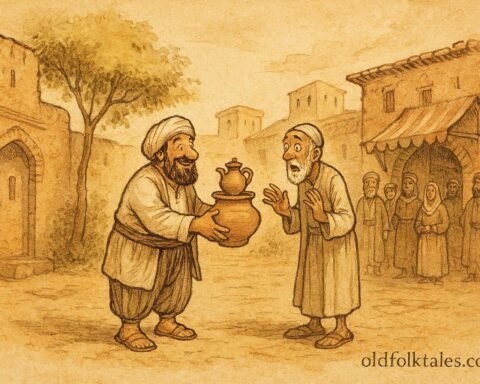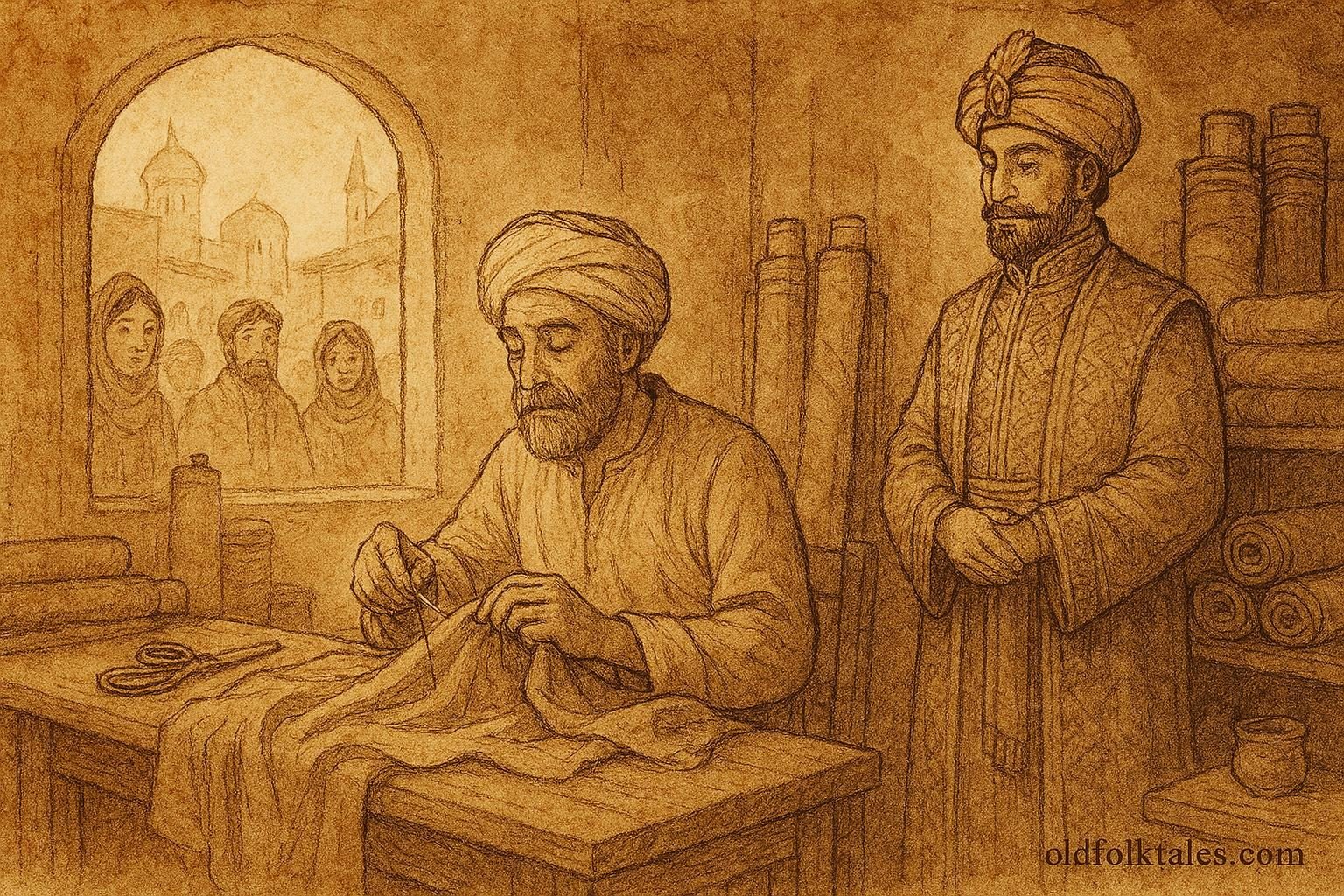
In the towns and market quarters of Uzbekistan, where narrow streets echoed with the calls of traders and the steady rhythm of looms and hammers, there lived a poor tailor named Magruf. His shop was small, no larger than a single room, with bolts of cloth stacked carefully against the wall and a low wooden table worn smooth by years of cutting and sewing. Though his clothes were simple and his earnings modest, Magruf possessed something far more valuable than wealth: a sharp mind, patient spirit, and quiet sense of honor.
Magruf was known throughout the neighborhood not only for the neatness of his stitches but for his clever tongue. He listened more than he spoke, observed more than he boasted. In a society where nobles and wealthy merchants often looked down on craftsmen, Magruf understood that survival depended on intelligence and restraint, not open defiance. He treated everyone with respect, whether a farmer seeking a patch or a lord ordering a robe.
One day, word of Magruf’s skill reached a wealthy merchant, a man famous not only for his riches but also for his cunning and love of trickery. The merchant summoned Magruf and set him an impossible task: to sew a garment that would reveal a secret known only to the merchant himself. The challenge was designed to humiliate the tailor, for the merchant assumed Magruf would fail and be shamed publicly.
Magruf accepted calmly. He bowed, took careful measurements, and asked thoughtful questions, never revealing surprise or fear. As he worked, he reflected on the merchant’s intent. The task was not about sewing at all, it was a test of wit against deceit. Rather than protest, Magruf chose a different path.
Using ordinary cloth and thread, Magruf crafted a garment of perfect balance and subtle design. When the merchant came to try it on, Magruf explained that the robe had a special quality: only an honest man could see its true beauty. If deceit lay in the wearer’s heart, the flaws would be revealed. The merchant, proud and eager to prove himself, admired the garment loudly, praising its excellence before others. In doing so, he unknowingly exposed his own dishonesty, for the crowd, aware of his reputation, understood the implication at once.
Laughter rippled through the room, not cruel but knowing. The merchant realized he had been outwitted. Yet Magruf had not insulted him directly, nor caused him physical harm. Instead, he had used clever exaggeration and moral insight to turn deception back upon its source. The merchant, chastened but unharmed, paid Magruf fairly and dismissed him in silence.
Other challenges followed. Nobles demanded clothes sewn from scarce materials, merchants insisted on impossible deadlines, and customers tried to bargain unfairly. Each time, Magruf relied on humor, illusion, and inventive thinking. He fulfilled tasks in unexpected ways, meeting the letter of each demand while revealing the folly or greed behind it. His reputation grew, not as a rebel, but as a man whose intelligence could not be exploited.
Despite his success, Magruf remained humble. He returned each evening to his modest home, content with enough food and honest sleep. He never used his wit to harm the innocent, only to protect his dignity and restore balance. To the people, he became a symbol of the everyday hero, the craftsman who proved that wisdom could stand firm even before power.
In the end, Magruf’s story spread far beyond his small shop. Parents told it to their children, merchants whispered it in bazaars, and tailors smiled as they threaded their needles. It reminded all who heard it that justice does not always wear armor or carry a sword, sometimes it holds a needle and thread.
Moral Lesson
This tale teaches that intelligence, patience, and integrity can overcome arrogance and deceit. True strength lies not in wealth or rank, but in using wit responsibly to uphold dignity and fairness in everyday life.
Knowledge Check
1. Who is Magruf in the folktale?
Magruf is a poor but clever tailor known for his intelligence and integrity.
2. What challenge does the wealthy merchant give Magruf?
He demands a garment that would reveal a secret, intending to humiliate the tailor.
3. How does Magruf outsmart the merchant?
By creating a garment that symbolically exposes dishonesty without causing harm.
4. What virtues does Magruf represent?
Wisdom, patience, humility, and moral cleverness.
5. What cultural theme is central to the story?
The Uzbek folk tradition of clever commoners achieving justice through intellect.
6. What is the main lesson of the tale?
Cunning guided by ethics is more powerful than wealth or social status.
Source: Uzbek oral storytelling; collected in local folktale compilations
Cultural Origin: Uzbekistan (Uzbek folk tale)