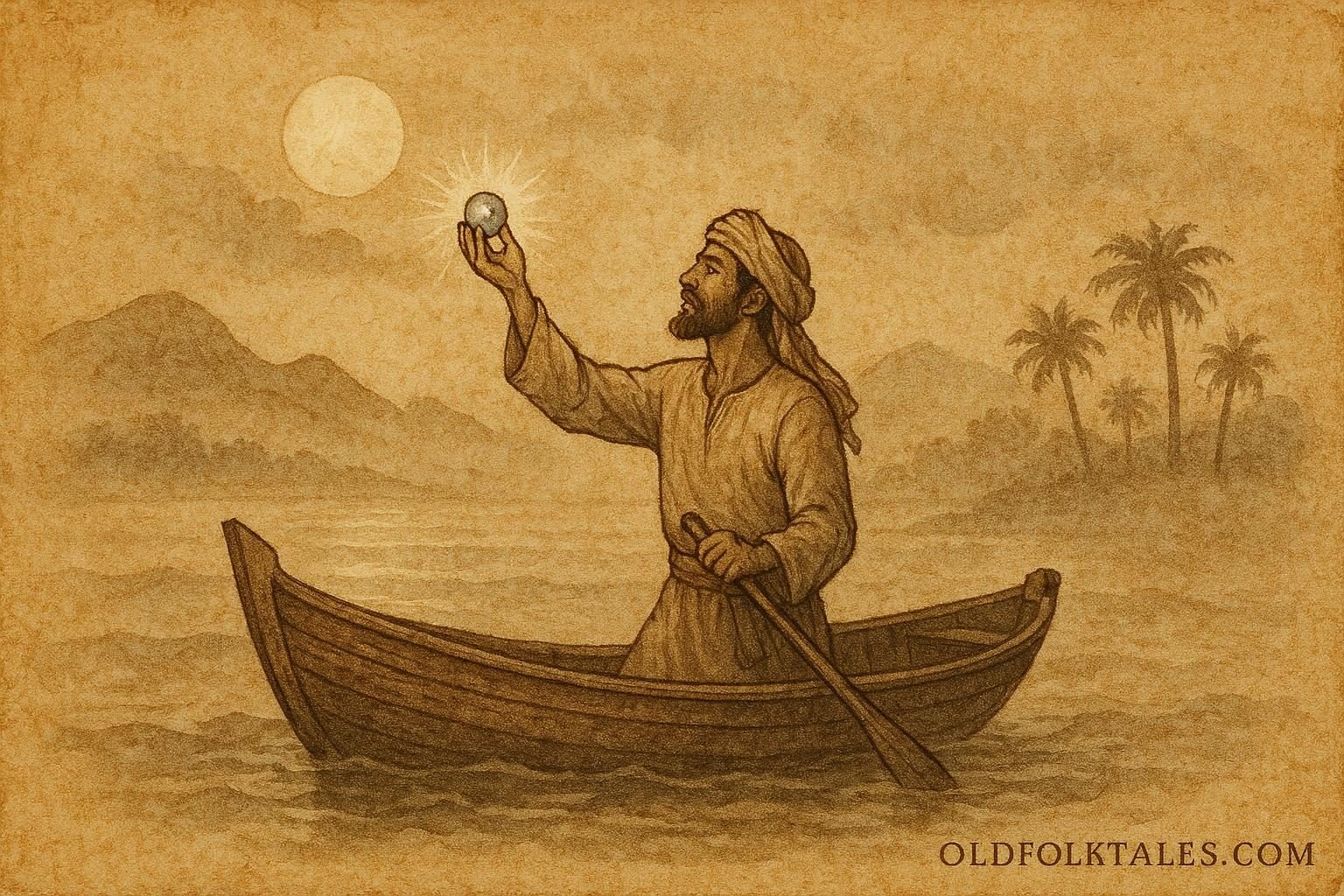
Along the windswept shores of Masirah Island, where the Indian Ocean breathes steadily against rock and sand, the people lived by the rhythm of the sea. Their days were shaped by tides and weather, and their hopes rested on the skill of their pearl divers, the ghaws who descended into the deep with little more than rope, stone, and faith. Among them all, none was more respected than Saeed.
Saeed was known for a gift that seemed almost unreal. He could hold his breath longer than any man on the island. While others returned to the surface gasping, Saeed moved calmly through the blue depths, his body steady, his mind quiet. Elders said the sea trusted him. Young boys watched from the shore, dreaming of the day they might dive as he did.
One night, during the fullness of the moon, when the badr rose round and bright above the water, Saeed dreamed a dream unlike any he had known. In it, he descended into the sea without effort. Light followed him downward, silvery and calm, until he reached a bed of black coral shaped like twisted fingers. Beneath it rested an oyster that pulsed faintly, as though it carried a living glow. When Saeed opened it in his dream, moonlight spilled into the water, soft and radiant, held within a pearl unlike any other.
He woke before dawn with the dream still warm in his chest. Saeed was not a man to dismiss such visions. On Masirah, dreams were often understood as messages, especially those that came beneath a full moon. As the sun rose, he prepared his diving gear and steered his boat toward the reef he had seen so clearly in sleep.
The sea that day was calm, its surface smooth as polished stone. Saeed tied the stone weight to his foot, whispered a quiet prayer, and slipped into the water. Down he went, past wavering light and drifting sand, until the world above became distant and silent. His lungs burned, but he pressed on.
Then he saw it. The black coral rose from the seabed just as it had in his dream. Beneath it lay an oyster larger than any he had known. With careful hands, Saeed pried it open. Inside rested a pearl that was not white or cream, but silvery and luminous, as though it had captured the moon itself. It glowed softly, lighting his face and the surrounding water.
Saeed surfaced at last, breath tearing back into his chest. He held the pearl up to the sun, but its light did not fade. The fishermen nearby fell silent when they saw it. No one spoke as Saeed wrapped it carefully and returned home.
That night, he set sail to check his nets. As darkness settled, a thick fog rolled in without warning, swallowing the horizon and blinding the familiar stars. Saeed found himself lost, the sound of waves offering no direction. Remembering the pearl, he lifted it from its cloth.
At once, it glowed brighter, sending out a gentle beam that cut through the fog like a guiding path. Saeed followed its light, rowing slowly and steadily, until the shoreline emerged before him. He reached home safely, his heart pounding with understanding. The pearl was not merely beautiful. It was a guide.
In the days that followed, Saeed realized the pearl’s true purpose. It could lead fishermen home on moonless nights, through storms and shifting currents. It was a blessing meant for the safety of the island, not for personal gain.
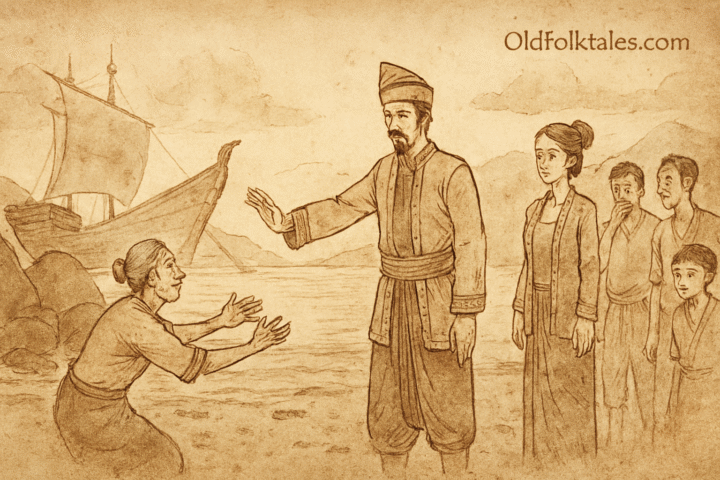
Word of the pearl traveled far across the sea routes. Eventually, an Indian Ocean trader arrived, his ship heavy with goods and ambition. He offered Saeed a chest of gold in exchange for the pearl. Saeed listened politely, then shook his head.
“This is not for sale,” he said. “It belongs to the sea and to my people.”
The trader smiled thinly, hiding his anger, and departed. That night, thieves crept toward Saeed’s boat and stole the pearl while the island slept. They fled into the dark, certain of their prize.
But as their boat moved farther from shore, the pearl began to shine with fierce intensity. Its light grew blinding, calling attention from the sky and the sea alike. The water rose suddenly, a great wave forming as though summoned by the pearl’s refusal to be owned. The wave struck the thieves’ boat, overturning it and casting the pearl back into the depths where it belonged.
The sea grew calm once more. The thieves were never seen again.
It is said that the pearl still lies beneath the waters of Masirah. On the clearest full moon nights, divers claim they can see a soft glow rising from the deep, steady and watchful. It guides those who respect the sea and reminds them that the greatest treasures are not possessions, but shared protections.
Moral Lesson
This Omani folktale teaches that true wealth lies in responsibility and restraint. Blessings meant for the community lose their power when claimed by greed, but endure when guided by care and humility.
Knowledge Check
1. Who was Saeed in the story?
Saeed was the most skilled pearl diver of Masirah Island, known for his extraordinary breath control.
2. What did Saeed see in his dream?
He dreamed of a glowing pearl beneath black coral that seemed to hold moonlight.
3. How did the pearl help Saeed?
It guided him safely through fog by emitting a soft, luminous light.
4. Why did Saeed refuse to sell the pearl?
He believed it was meant to protect his people, not to bring personal wealth.
5. What happened when the pearl was stolen?
Its light summoned a great wave that sank the thieves and returned the pearl to the sea.
6. What cultural value does the story emphasize?
Respect for the sea, communal responsibility, and the rejection of greed.
Source and Cultural Origin
Source: Oxford Arabian Stories Project, Recording OMA-017.
Cultural Origin: Masirah Island, Sultanate of Oman.