Long ago, in a kingdom where the desert steppe met flowering gardens and stone palaces shimmered beneath the sun, there ruled a king known for his strict sense of justice. Though powerful, he was troubled by one question: what truly defines worth in a person, birth, beauty, or character? Seeking an answer, he devised a test not for warriors or nobles, but for girls, believing that wisdom and courage often grow quietly.
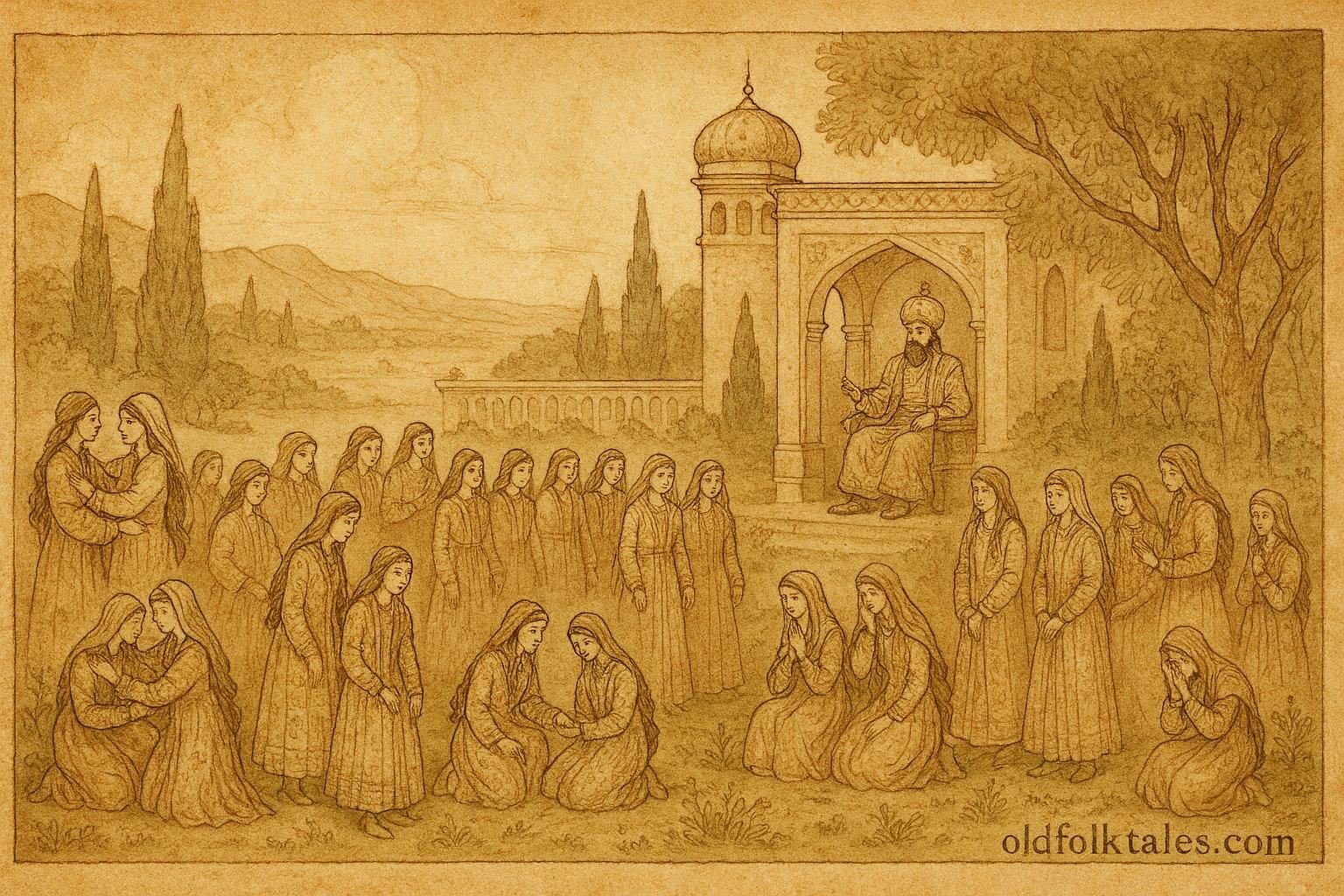
From across the kingdom, forty girls were summoned to the royal court. They came from villages, caravan towns, and distant oases, some daughters of merchants, others shepherds, gardeners, or artisans. Though their clothes differed and their hands bore different labors, all stood equal before the king.
The king addressed them from his throne. He declared that each girl would face a trial designed to test courage, loyalty, honesty, and wisdom. Those who succeeded would earn honor and reward. Those who failed would not be punished but would leave having learned a lesson meant to strengthen their spirit.
The girls listened in silence. Some trembled. Others stood firm. Among them was one girl whose calm eyes reflected thoughtfulness rather than fear.
The first trial led the girls beyond the palace walls, into an enchanted forest where paths twisted like riddles. At its entrance stood a spirit guardian who spoke only in puzzles. Each girl was asked a question, and her answer determined whether the forest would open safely or turn her back.
Many girls answered quickly, eager to prove intelligence. Yet haste led some astray, and the forest gently returned them to the edge. Others paused, listening carefully, choosing humility over pride. Several passed, including the quiet girl, who answered not with clever words, but with patience and honesty.
The second trial required the girls to cross a vast stretch of steppe, where mirages shimmered and thirst tested endurance. Along the way, talking animals appeared, foxes offering shortcuts, birds promising rest, and spirits whispering false comforts. Some girls followed these temptations and became lost, learning that easy paths often hide danger.
The quiet girl walked steadily, refusing offers that felt wrong. When she encountered another girl struggling from exhaustion, she shared her water instead of rushing ahead. Though this slowed her progress, it strengthened her resolve.
The final trial brought the remaining girls back to the palace gardens, where a riddle awaited, one that could not be solved with words alone. Each girl was asked to choose between personal reward and loyalty to others. Some hesitated. Some chose selfishly, believing success meant standing alone.
The quiet girl chose differently. She spoke of shared strength, of how girls grow stronger when they support one another. She did not demand praise or reward, only fairness.
The king listened closely. When the trials ended, he rose and declared that while many girls had shown courage, this one girl embodied all virtues combined, wisdom, loyalty, patience, and bravery.
Yet the king surprised everyone. Instead of elevating only one, he honored all forty girls, each according to what she had learned. He declared that courage appears in many forms, and that even failure, when met with humility, is a victory of the spirit.
The girls returned home transformed, not as rivals, but as bearers of wisdom. And the kingdom remembered their trials as proof that true strength lives within character, not status.
Moral Lesson
This folktale teaches that girls are defined not by appearance or rank, but by courage, loyalty, and moral choice. Wisdom grows through patience, and true honor is found in compassion and integrity rather than competition.
Knowledge Check
1. Why did the king choose girls for the trials?
To discover true courage, wisdom, and character beyond social status or strength.
2. What do the enchanted forest and riddles symbolize?
Life’s moral choices, which require patience and thoughtful judgment.
3. Why do some girls fail the trials?
Because haste, pride, or temptation leads them away from wisdom.
4. What makes the quiet girl stand out?
Her humility, loyalty to others, and calm decision-making.
5. How does the king judge success among the girls?
By moral growth and integrity, not just victory.
6. What cultural values does the story reflect?
Uzbek ideals of resilience, honesty, communal respect, and inner strength.
Source: Uzbek oral tradition; referenced in regional collections of fairy tales
Cultural Origin: Uzbekistan (Uzbek folk tale)