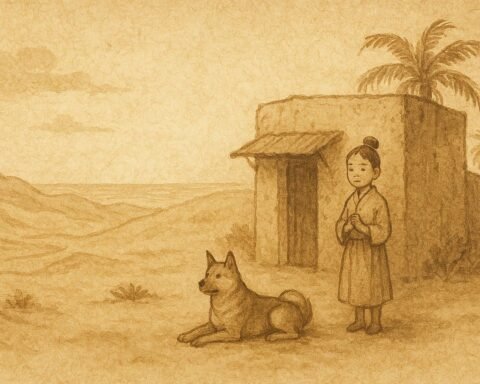
On the island of Socotra, where dragon blood trees cast twisted shadows and the sea breaks against pale limestone cliffs, the people guarded their history as carefully as they guarded their wells. Above the shoreline stood a sacred cave, known to every family on the island. Inside it were kept scrolls written by ancestors long gone, records of seasons, winds, and the careful ways water could be gathered when the rains were scarce. The cave was sealed with a heavy iron door, and its single key was entrusted to an elder whose duty was to guard it for life.
One year, without warning, the guardian elder died in his sleep. In the confusion and grief that followed, the iron key vanished. The cave remained closed, and no one could remember seeing the key since the day of the burial. The people searched the elder’s house, the paths he walked, and the stones near the cave, but the key was nowhere to be found.
Soon after, the rains failed.
Season after season passed with dry winds and cloudless skies. Springs weakened, cisterns cracked, and fields yielded little. The islanders prayed, worked harder, and waited, but the drought did not lift. As the land grew harsher, the loss of the key became more than an inconvenience. Without the scrolls, the people feared they had lost the guidance of their ancestors.
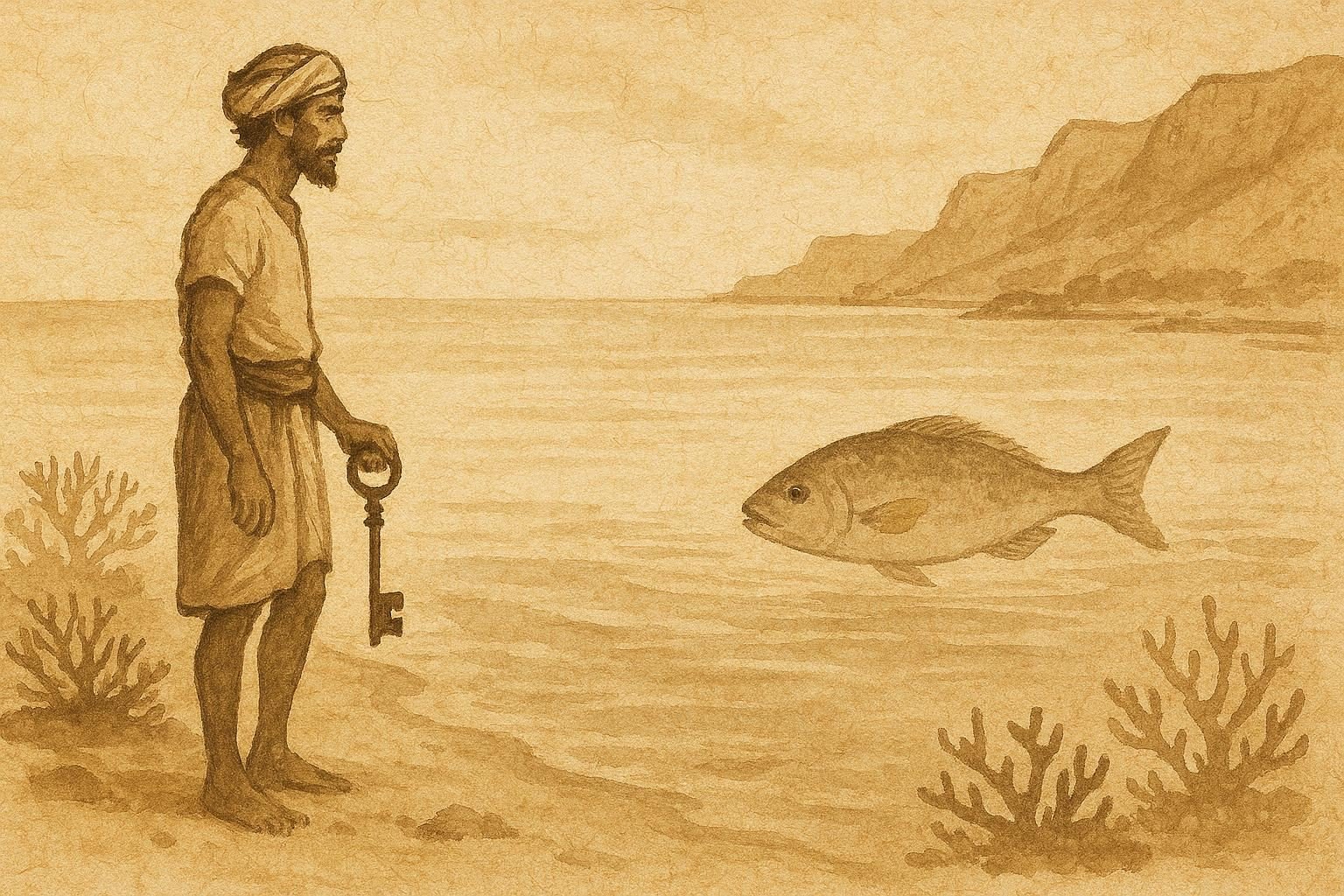
Among them lived a wise woman, known for her clear judgment and careful listening. One night, as the sea wind moved through her window, she dreamed. In her dream, she stood at the deep reef beyond the shallows, where the water darkened and the fish grew large. Before her swam a single fish marked by a golden spot on its side, shining even in the depths. A voice told her that the missing key rested within that fish.
When she woke, the image remained vivid. She called the elders and told them what she had seen. Some doubted, but others remembered old sayings of Socotra, which taught that the sea often guards what humans forget. They agreed to search for the fish with the golden spot.
A young diver volunteered. He was known for his steady breath and his patience beneath the waves. Day after day, he swam to the reef, scanning the moving schools. At last, he saw it. The fish with the golden spot glided just beyond reach, swift and alert. Each time he tried to catch it, it slipped away, vanishing into the blue.
Frustration grew, but the diver remembered the words of the wise woman. He returned the next day carrying a small flute made from a sea shell. Floating quietly above the reef, he played a gentle tune. The sound drifted through the water, soft and steady, and the fish slowed. Drawn by calm rather than fear, it swam closer.
The diver did not strike or grab. Instead, he spoke into the water, his voice low and respectful.
“I do not seek your life,” he said. “Only what was swallowed but not yours.”
The fish hovered before him. Slowly, it opened its mouth. Between its jaws, the diver saw the dull gleam of iron. With careful hands, he reached forward and drew out the key. The fish turned away unharmed, the golden spot flashing once before it disappeared into the reef.
The diver returned to shore holding the iron key aloft. The people gathered as the sacred cave was opened for the first time since the elder’s death. Inside, the scrolls lay untouched, preserved by stone and darkness. They were unrolled with reverence.
Within the writings, the people rediscovered methods their ancestors had used during earlier droughts: ways of shaping terraces, catching rainwater, and guiding runoff into hidden channels. They worked together, repairing old systems and building new ones according to the ancient knowledge.
When the rains finally returned, the water was captured and stored. Fields recovered, and the island breathed again. The people spoke of the fish with the golden spot and the wisdom of approaching loss with humility rather than force.
Moral Lesson
This folktale teaches that what is lost is often protected rather than taken away. Respect, patience, and gentle understanding can recover what force cannot.
Knowledge Check
-
What was kept inside the sacred cave on Socotra Island?
Ancient scrolls containing ancestral knowledge, especially about water management. -
Why was the iron key so important to the community?
It was the only way to access the scrolls that preserved vital survival knowledge. -
Who discovered where the key was hidden?
A wise woman who learned through a dream that the key was inside a special fish. -
What made the fish unique in the story?
It had a golden spot and lived in the deep reef near Socotra. -
How did the diver retrieve the key without harming the fish?
By calming it with music and speaking respectfully instead of using force. -
What lesson does the folktale emphasize?
That respect and patience can restore what aggression and haste cannot.
Source: Adapted from “The Fish That Swallowed the Key,” Story 22 in Yemeni Folk Tales by Amin Al-Rihani. Origin: Socotra Island, Yemen.