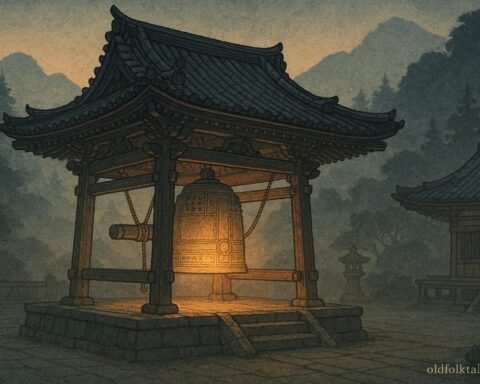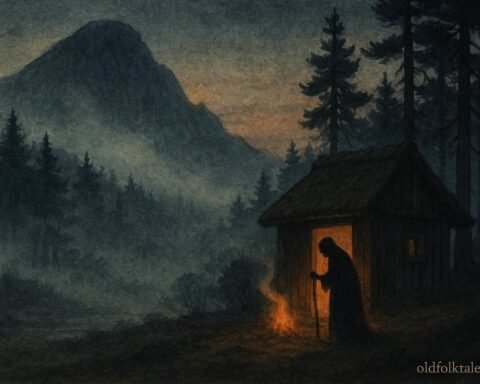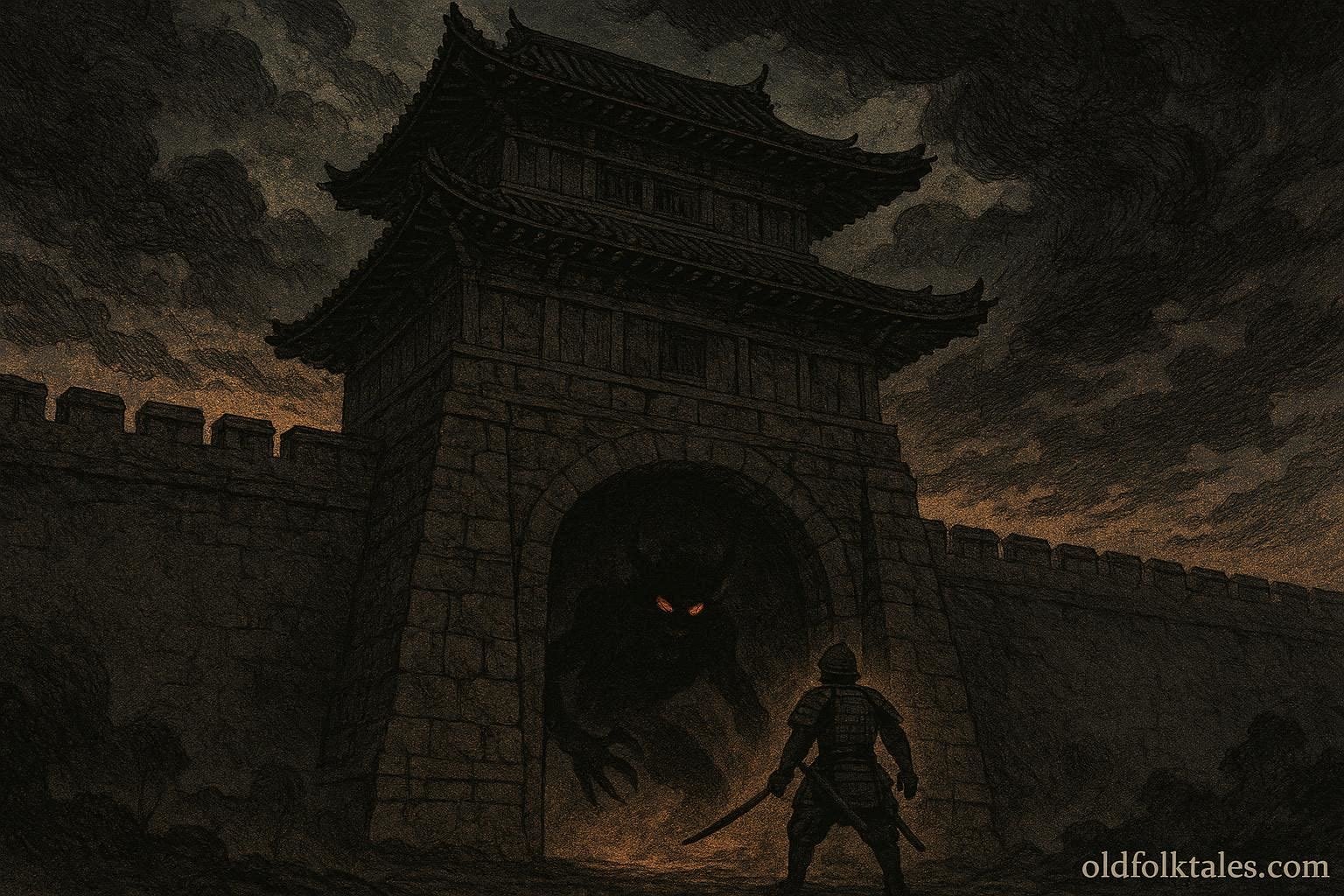
The western edge of the capital stirred uneasily at dusk. Merchants shuttered their stalls earlier than usual, monks hastened their steps, and even the dogs seemed reluctant to linger near the towering gate that marked the city boundary. Rashōmon rose above the road like a wounded giant, its pillars cracked, its roof tiles darkened by years of neglect. Though once a proud entrance to the capital, it had become a place avoided by all who valued their peace of mind.
Whispers followed anyone who passed too close. Some claimed voices echoed from the shadows beneath the gate. Others swore they had seen glowing eyes watching from the rafters. The gate no longer symbolized welcome or protection but rather the thin line between order and the chaos pressing in from beyond the city walls.
A warrior named Masanori arrived in the capital during this uneasy season. He had served provincial lords and border settlements, places where danger announced itself openly. Yet the tension he felt in the capital unsettled him more than any battlefield. Here fear was hidden behind closed doors and polite silence.
Explore ancient tales from Thailand, Cambodia, and the Philippines in Southeast Asian Folktales.
Masanori soon learned that Rashōmon stood at the center of this unease. Travelers avoided it, corpses were rumored to vanish near its base, and city guards refused to patrol its grounds after sunset. Officials dismissed the tales as superstition, yet none dared investigate.
One evening, Masanori walked toward the gate as the sky darkened. Rain began to fall, thin and cold, washing the dust from the stones. He took shelter beneath Rashōmon’s roof, listening to the wind weave through broken beams. As lightning flashed, the gate revealed its decay, splintered wood and sagging stone bearing the weight of abandonment.
From the shadows came a low voice, deep and deliberate. It questioned why a human dared stand there unafraid. Masanori tightened his grip on his sword but answered calmly. He said the city belonged to its people, not to fear.
The demon emerged slowly. Its form was massive, horned, with skin like charred stone. Its eyes burned with hunger and contempt. It claimed the gate as its domain, feeding on the corruption and neglect that allowed it to take root. The city’s decay had summoned it, just as broken vows summon storms.
Masanori did not rush to strike. He listened as the demon spoke of stolen bodies, broken laws, and officials who turned away from suffering. The demon did not deny its cruelty. It declared itself a mirror, reflecting what humans had allowed to rot.
Steel rang as Masanori finally drew his blade. He declared that chaos thrives where vigilance fades and that order demands action, not excuses. Their clash shook the gate. Sparks flew as blade met claw. Rain turned red upon the stones.
The demon was powerful, but Masanori fought with resolve sharpened by purpose. He struck not from hatred but from duty. When the demon faltered, Masanori demanded it leave the gate. With a final roar, the creature dissolved into smoke, carried away by the wind.
Silence followed. The rain eased. Rashōmon stood unchanged, yet something within it felt lighter. At dawn, rumors spread quickly. Travelers reported passing the gate safely. The air no longer felt heavy with dread.
Masanori did not remain to accept praise. He left the city quietly, knowing that the demon’s defeat was only part of the battle. The gate would demand care, justice, and attention if it were to remain free of darkness.
Officials soon ordered Rashōmon repaired. Guards resumed patrols. The people spoke openly again, remembering that neglect invites chaos just as surely as malice does.
Generations later, storytellers would say the demon never truly vanished but waited for vigilance to fade once more. Rashōmon remained a reminder that order must be defended not only with swords but with responsibility and moral courage.
Discover more East Asian Folktales from the lands of dragons, cherry blossoms, and mountain spirits.
Moral Lesson:
Evil does not always arrive uninvited. When neglect, injustice, and indifference take root, chaos finds a home. True courage lies not only in facing visible threats but in maintaining moral vigilance. Order survives only when individuals accept responsibility for protecting it.
Knowledge Check:
1 Where is Rashōmon located in the story?
Answer: At the western edge of the capital city
2 Why do people fear the gate?
Answer: It is believed to be haunted by a demon and surrounded by disappearances
3 What does the demon claim to represent?
Answer: The corruption and neglect of human society
4 Why does Masanori listen before fighting?
Answer: He seeks to understand the cause of the chaos before confronting it
5 How is the demon defeated?
Answer: Through Masanori’s courage and sense of duty
6 What lesson does Rashōmon symbolize after the battle?
Answer: That order must be actively maintained to prevent chaos
Source:
Adapted from Kyoto City Historical Folklore Archive, 2015.
Cultural Origin:
Heian period Kyoto folklore.