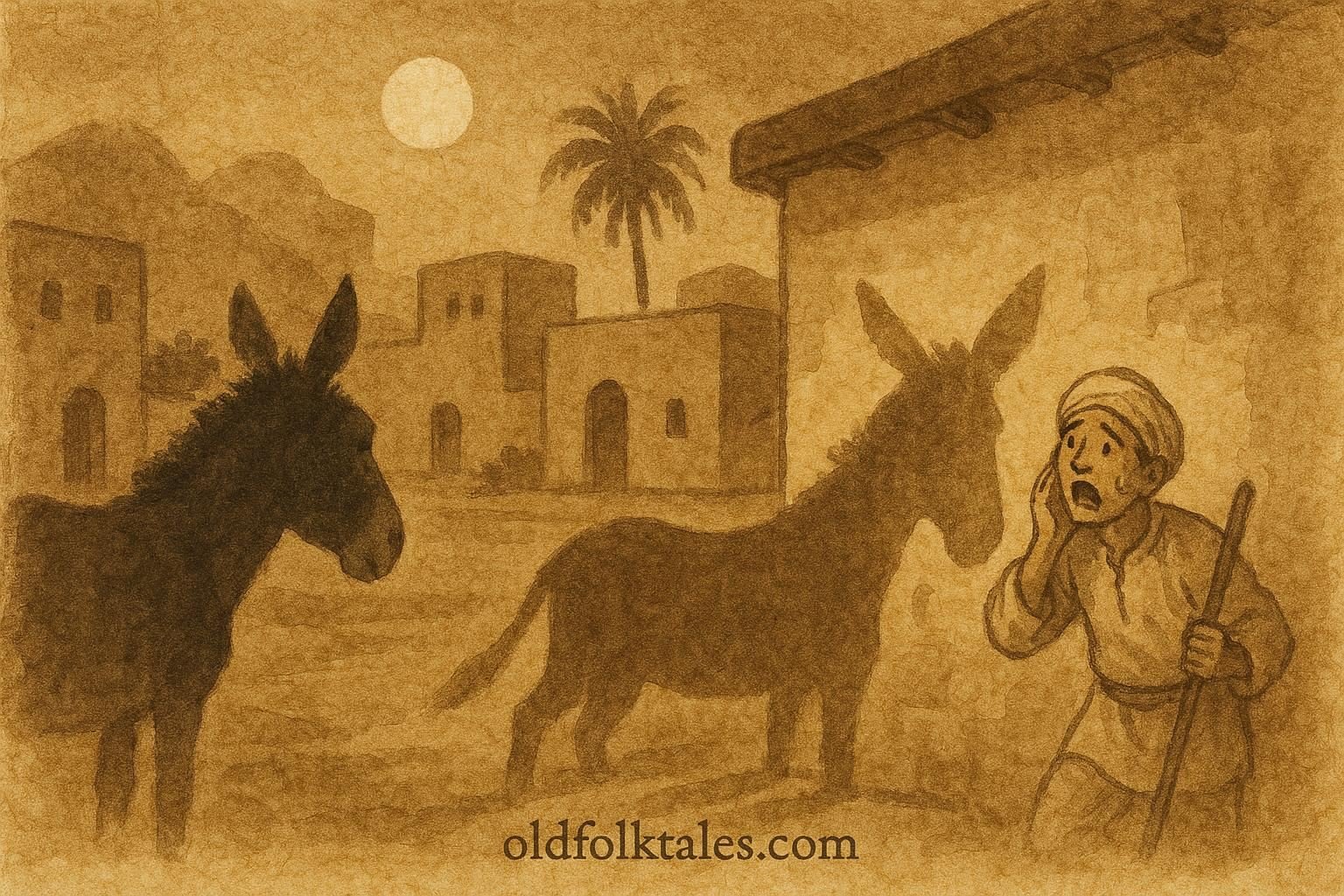
In the farming village of Malikiyah, where palm groves edged dusty fields and the call to prayer marked the rhythm of each day, there lived a man named Jassim. He owned a small plot of land and a single donkey, which he used to plow his fields, carry water, and haul produce to market. Though his livelihood depended on the animal, Jassim was known throughout the village for his hard heart. He worked the donkey from dawn until dusk and fed it little, believing that an animal needed only enough to keep moving.
Neighbors often watched in silence as the donkey’s ribs showed through its hide and its steps grew slower with each passing season. Some shook their heads, others whispered reminders of mercy, but Jassim dismissed them all. To him, the donkey was a tool, nothing more.
One summer afternoon, the heat lay heavy over Malikiyah. The air shimmered above the ground, and even the cicadas fell silent. Jassim drove his donkey across the fields under the burning sun, ignoring its labored breathing. Near the edge of the village, the animal stumbled, its legs trembling. Before Jassim could shout or pull the rope, the donkey collapsed onto the dry earth and did not rise again.
Jassim stood over the still body, irritated more than sorrowful. With night approaching, he left the donkey where it lay and returned home alone.
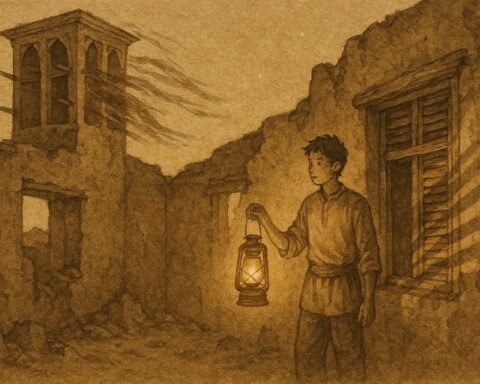
That night, as darkness settled over Malikiyah, Jassim awoke with a sudden chill. Moonlight spilled through the doorway, and on the wall before him stretched a long, unnatural shape. It was the shadow of a donkey, but no animal stood nearby. The shadow moved as if alive, lifting its head and lowering it again, silent and watchful.
Startled, Jassim lit a lamp. The shadow remained.
When he stepped outside, it followed him. When he turned, it stood behind him. No one else in the village saw it. To his neighbors, Jassim walked alone, but to him, the shadow was always there, cold and dark, clinging to his steps.
Each night, the shadow grew larger. It crept across the walls of his house and stretched along the ground like a living thing. Sleep abandoned Jassim, and fear hollowed his face. He tried to flee the village, but the shadow traveled with him. He prayed, but the shadow did not fade.
At last, driven by exhaustion, Jassim sought out a wise woman known for her understanding of old matters. She listened quietly as he spoke, her eyes steady and unafraid.
“This is not a curse without cause,” she told him. “You are being followed by what you refused to see. If you wish to be free, you must make amends to all creatures you have wronged.”
Jassim left her house uneasy but thoughtful. The next morning, he began with small acts. He filled a bowl of water for the stray cats near his door. He helped a neighbor tend to an injured goat. He offered fodder to animals that were not his own. Each act felt strange, but something within him softened.
Still, the shadow remained.
Days passed, and Jassim continued his efforts. He mended broken fences, shared grain, and spoke gently where he once shouted. Yet the shadow only paused, never disappearing.
One evening, while walking beyond the village, Jassim heard a weak braying carried on the wind. Following the sound, he found a wounded donkey trapped among rocks, its leg injured and its strength nearly gone. The sight struck him deeply, stirring a memory he had long avoided.
Carefully, Jassim freed the animal and led it home. He cleaned its wound, fed it generously, and sheltered it through the night. For the first time, he watched an animal rest in comfort because of his care.
As dawn broke, Jassim stepped outside and felt something shift. The shadow stood before him once more, larger than ever. Slowly, it moved toward the wounded donkey. As the sun rose, the shadow merged with the animal’s form and vanished, leaving only the living creature behind.
Jassim fell to his knees, overcome with relief and understanding. From that day on, he was known not for his miserliness, but for his kindness. The fields of Malikiyah still remembered the night of the donkey’s shadow, and so did Jassim, for the rest of his life.
Moral Lesson
This folktale teaches that cruelty to animals leaves lasting consequences, while sincere repentance and compassion restore balance. Kindness to all living beings is both a moral duty and a path to inner peace.
Knowledge Check
-
Where does the story take place?
In the village of Malikiyah in Bahrain. -
Who is Jassim?
A farmer known for mistreating his donkey. -
What happens after the donkey dies?
Its shadow follows Jassim and is visible only to him. -
Who advises Jassim on how to end the haunting?
A wise woman from the village. -
What action finally causes the shadow to disappear?
Rescuing and caring for a wounded donkey. -
What central lesson does the story convey?
That kindness to animals is a moral obligation with spiritual consequences.
Source: Collected by University of Bahrain anthropology students in Malikiyah (1998), published in Bahraini Oral Traditions. An animal welfare folktale reflecting Islamic teachings on mercy toward animals.