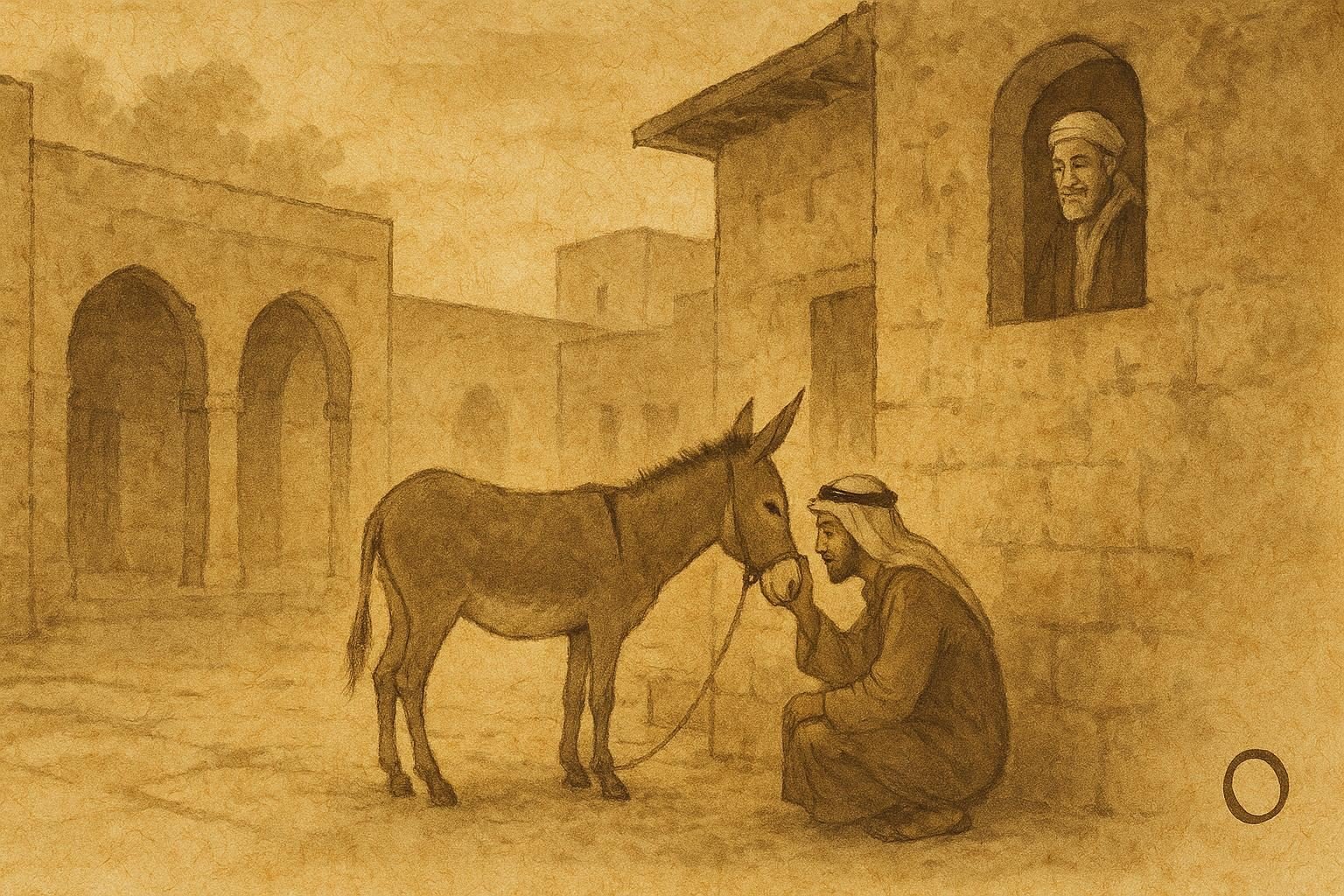
In the days when the souqs of Kuwait were shaded by woven canopies and filled with the sounds of traders calling out their goods, disputes were settled not by loud argument, but by wisdom. In one such souq, known among the people as Souq Al-Tuyour, two men arrived before the qadi, the judge appointed to uphold fairness among merchants, travelers, and townsfolk alike.
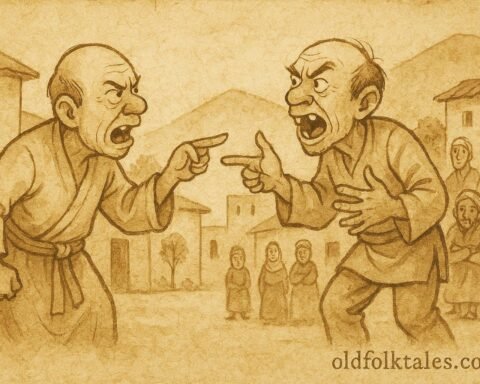
Between them stood a single donkey, a sturdy beast accustomed to carrying sacks of grain and jars of water through narrow market lanes. Both men claimed the animal as their own. One insisted that he had lent the donkey to the other as an act of kindness. The second swore that the donkey had been given to him freely, without expectation of return. Their voices rose, their hands gestured sharply, and each accused the other of deceit.
The qadi listened in silence. He was an older man, known not for quick judgments, but for careful thought. His eyes moved from the men to the donkey, then back again. He asked no questions at first. When the arguments finally exhausted themselves, he spoke calmly.
“Leave the donkey here,” he said. “Return tomorrow, and I will decide.”
The men were surprised. Some expected the judge to demand witnesses or oaths. Others thought he might examine old agreements. Yet the qadi gave no explanation. Reluctantly, the two men left the donkey tethered in the courtyard and went their separate ways, each convinced the judgment would fall in his favor.
That evening, as the sun dipped low and the souq grew quiet, the qadi positioned himself near a small window overlooking the courtyard. From there, he waited.
Not long after, one of the men returned. He approached the donkey slowly, his steps careful, as though not wishing to startle it. He stroked its neck and leaned close, whispering softly. Though no one else could hear the words, the donkey lifted its head and shifted toward him, ears relaxed, body calm. After a moment, the man departed without taking the animal, leaving it as instructed.
Later still, the second man came. He glanced around, then approached the donkey with hurried steps. He tugged at the rope and spoke aloud, urging the animal to follow him. The donkey resisted, stamping the ground and pulling away. Frustrated, the man muttered to himself and left.
At dawn, the souq stirred back to life. The two men returned before the qadi, once again presenting their claims with equal certainty. This time, the judge raised his hand, and silence fell.
“I have seen enough,” he said.
He turned to the first man. “The donkey is yours.”
The second man protested, demanding to know how such a decision had been reached. The qadi answered simply, “Ownership is not proven by loud words or sharp claims. It is revealed by care. The one who spoke with love spoke as an owner. Love reveals the owner.”
The donkey was returned to the man who had whispered to it, and the case was closed. Those who witnessed the judgment carried the story beyond the souq, repeating it in homes and gatherings as an example of true justice.
Moral Lesson
This folktale teaches that wisdom lies in observation, not argument. True ownership, like true justice, is revealed through care, patience, and sincerity rather than force or loud claims.
Knowledge Check
-
What is the dispute in the story about?
Two men argue over the ownership of a donkey. -
Who resolves the conflict?
A wise qadi serving as judge in the souq. -
Why does the judge delay his decision?
To observe the men’s behavior rather than their arguments. -
What action reveals the true owner?
He gently whispers to the donkey with affection. -
What does the donkey’s reaction symbolize?
Trust and familiarity built through genuine care. -
What lesson does the story teach about justice?
That justice is best served through insight and observation.
Source: in compilations of Kuwaiti proverbs and anecdotes, including works by Dr. Suad Al-Sabah in “أمثال شعبية كويتية”, reflecting oral wisdom traditions of Kuwait.