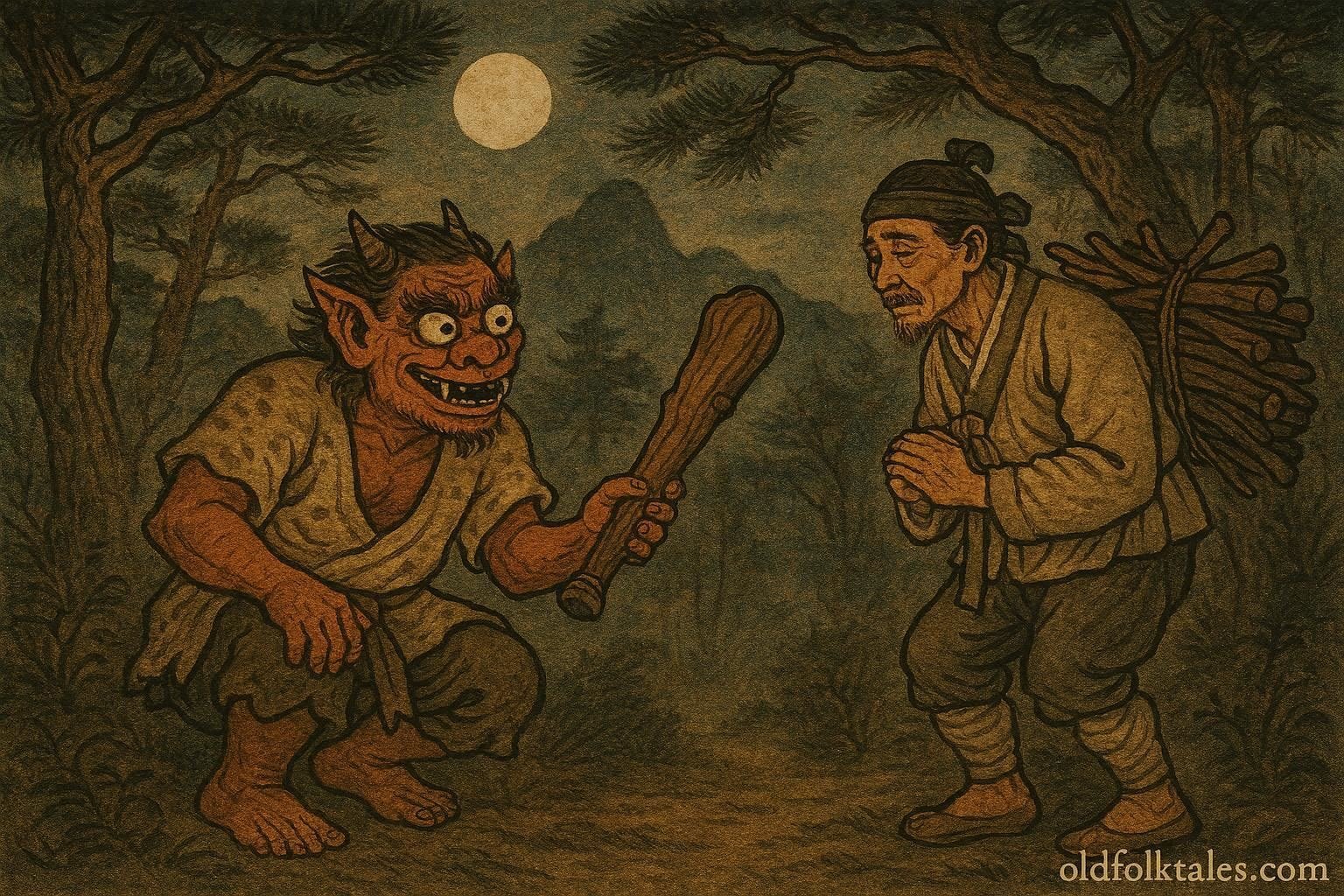
At the edge of a mountain village where pine forests thickened and mist settled early each evening lived a poor woodcutter named Dal Ho. His home was small and built of patched wood, its roof bowed by age and weather. Each morning before the sun warmed the stones of the path, Dal Ho carried his axe into the forest, cutting fallen branches and gathering firewood to sell in the market. He did not complain about his life, nor did he dream of sudden fortune. He believed that steady hands and a calm heart were enough for a man to endure.
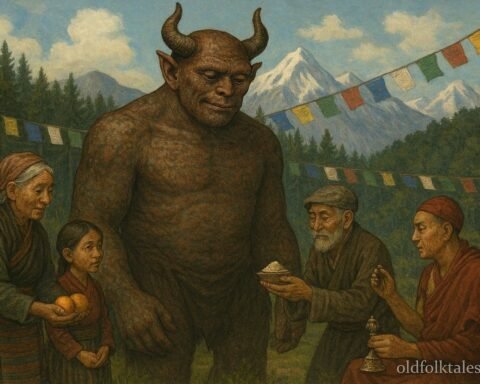
One night, after staying late in the forest to gather extra wood before winter, Dal Ho lost his way. The moon rose higher, turning the trees silver, and unfamiliar laughter echoed between the trunks. It was not human laughter. It was sharp and playful, like wood cracking in a fire. From behind a boulder leapt three dokkebi, goblins of the Korean hills, their faces red and blue, their teeth wide with amusement. They carried brass pipes and wooden clubs, and their eyes shone with mischief.
Dal Ho froze, gripping his axe. The dokkebi circled him, whispering and snickering, testing his fear. Yet Dal Ho bowed politely, as his father had taught him to bow to all beings of the mountains. He greeted them calmly and apologized for disturbing their forest. The dokkebi were startled. They expected screams or pleas, not courtesy.
Journey through enchanted forests and islands in our Southeast Asian Folktales collection.
Curious, they invited Dal Ho to sit and drink rice wine with them. Though wary, he accepted with respect, drinking only a small amount and thanking them sincerely. All night they talked, the dokkebi boasting of their tricks and Dal Ho speaking humbly of his village. When dawn neared, the dokkebi decided to reward him for his manners.
One dokkebi handed Dal Ho a wooden club, rough and unremarkable. He explained that the club could summon wealth when struck upon the ground. Dal Ho hesitated. He said he did not wish to take something that did not belong to him. The dokkebi laughed louder than before. They insisted the club was his only if he remembered balance. Wealth, they warned, obeyed the heart of its owner.
Dal Ho returned home with the club wrapped in cloth. For many days he did nothing with it. Only when his neighbor fell ill and lacked food did Dal Ho strike the ground once. Rice and coins appeared, enough to help but not excess. The village whispered in wonder as Dal Ho shared his fortune quietly. He repaired roofs, fed widows, and rebuilt the bridge after a storm.
As seasons passed, Dal Ho no longer needed to cut wood. His house grew larger, his storage jars fuller. At first, he continued his kindness. But as wealth surrounded him, fear crept into his heart. He worried others would steal from him. He locked his doors. He struck the club more often, no longer thinking of balance.
The dokkebi returned one night, unseen, watching silently. Each strike of the club now produced more than Dal Ho could store. Food spoiled. Coins piled uselessly. His neighbors grew distant, remembering the generosity that had faded. Dal Ho no longer bowed to the mountains or thanked the spirits. He believed the club belonged to him alone.
One evening, in a moment of anger, Dal Ho struck the club repeatedly, demanding more than ever before. The earth shook. Fire burst from the ground. His storerooms collapsed, burying the wealth beneath rubble. The club split in two, turning to ash in his hands.
At dawn, Dal Ho stood amid ruins. The dokkebi appeared once more, their laughter gone. They reminded him that gifts reflect the heart that holds them. Wealth without restraint becomes burden. Power without humility invites loss. With that, they vanished into the forest mist.
Dal Ho rebuilt his life slowly. He returned to cutting wood, greeting the forest each morning with respect. Though poor again, his heart was lighter. He taught the village children the lesson he learned, warning them that abundance gained without balance will always ask for payment.
Moral Lesson
The story teaches that wealth itself is not evil, but desire without restraint corrupts even the purest gift. True prosperity grows from humility, gratitude, and care for others. When greed replaces balance, fortune turns into ruin. Supernatural blessings, like life itself, respond to the character of those who receive them.
Knowledge Check
1 What kind of man was Dal Ho before he encountered the dokkebi in the forest?
Answer: Dal Ho was a poor but patient and respectful man who lived humbly, worked honestly, and accepted hardship without bitterness.
2 Why did the dokkebi decide to give Dal Ho the magical club instead of tricking or harming him?
Answer: The dokkebi were pleased by his politeness, lack of fear, and refusal to accept unearned wealth, which showed humility and balance.
3 How did Dal Ho first use the magic club, and why was its power harmless at the beginning?
Answer: He used the club only to meet basic needs and to help others, so the magic responded positively to his gratitude and moderation.
4 What changes occurred in Dal Ho’s behavior as his wealth increased over time?
Answer: He became possessive, fearful of losing wealth, stopped helping others, and allowed desire to replace gratitude.
5 Why did the magic club ultimately bring destruction instead of prosperity?
Answer: The club reflected Dal Ho’s inner greed, turning excess desire into chaos and punishment rather than blessing.
6 What central moral lesson does the story teach about wealth and supernatural gifts?
Answer: True prosperity comes from balance and restraint, and gifts gained without humility will eventually lead to loss.
Source
Adapted from National Folk Museum of Korea Dokkebi Folklore Archive
Seoul National University Korean Oral Literature Database
Cultural Origin
Korean folk belief and goblin lore