In the towns and villages of Syria, where courtyards echoed with laughter and debate, the name Djuha was spoken with a smile. He was known to everyone and fully understood by no one. Some said he was a fool who stumbled into trouble through careless words. Others insisted he was wiser than any scholar, hiding sharp insight behind absurd behavior. In truth, Djuha lived somewhere between laughter and wisdom, and it was in that space that his stories were born.
One morning, as the sun warmed the stone walls of the neighborhood, Djuha found himself in need of a large cooking pot. He had guests coming, or so he claimed, though no one ever knew whether Djuha’s explanations were true or simply convenient. He walked to the house of his neighbor, a man known for guarding his possessions as closely as a merchant guards his scales.
Djuha greeted him warmly and asked to borrow a sturdy pot, promising to return it the very next day. The neighbor hesitated, as he always did when parting with anything he owned. After a long pause and a careful look at Djuha’s smiling face, he agreed, warning him sternly to return it undamaged.
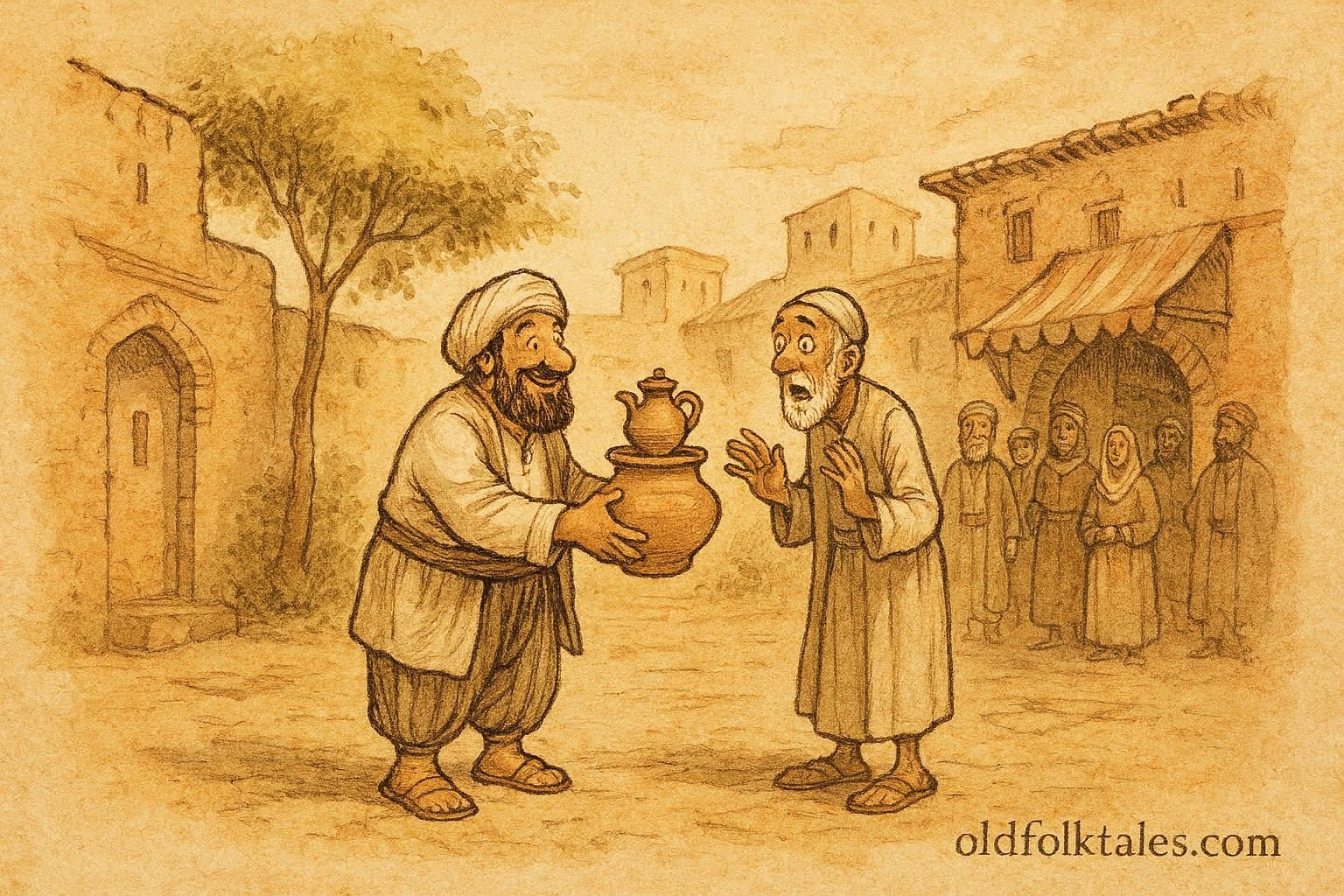
The next day, just as promised, Djuha returned the pot. But it was not alone. Nestled inside it was a smaller pot, clean and shining. The neighbor stared in confusion.
“What is this?” he asked.
Djuha looked surprised by the question. “Did you not hear?” he said calmly. “Your pot gave birth while it was with me. This is its child.”
The neighbor frowned, then laughed. The idea was ridiculous, but the smaller pot was real and useful. Greed quietly overcame reason. He accepted both pots, thanking Djuha and praising his honesty. The story spread quickly, and people chuckled at Djuha’s strange logic.
Some days later, Djuha returned to borrow the pot again. Remembering the unexpected gift from before, the neighbor handed it over eagerly, hoping for another miracle.
Days passed. Then more days. The neighbor waited, growing uneasy. Finally, unable to bear it any longer, he went to Djuha’s house and demanded his pot.
Djuha lowered his head and sighed deeply. “May Allah give you patience,” he said. “Your pot has died.”
The neighbor shouted in anger. “Died? Pots do not die.”
Djuha looked up, his expression calm and steady. “You believed it could give birth,” he replied. “Why is it so hard to believe it could also die?”
The neighbor stood speechless. Laughter erupted from those who had gathered nearby. In that moment, the truth became clear to all. Djuha had held up a mirror, not of metal but of words, reflecting the neighbor’s greed and selective belief. The man left in silence, knowing he had been outwitted not by foolishness, but by wisdom disguised as folly.
And so the tale of Djuha borrowing the pot lived on, told in markets, homes, and gatherings, reminding listeners that intelligence is not always loud, and wisdom does not always wear serious clothes.
Moral Lesson
This folktale teaches that greed blinds reason and that hypocrisy is often revealed by our own choices. Djuha’s humor reminds us to examine what we believe and why, especially when desire clouds judgment.
Knowledge Check
1. Who is Djuha in Syrian folklore?
Djuha is a comic folk character whose foolish behavior hides sharp social insight and wisdom.
2. What object is central to this story’s lesson?
The borrowed pot symbolizes greed and selective belief.
3. Why does the neighbor believe the pot gave birth?
Because his desire for gain overcomes logic and reason.
4. What technique does Djuha use to teach his lesson?
He uses satire and absurd logic to expose hypocrisy.
5. What social behavior does this story criticize?
Greed, double standards, and blind self interest.
6. Why are Djuha stories important in Syrian culture?
They use humor to teach moral lessons and social awareness.
Cultural Source and Origin
Source: Adapted from Syrian oral variants of Djuha tales in Tales of Juha: Classic Arab Folk Humor, edited by Salma Khadra Jayyusi, Interlink Books.
Origin: Pan Arab folk tradition with widely told Syrian variants.