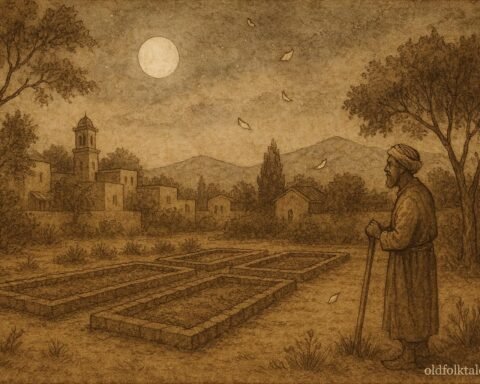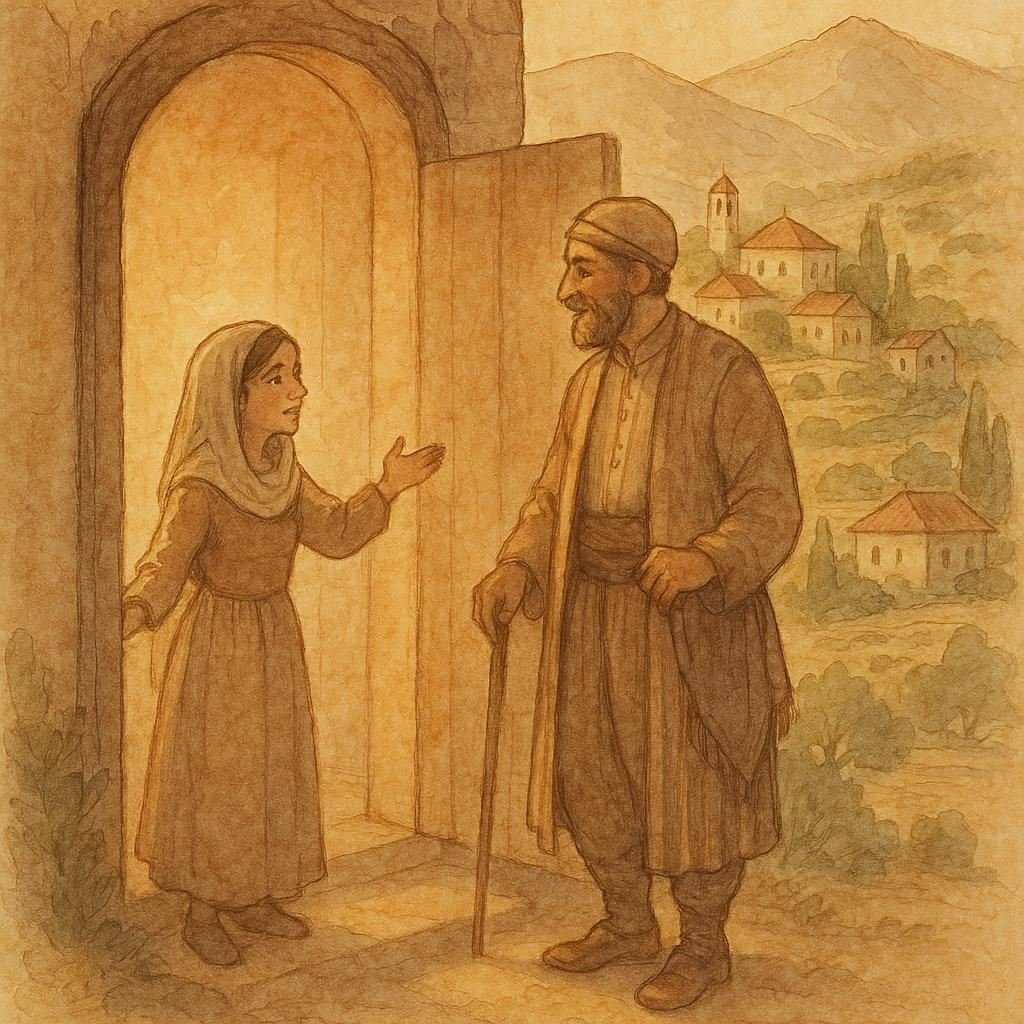
In a small Lebanese village surrounded by olive groves and stone houses, there lived a man named Abu Jmeel, whose name meant “Father of Beauty.” He was known far and wide for his handsome features and his pride in outward appearances. To him, beauty was everything, a sign of worth, honour, and divine favour. He often boasted that his children would be as beautiful as the moon.
When his daughter Rida was born, however, fate had other plans. The infant’s face bore scars from a severe bout of smallpox, and Abu Jmeel’s heart sank the moment he saw her. While others would have thanked God for her life, Abu Jmeel turned away in disappointment. “She is not the beauty I was promised,” he said bitterly, and from that day on, he treated Rida with coldness and neglect.
Despite her father’s disdain, Rida grew into a young woman of grace and kindness. Her mother, a gentle soul, nurtured her with warmth and faith. “The heart sees more than the eyes,” she often whispered. Rida learned early that compassion and patience were treasures no one could tarnish. She helped her mother with household work, fetched water from the village spring, and shared bread with the poor who passed their door.
One day, when Rida came of age, talk spread that Abu Jmeel was seeking suitors for his daughter. The village men came, curious about the girl whose father spoke so little of her. But when they saw her scarred face, they turned away, whispering among themselves. Each rejection wounded Rida’s heart, yet she remained calm, her dignity untouched.
Then came Abu Salim, a humble merchant whose wealth came from trade, not vanity. He was a widower known for his honesty and quiet strength. While others judged Rida’s looks, he noticed her gentle speech and clear eyes that held both intelligence and peace. After several visits, he asked for her hand in marriage.
Abu Jmeel, though surprised, agreed at once. “At last,” he thought, “someone will take this burden from me.” The wedding was simple but joyous. Villagers came with olive branches and songs, and Rida began her new life with gratitude.
In her husband’s home, she worked diligently, managing the household and helping with his trade. When Abu Salim travelled to distant markets, Rida watched over their property faithfully. One year, a drought struck the region, and many grew desperate. Yet through wise management and kindness, Rida shared her stored grain with the poor, ensuring no one in their village went hungry.
When Abu Salim returned, he found his home thriving and the people blessing his wife’s name. He realised that her inner beauty far surpassed any outward charm. “You are the jewel of my life,” he told her, his heart full of pride.
News of Rida’s good deeds spread to neighbouring villages, even reaching Abu Jmeel. Wracked with shame, he travelled to see his daughter, expecting rejection. Instead, Rida welcomed him warmly, serving him food with her own hands. “Father,” she said softly, “God teaches us that beauty fades, but kindness endures.” Abu Jmeel wept for the first time in years, embracing the daughter he had once scorned.
From that day onward, he no longer boasted of looks or fine garments. Instead, he told all who would listen: “The truest beauty lies in the heart.”
Moral Lesson
This tale reminds us that beauty is fleeting, but goodness and integrity live forever. True worth is found not in the perfection of the face but in the purity of one’s spirit.
Knowledge Check
1. Who is the main character in Abu Jmeel’s Daughter?
Rida, the kind and virtuous daughter of Abu Jmeel.
2. What is the main theme of the folktale?
The triumph of inner virtue over outward beauty.
3. How does Rida prove her worth?
Through kindness, intelligence, and generosity during hardship.
4. What transformation occurs in Abu Jmeel’s character?
He learns humility and realises that true beauty lies within.
5. What cultural values does the story reflect?
Lebanese village values of humility, moral integrity, and compassion.
6. What lesson does the story teach about appearances?
That physical beauty fades, but a virtuous heart brings lasting honour.
Source: Adapted from Abu Jmeel’s Daughter & Other Stories: Arab Folk Tales from Palestine and Lebanon by Jamal S. Nuweihed (Interlink Books, 2002).
Cultural Origin: Lebanon (Levantine folklore)