In the high mountains of Tibet, where the wind carries the sound of temple bells and the smell of juniper smoke, lived a man named Akhu Tönpa, which means “Uncle Teacher.” Though dressed in rags and often mistaken for a fool, Akhu Tönpa was known far and wide for his cleverness, humor, and sharp tongue. He traveled from village to village with nothing but a walking stick and a smile, teaching people lessons that no monk or king could ever forget.
One cold morning, Akhu Tönpa arrived in a prosperous village where the people were preparing for a great feast. The aroma of roasted meat and butter tea filled the air, and the sound of laughter echoed through the valley. Tönpa, tired and hungry, went to the house of the richest man in the village and knocked on the door.
“Good day, friend,” Tönpa said cheerfully. “I have traveled far and am weary. Could you spare a little food for a hungry traveler?”
The rich man frowned and looked him up and down. “You have no fine clothes, no gifts, and no title. Why should I share my feast with a beggar?”
Akhu Tönpa bowed politely. “You are right, my lord,” he said. “It would be improper for me to enter your grand house looking like this. Allow me to borrow a fine robe, and then I shall be worthy of your table.”
Amused by this strange request, the rich man lent him a robe of silk trimmed with gold. Tönpa thanked him and walked straight to the feast.
When the servants saw him in the splendid robe, they bowed and led him to the seat of honor. The rich man greeted him warmly, not recognizing his guest beneath the fine clothes. Plate after plate of delicious food was brought before him momos, yak stew, and sweet barley cakes.
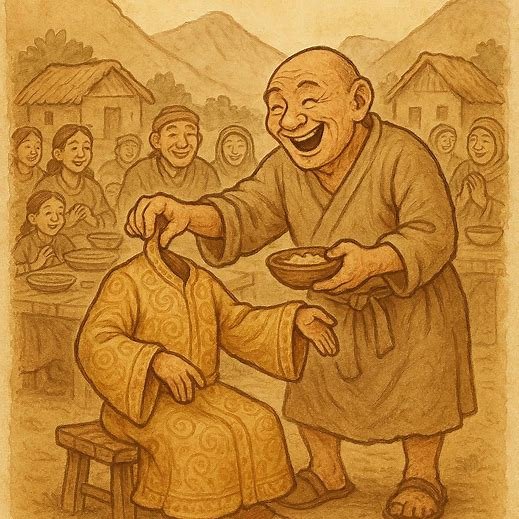
But to everyone’s surprise, Akhu Tönpa did not eat. Instead, he began scooping the food into the sleeves of his robe. “Eat, my sleeves, eat!” he said loudly.
The guests gasped. “What are you doing?” the rich man cried.
Akhu Tönpa smiled and said, “When I came as a poor traveler, you turned me away. But when I wore this robe, you welcomed me like a king. It seems the feast was not for me but for these clothes. So let the robe eat!”
Realizing his arrogance, the rich man hung his head in shame. He apologized to Tönpa and offered him food with genuine respect. The villagers who witnessed the scene laughed and applauded. From that day, they remembered that kindness should be shown to the person, not to the clothes.
As Akhu Tönpa continued his journey, his name spread across the valleys and monasteries of Tibet. In another tale, he visited a greedy lama who demanded payment before offering prayers for the poor. Tönpa pretended to be a wealthy merchant and asked the lama to bless his bag of gold. The lama eagerly began his chants. When he finished, Tönpa opened the bag to reveal a pile of stones. “Your prayers were for gold, not for goodness,” said Tönpa. “So I brought you what your heart truly holds nothing but stones.”
The lama was humiliated, and soon his greed became the talk of the village. Through stories like this, people began to understand that Akhu Tönpa’s foolishness was only a disguise for great wisdom.
Though he often mocked kings, monks, and merchants, he never harmed anyone. His laughter broke down pride and taught people that wisdom does not always wear a scholar’s robe or live in a monastery. Sometimes, it walks barefoot across the dusty roads, smiling at the world’s foolishness.
In the evenings, when children sat by the hearth and old men sipped butter tea, they would tell stories of Uncle Tönpa — the trickster who made everyone laugh and think at the same time. His tales, passed down for centuries, became a treasure of Tibetan culture, reminding people that humor is one of the greatest teachers of all.
To this day, the stories of Akhu Tönpa are told across the Himalayas. They live on in songs, plays, and laughter shared between generations. Wherever people are tempted by greed, pride, or hypocrisy, the voice of Akhu Tönpa seems to whisper in the wind: “Be humble, be kind, and never take yourself too seriously.”
Discover more East Asian Folktales from the lands of dragons, cherry blossoms, and mountain spirits.
Moral Lesson
The story of Akhu Tönpa teaches that wisdom can come from the most unexpected people. True worth is not measured by wealth, clothing, or power, but by kindness, honesty, and the courage to speak truth through laughter.
Knowledge Check
-
Who was Akhu Tönpa and what does his name mean?
He was a wise trickster from Tibet whose name means “Uncle Teacher.” -
What did the rich man do when Akhu Tönpa first asked for food?
He refused to share his feast because Tönpa looked poor. -
How did Akhu Tönpa teach the rich man a lesson?
He wore a fine robe and fed food to its sleeves, showing that people respected clothes, not character. -
What was the lama’s mistake in the second story?
He was greedy and offered prayers only for money, not for true goodness. -
What quality made Akhu Tönpa’s stories special?
They mixed humor and wisdom, teaching lessons through laughter. -
What is the main lesson of Akhu Tönpa’s tales?
That humility and compassion are worth more than wealth or status.
Source:
Adapted from the Tibetan folktale “Akhu Tönpa the Trickster” in Tales of Uncle Tompa: The Legendary Rascal of Tibet, collected by Rinjing Dorje (1976), Dharamsala: Library of Tibetan Works and Archives.
Cultural Origin: Tibet (traditional oral folklore)