In the golden age of the Bruneian Sultanate, when the empire’s influence stretched across the northern coast of Borneo and the surrounding seas, when merchants from distant lands sailed up the mighty Brunei River seeking precious trade goods, there lived a warrior whose name became synonymous with courage and protection. His name was Awang Sihah, and his story is woven into the very fabric of Bruneian heroic tradition.
The Brunei River was the lifeblood of the sultanate, its wide brown waters carrying not just fish and fresh water but prosperity itself. Along its banks stood villages built on stilts over the water, the kampung ayer, water villages where families had lived for generations. These wooden houses, connected by intricate networks of walkways, housed fishermen, craftsmen, traders, and their families. Children learned to swim before they could walk. Women steered small boats through the waterways as easily as others might navigate a garden path. Life and water were inseparable.
Click to read all East Asian Folktales — including beloved stories from China, Japan, Korea, and Mongolia.
But the river that brought prosperity also brought danger.
Sea raiders, lanun as they were called, prowled the coastal waters and ventured up the rivers in swift, deadly boats. These pirates came from various origins, unified only by their predatory nature and their hunger for plunder. They attacked trade vessels carrying precious goods, raided peaceful villages for captives to sell as slaves, and struck with the suddenness of lightning before disappearing back into the maze of islands and mangrove swamps that lined the coast.
The river villages lived in constant vigilance, their joy tempered by fear. Watchmen scanned the horizon. Families developed plans for quick escape. But no amount of vigilance could fully protect against raiders who knew these waters as well as the locals did, who could navigate by starlight and move silently through the darkness.
Into this world of beauty and danger, Awang Sihah emerged as something exceptional. He was not born into nobility, nor did he come from a lineage of famous warriors. He was simply a young man from one of the river villages, the son of a fisherman who had taught him to read the water’s moods and the sky’s messages. But from his earliest years, Awang Sihah possessed gifts that set him apart from his peers.
He could sense danger before it arrived, not through any rational observation, but through an intuition so profound it seemed supernatural. When others saw only calm waters and clear skies, Awang Sihah would feel a prickling at the back of his neck, a tightening in his chest, a certainty that trouble approached. Time and again, his warnings saved lives when raids came from unexpected directions at unexpected times.
More remarkably, he possessed what the elders called the ability to read the angin roh, the spirit wind. This was not the physical wind that filled sails and bent trees, but something more subtle and profound. It was the invisible current that flowed between the natural and spiritual worlds, the breath of the land and sea themselves. When storms arose and other sailors lost their bearings in the chaos of wind and rain, Awang Sihah could navigate with uncanny accuracy, steering his boat through conditions that should have been impossible to survive.
“The wind speaks to those who listen,” he would tell younger warriors who sought to learn his methods. “But you must quiet your own noise first your fear, your assumptions, your desire to control. Only then can you hear what the angin roh is saying.”
As Awang Sihah grew into manhood, his reputation grew with him. Village after village along the river knew his name and felt safer knowing he patrolled their waters. He gathered around him a loyal band of warriors, men who trusted his instincts absolutely and followed him into danger without hesitation. Together, they became the scourge of sea raiders throughout the region.
Their methods were unconventional. Rather than waiting for attacks and responding defensively, Awang Sihah took the fight to the raiders. Using his intuition and knowledge of the spirit wind, he could predict when and where attacks were most likely to occur. His crew would position themselves along likely approach routes, hiding their boats in the shadows of mangrove forests or behind river bends, waiting with the patience of crocodiles.
When raiders appeared, confident in their element and expecting easy prey, they instead encountered Awang Sihah and his warriors. The battles were fierce and swift. Awang Sihah fought with a kris, the traditional wavy bladed dagger of Malay warriors, that seemed to move with a life of its own in his hands. His tactical brilliance combined with his supernatural awareness made him nearly impossible to defeat.
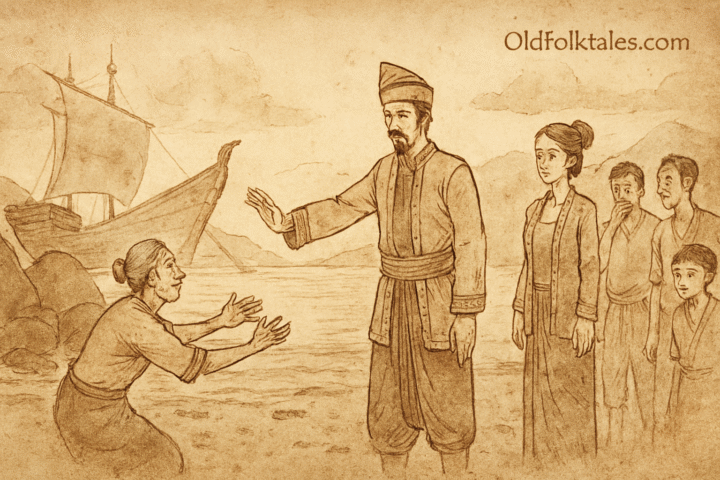
But Awang Sihah’s greatest fame came not just from defeating raiders, but from his rescue missions. Sea raiders often captured villagers, men, women, and children, to sell in slave markets far from Brunei. These captives faced lives of misery and separation from everything they had known, torn from their families by violence and greed.
Awang Sihah made it his sacred mission to rescue these captives whenever possible. He would track raider vessels through treacherous waters, navigating by the spirit wind through storms that other sailors feared to enter. Under cover of darkness or amid the chaos of sudden squalls, he and his warriors would board raider ships, free the prisoners, and escape before the pirates could mount an effective response.
One legendary rescue mission became the most celebrated tale in his cycle of stories. A large raiding force had struck multiple villages simultaneously, overwhelming the defenses and capturing dozens of people, including the daughter of a respected village headman. The raiders fled downriver toward the open sea, confident that their swift boats and the approaching storm would prevent any pursuit.
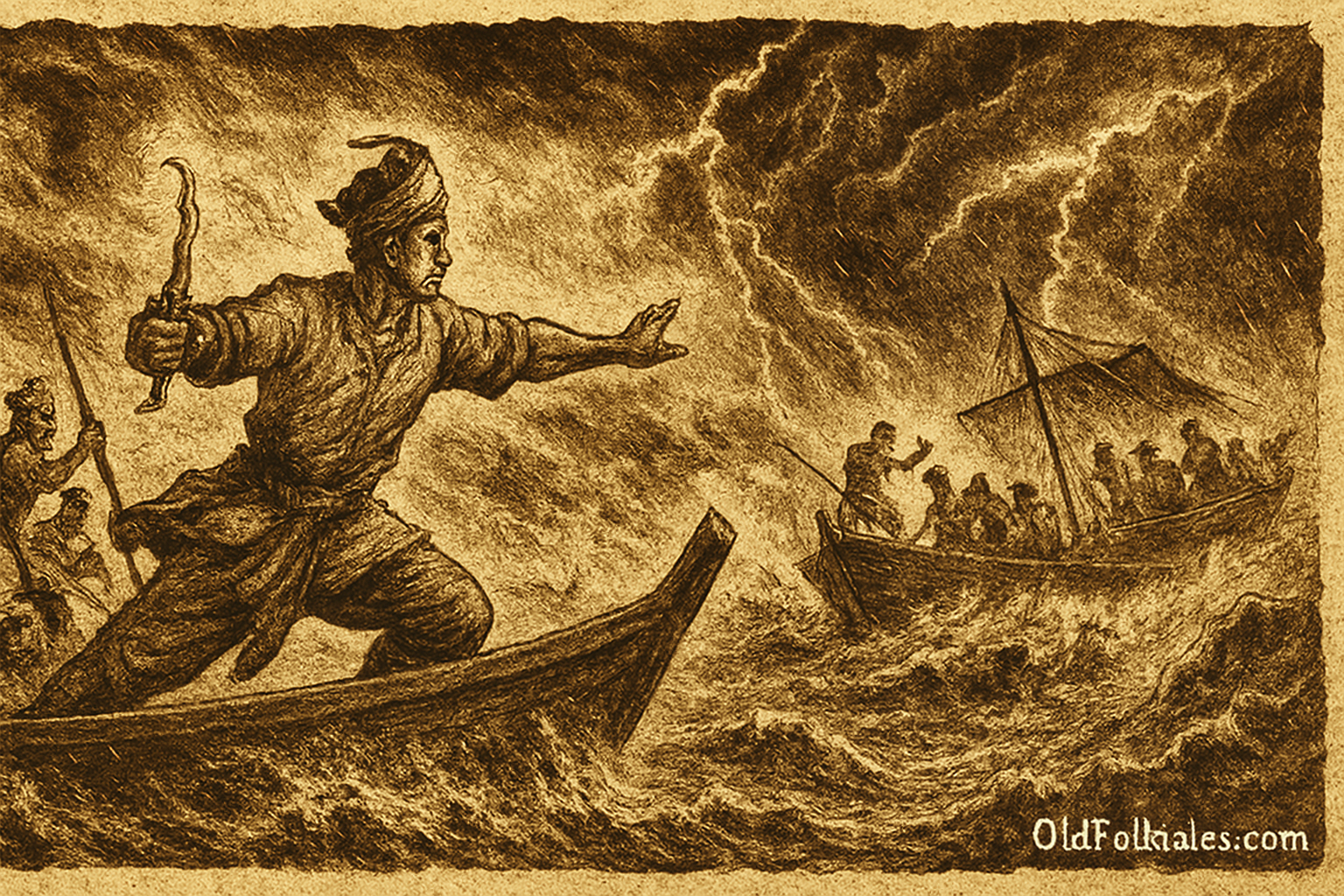
But Awang Sihah did not hesitate. While others looked at the darkening sky and building waves with dread, he saw opportunity. “The spirit-wind will guide us,” he told his warriors. “The raiders fear the storm, but we will use it as our ally.”
They launched their boats into conditions that seemed suicidal. Rain lashed their faces, wind threatened to capsize their vessels, and visibility dropped to almost nothing. But Awang Sihah stood at the prow of his boat, eyes closed, feeling rather than seeing the path forward. He could sense the flow of water beneath them, the direction of wind that wasn’t quite physical, the presence of the raider ships ahead like shadows in his mind.
Through the height of the storm, they caught up with the raiders. The pirates, struggling just to keep their boats afloat and their captives secured, never expected an attack in such conditions. Awang Sihah and his warriors struck like spirits themselves, appearing from the storm, overwhelming the confused raiders, cutting the captives’ bonds, and transferring them to the rescue boats before the pirates could organize a defense.
By the time the storm cleared and dawn broke over calmer waters, Awang Sihah was returning to the river villages with every single captive safe. The raiders, meanwhile, limped away with damaged boats and stories of a warrior who commanded the very storms themselves.
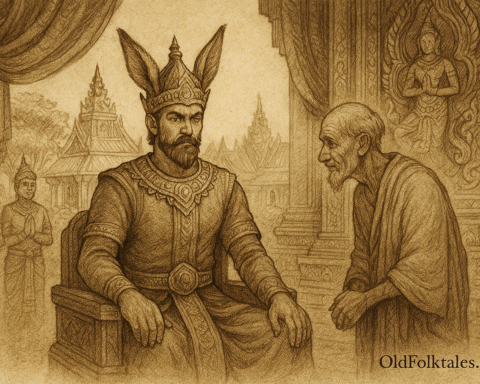
Word of this and countless other victories reached the Sultan’s court. The ruler of Brunei, always concerned with protecting his people and maintaining order throughout his realm, summoned Awang Sihah to the palace. The warrior came as commanded, though he was more comfortable in a boat than in royal chambers, more at ease reading wind and water than navigating court politics.
But the Sultan, wise in his own right, recognized that true value came in many forms. He saw in Awang Sihah not just a skilled fighter but a leader who understood the needs of common people, a strategist who thought in unconventional ways, and most importantly, someone who possessed deep connection to the spiritual currents that flowed through the land and sea.
“I need men like you close to me,” the Sultan said. “Men who know my kingdom not from maps and reports, but from living among its people and defending its waters. I need advisers who understand that power without wisdom is tyranny, and wisdom without connection to the spirit of the land is empty philosophy.”
Thus Awang Sihah, the fisherman’s son who had become a legendary warrior, took his place as one of the Sultan’s most trusted advisers. He continued to lead expeditions against raiders when needed, but he also brought to the court a perspective that had been missing, the voice of the river villages, the wisdom of those who lived close to both danger and the divine.
In the royal council, when nobles debated policy in abstract terms, Awang Sihah would speak of real families in real villages, of the delicate balance between prosperity and security, of the need to honor both the practical and the spiritual dimensions of leadership. His counsel was sought on matters ranging from naval defense to trade routes, from the timing of ceremonies to the resolution of disputes between communities.
The story of Awang Sihah became one of the great tales in the Bruneian heroic cycle, told alongside the adventures of Awang Semaun and other legendary figures. Parents repeated his story to children to teach them about courage, intuition, and the importance of protecting one’s community. Warriors invoked his name before dangerous missions. Sailors still speak of the spirit-wind with respect, remembering the warrior who could navigate by its guidance.
In the water villages along the Brunei River, where wooden walkways still connect houses built over the water, the memory of Awang Sihah endures. When storms arise and boats must navigate dangerous conditions, when raiders or modern dangers threaten the peace, when leaders must make difficult decisions that affect ordinary lives, in all these moments, the people remember the fisherman’s son who learned to listen to the wind that others could not hear, who rescued the captive and defended the vulnerable, and who rose from humble origins to guide a sultanate with wisdom born from both courage and connection to something greater than himself.
Click to read all Southeast Asian Folktales — featuring legends from Thailand, Indonesia, Vietnam, and the Philippines.
The Moral of the Story
This Bruneian legend teaches us that true heroism combines courage with spiritual awareness and practical wisdom. Awang Sihah’s greatness came not just from his fighting skill but from his ability to listen to intuition, to the spiritual currents of the natural world, and ultimately to the needs of ordinary people. His rise from fisherman’s son to Sultan’s adviser demonstrates that leadership and wisdom can emerge from any background when combined with genuine dedication to protecting and serving others.
Knowledge Check
Q1: Who was Awang Sihah in Bruneian tradition?
A: Awang Sihah was a legendary warrior from the classical Sultanate period who protected Brunei’s river villages from sea raiders. Born as a fisherman’s son, he became famous for his combat skills, his supernatural intuition for danger, and his ability to navigate by reading the “spirit-wind.”
Q2: What were the lanun and why were they a threat?
A: The lanun were sea raiders or pirates who terrorized the coastal regions and rivers of Brunei. They attacked trade vessels, raided peaceful water villages for plunder, and captured villagers to sell as slaves, striking suddenly before disappearing into the maze of islands and mangrove swamps.
Q3: What was the “spirit-wind” (angin roh) in this story?
A: The angin roh or spirit-wind was not the physical wind but an invisible spiritual current flowing between the natural and supernatural worlds. Awang Sihah possessed the rare ability to sense and read this spirit-wind, allowing him to navigate through storms and sense approaching danger when others could not.
Q4: What made Awang Sihah’s rescue missions legendary?
A: Awang Sihah tracked raiders through treacherous waters and storms that other sailors feared to enter, using his connection to the spirit-wind to navigate impossible conditions. His most famous rescue involved pursuing raiders through a violent storm and successfully freeing all captives, including a village headman’s daughter.
Q5: How did Awang Sihah become an adviser to the Sultan?
A: After his many victories protecting the river villages became widely known, the Sultan summoned him to court. Recognizing Awang Sihah’s unique combination of warrior skill, strategic thinking, spiritual connection, and understanding of common people’s needs, the Sultan appointed him as a trusted adviser.
Q6: What is the Bruneian heroic cycle and Awang Sihah’s place in it?
A: The Bruneian heroic cycle is a collection of oral traditions celebrating legendary warriors and leaders from the Sultanate period. Awang Sihah is one of the central figures alongside heroes like Awang Semaun, representing ideals of courage, spiritual awareness, protection of the vulnerable, and wisdom earned through experience rather than birthright.
Cultural Origin: Bruneian Malay people, Brunei Darussalam (Sultanate period)