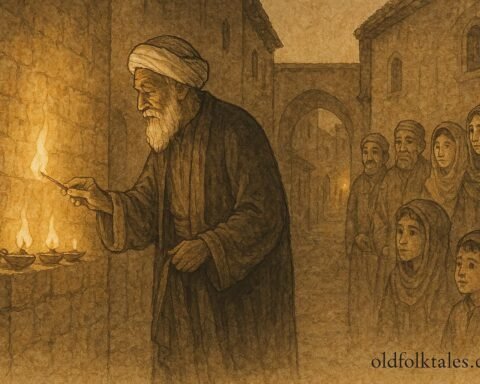
Long ago, in the sun-baked plains of southern Iraq, there lived a man known throughout his village for his fairness and gentle heart. His name was Karim, and he was a man who believed deeply in honesty. People sought his counsel in disputes, for he had the gift of seeing clearly through confusion. Yet even Karim would learn that the line between truth and falsehood can be thinner than a breath, no wider, as the old saying goes, than four fingers.
The Test of a Promise
One summer, a wealthy merchant arrived in Karim’s town. He carried a chest of silver coins and precious fabrics from Basra, and before continuing his journey, he asked Karim to keep the chest safe until he returned. “Guard this with your honor,” said the merchant. “If I do not come back in a year, give it to my son, for he alone will have my mark of truth.”
Discover more East Asian Folktales from the lands of dragons, cherry blossoms, and mountain spirits.
Karim agreed. The merchant sealed the chest and drew a sign upon it, his family’s mark, a crescent and a star etched in wax. True to his word, Karim locked the chest in his home and waited.
Months passed. Then, one evening, a young man arrived at Karim’s door. “I am the merchant’s son,” he said. “My father has died, and I have come for what is mine.” The young man bore a seal with the same crescent and star. Everything seemed correct, but something in his voice troubled Karim. The youth spoke too quickly, his eyes darted like fish in shallow water.
“I will give you what is yours,” said Karim, “but return in three days. I must make the preparations.” The young man agreed and left.
The Stranger’s Warning
That night, as Karim pondered, a traveler sought shelter from the desert wind. He was an old pilgrim with weary eyes. Over supper, Karim told him his dilemma.
The old man listened quietly. Then he said, “In my life, I have seen truth wear the clothes of falsehood, and falsehood dress like truth. Between them, my son, lie only four fingers—the width of the space between the eyes and the ears. What you see and what you hear are not always the same.”
The words struck Karim like a spark. The next morning, he went to the mosque and prayed for wisdom. He decided to test the young man when he returned.
The Revelation
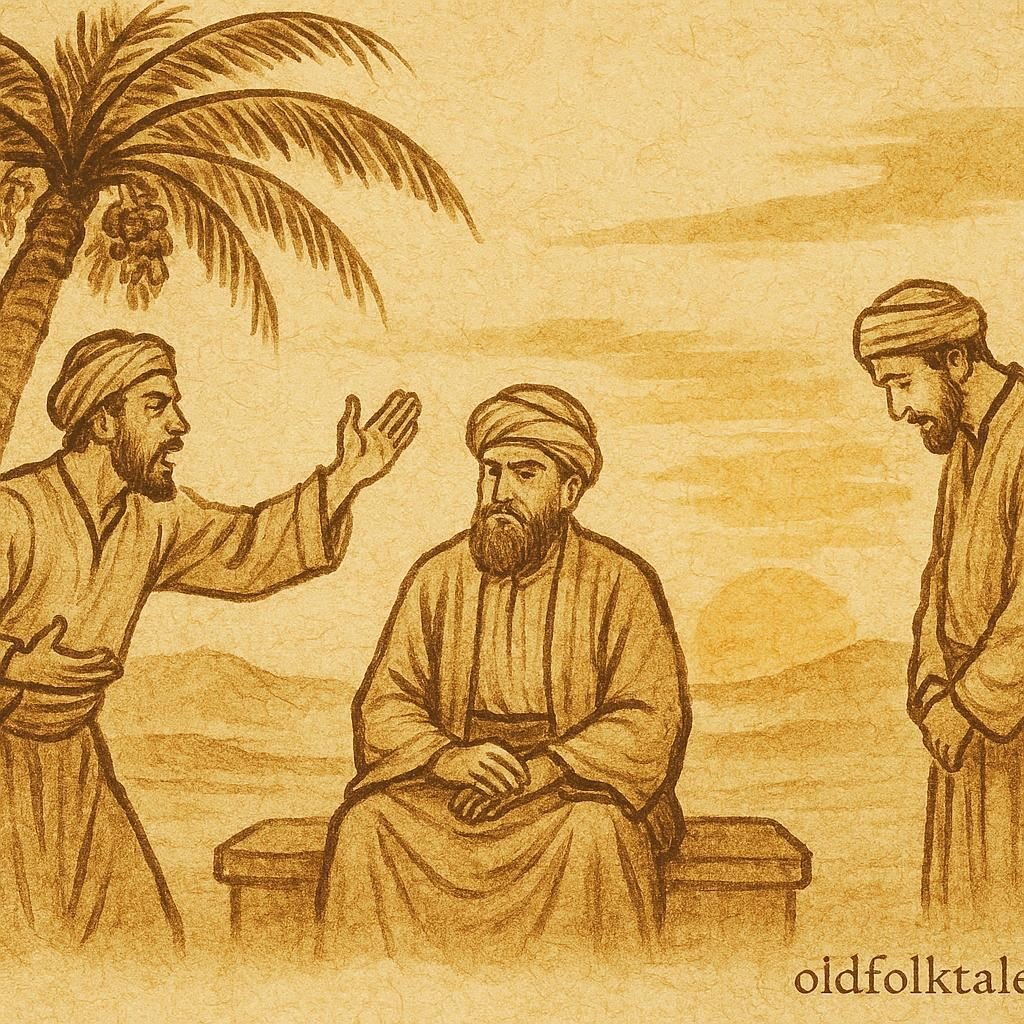
On the third day, the youth came again. Karim said gently, “Before I give you the chest, tell me, what did your father place inside it?”
The young man frowned. “Gold coins, of course!”
Karim shook his head. “That is not the truth.”
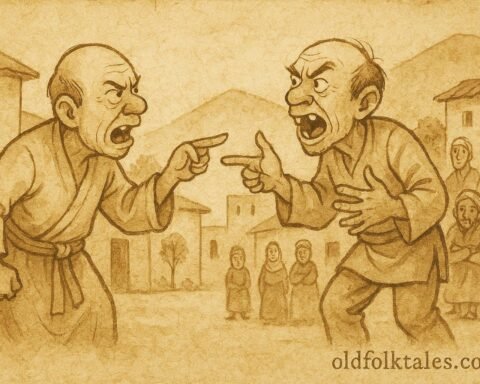
“How dare you doubt me?” the youth cried.
“Because,” said Karim, “your father left jewels, not coins.”
The young man turned pale. “Then open it and see!”
Karim nodded. He unlocked the chest and lifted the lid—revealing not coins or jewels but plain stones. The young man gasped.
“You see,” Karim said softly, “truth and falsehood stand close together. Had I believed your words, I would have betrayed a good man’s trust. But now I know, you never knew what was inside.”
The youth dropped to his knees and confessed that he had never met the merchant at all. He had merely heard of the chest and forged the seal. Karim sent him away to repent and later returned the chest, still sealed, to the merchant himself, who, it turned out, was alive and well, delayed by illness.
The merchant thanked Karim and said, “You have guarded not only my wealth but my honor. How did you see through the lie?”
Karim smiled. “Because between truth and falsehood lie four fingers, the space between sight and understanding.”
Discover the wisdom of Persian poets and Arabian storytellers in Western Asian Folktales.
Moral Lesson
This Iraqi folktale teaches that truth is not always what appears before the eyes. Wisdom lies in questioning what we see and hear, for the distance between truth and falsehood is as narrow as four fingers. True discernment comes from reflection and integrity.
Knowledge Check
1. Who is the main character in “Between Truth and Falsehood Lie Four Fingers”?
The main character is Karim, an honest man from southern Iraq known for his fairness and wisdom.
2. What is the main theme of this Iraqi folktale?
The story explores the fine line between truth and falsehood, teaching the importance of discernment and moral integrity.
3. What is the meaning of the “four fingers” metaphor in the tale?
It symbolizes the narrow distance between what we see (appearance) and what we know (truth), reminding listeners that perception can deceive.
4. What test does Karim face in the story?
Karim must decide whether to trust a young man who claims to be the merchant’s son, testing his sense of honesty and judgment.
5. What lesson does the tale convey about trust and deception?
It warns that trust should be guided by wisdom, not appearances, and that truth requires careful observation and patience.
6. What is the cultural origin of this folktale?
This story originates from Iraq, collected among Shia tribes in the southern region during the 1940s.
Source & Cultural Origin
Source:Adapted from Folktales from Iraq, edited by C. G. Campbell (1940s collection).
Collected from Shia tribes of southern Iraq.
Origin: Iraq (Southern Iraq oral tradition)