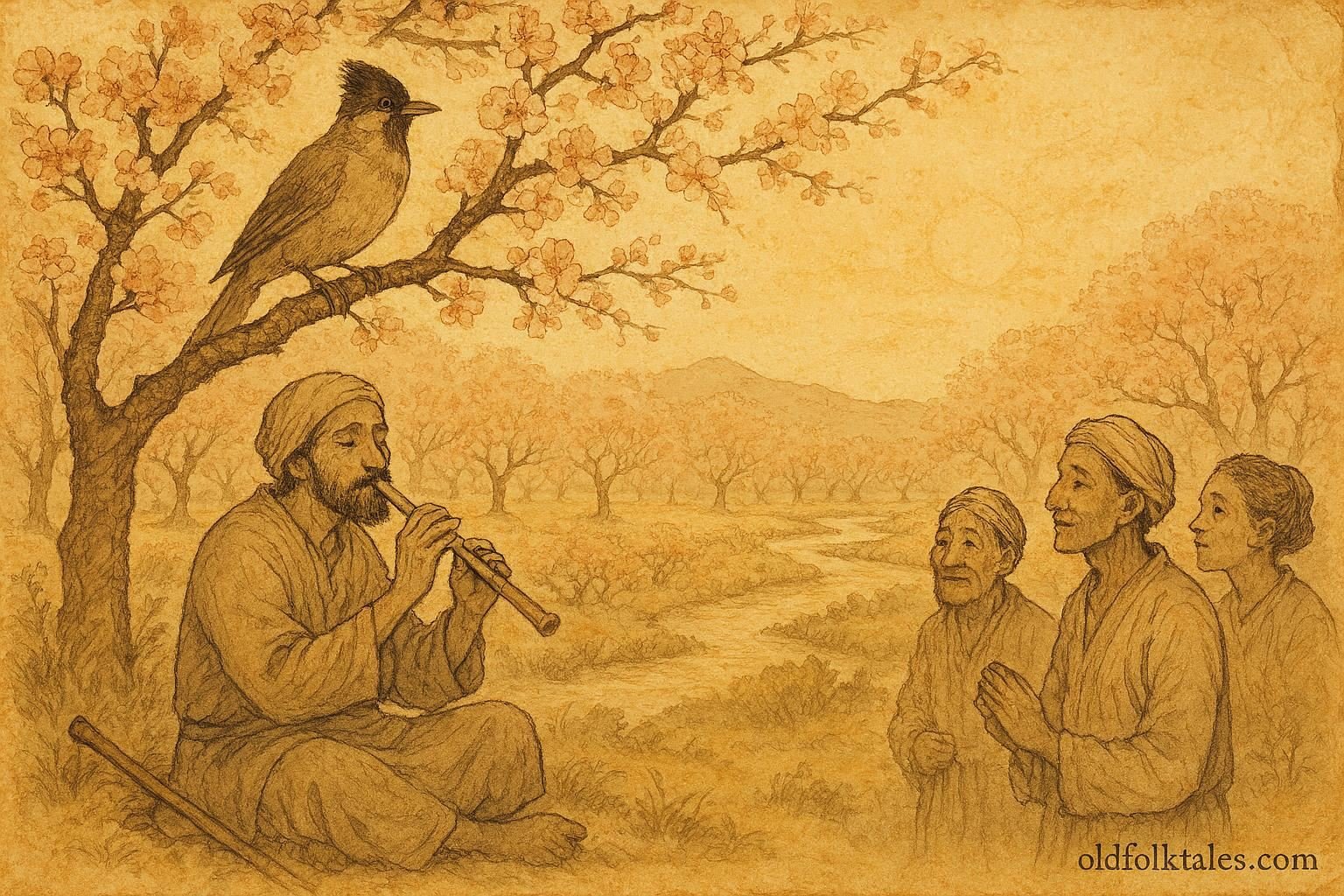
In a quiet village nestled between Uzbekistan’s lush orchards and flowing rivers, life moved with the rhythms of nature. Birds chirped in the early morning, and the sun painted golden light across fertile gardens. Yet, amidst this tranquil beauty, one melody would change the fate of a humble musician and his community.
In this village lived a poor, kind-hearted musician. Each day, he wandered the orchards and meadows, playing his simple flute for birds, trees, and passersby. Though his life was modest, he was content, finding joy in music’s quiet magic. One evening, as the sun dipped behind distant hills, he heard a sound unlike any he had known, a song pure and enchanting, weaving through the wind and rustling leaves.
Discover more East Asian Folktales from the lands of dragons, cherry blossoms, and mountain spirits.
Curious, the musician followed the melody to the heart of a flowering orchard. There, perched upon a cherry blossom branch, was Bulbul Khushnua, a nightingale of extraordinary beauty. Its feathers shimmered like spun gold, and its song seemed to carry the power to heal aching hearts, inspire courage, and unveil hidden truths. The bird’s eyes, bright and knowing, met the musician’s gaze, as if testing his spirit.
For days and nights, the musician returned, playing alongside the nightingale. Their music intertwined, creating melodies that seemed to make the flowers bloom brighter, the streams sparkle clearer, and the hearts of villagers lighter. People came from afar to hear the duet, praising its harmony, yet the musician remained humble, attributing every note to the nightingale’s gift rather than his own skill.
But news of Bulbul Khushnua’s magical song reached the ears of a greedy ruler, who longed to possess the bird for his palace. The ruler sent soldiers to seize the nightingale, imagining that its song would elevate his status and impress neighboring kings. When the soldiers approached the orchard, Bulbul Khushnua’s song shifted in tone, soft and sweet at first, then twisting into illusions and mirages. The soldiers saw endless gardens, flowing rivers, and mountains that vanished as they approached, unable to capture the bird or discern reality from magic.
Frustrated, the ruler came himself, adorned in silks and jewels, demanding that the nightingale submit to his command. Yet Bulbul Khushnua tested him as well. Its song revealed the selfishness in his heart, visions of wealth hoarded, communities silenced, and joy stifled played before his eyes. The ruler, blinded by greed, ignored the lessons hidden within the melodies, and the nightingale vanished beyond reach, leaving him frustrated and humbled.
The musician, however, was different. He approached the nightingale with patience, humility, and respect. He never sought to own or control it, only to play and share its gift for the good of his village. Recognizing this virtue, Bulbul Khushnua allowed him to continue their harmonious duets. Together, they performed in the village squares, gardens, and riverbanks, bringing hope, healing, and wonder. Their music encouraged honesty, kindness, and community spirit among the people, reinforcing the Uzbek belief that humility and virtue attract true blessings.
Over time, the legend of the Singing Nightingale spread across valleys and towns. Parents told children of the musician who played with a magical bird, teaching that gifts, whether of talent, knowledge, or magic, should be cherished with respect, never exploited. Even kings and officials were reminded that power without integrity is empty, and that harmony arises from ethical conduct, patience, and love for nature.
Through Bulbul Khushnua’s song, the village prospered, not only materially, but spiritually. Orchards flourished, rivers gleamed in sunlight, and the people lived with a renewed sense of community and wonder. Music, once mere entertainment, became a bridge connecting hearts, revealing that magic is most profound when shared with humility and goodness.
Moral Lesson
This story teaches that humility, patience, and respect for the gifts of nature and others bring lasting blessings, while greed and selfishness only lead to frustration and loss.
Knowledge Check
1. Who is Bulbul Khushnua?
A magical nightingale whose song can heal, inspire, and reveal hidden truths.
2. What role does the musician play in the story?
A humble, kind-hearted artist who earns the nightingale’s trust through patience and respect.
3. How does the greedy ruler fail?
His selfishness blinds him; he cannot understand the nightingale’s magic or earn its trust.
4. What virtues does the tale emphasize?
Humility, patience, ethical use of talent, and respect for nature and supernatural gifts.
5. What cultural values are reflected in the story?
Uzbek beliefs in moral integrity, the sacredness of music, and community harmony.
6. How does the nightingale influence the village?
Its song brings joy, healing, inspiration, and reinforces social cohesion and virtue.
Source: Uzbek fairy tale collections; preserved in oral storytelling
Cultural Origin: Uzbekistan (Uzbek folk tale)