Browse Category

East Asian Folktales - Page 3

A panorama of dragons, ancestral spirits, and moral wisdom from China, Japan, Korea, Taiwan, Mongolia, and Tibet.
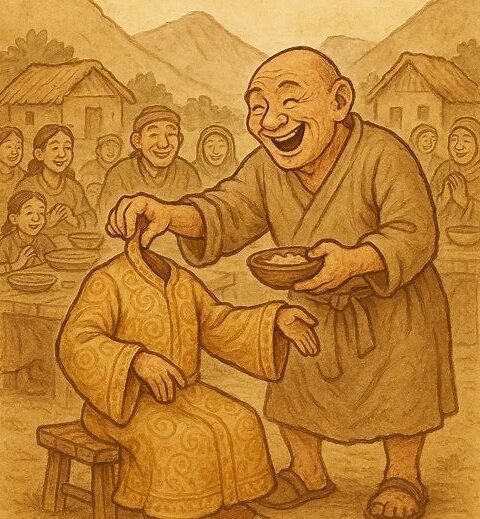
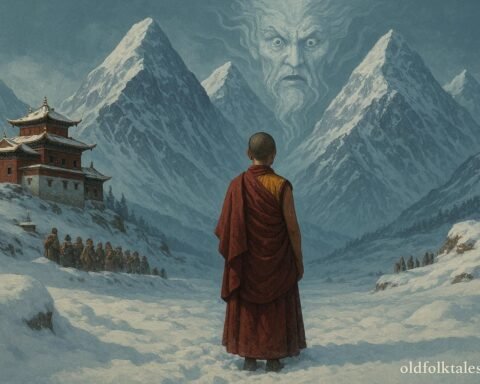
Akhu Tönpa feeding food into his robe sleeves to teach humility during a Tibetan village feast.

Akhu Tönpa the Trickster

In the high mountains of Tibet, where the wind carries the sound of temple bells and the smell of juniper smoke, lived a man named Akhu Tönpa, which means “Uncle Teacher.” Though dressed in rags and often mistaken for a fool, Akhu Tönpa was known far and wide for his
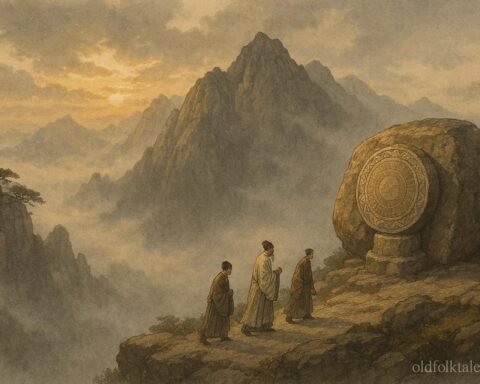
An ancient stone drum carved into rock on Mount Tai, symbolizing moral warnings and imperial legitimacy in Chinese folklore.

The Stone Drum of Mount Tai

Mist often gathered around Mount Tai at dawn, clinging to its slopes like a living breath. Pilgrims climbed its ancient paths in silence, believing the mountain to be more than stone and soil. It was the meeting place of Heaven and Earth, where emperors once came to affirm their right
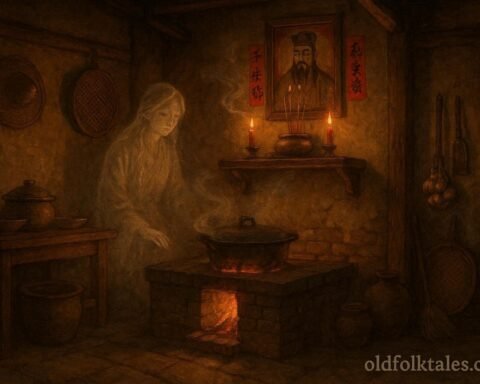
A traditional Chinese kitchen hearth with an altar representing the Kitchen God, symbolizing moral accountability and domestic virtue in Chinese folklore.

The kitchen god

Smoke rose each morning from the kitchens of ancient Chinese homes, curling upward through roof tiles and disappearing into the sky. The hearth was not merely a place of cooking. It was the heart of the household, where warmth, nourishment, and family harmony were sustained. In one such household lived
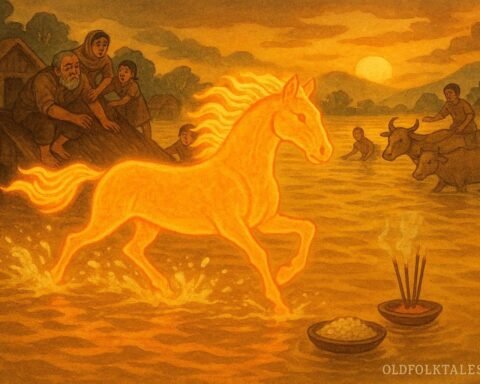
A clay horse comes to life during floods along the Yellow River, carrying villagers and livestock to safety, symbolizing selfless protection and impermanence in northern Chinese river folklore.

The Clay Horse of the Yellow River

In a bustling riverside village along the Yellow River, floods were a constant threat. The villagers had long learned to respect the river, building levees and performing seasonal rituals to appease its restless waters. Among them lived a humble potter, known for his skill in shaping clay into figures that
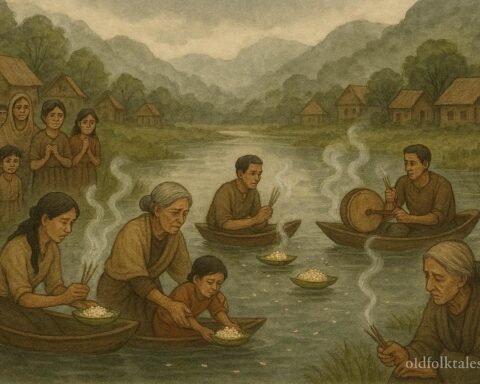
Southern Chinese villagers perform rituals and offer incense and rice to a river that has stopped flowing, emphasizing respect for ancestors and communal moral responsibility.

The River That Refused to Flow

In a fertile valley of southern China, a wide river nourished villages along its banks for generations. The villagers depended on its waters to irrigate rice paddies, fill wells, and sustain livestock. The river was not only a source of life but also a living symbol of the ancestors’ guidance
Eight Taoist immortals using magical powers, musical instruments, and artifacts to safely cross a turbulent sea, symbolizing wisdom, teamwork, and spiritual mastery.

The Eight Immortals Cross the Sea

Along the vast coastline where the ocean meets misty cliffs, tales of extraordinary travelers had long captured the imagination of villagers. Among these stories, one recounts the journey of the Eight Immortals, legendary beings whose wisdom, courage, and unique abilities allowed them to overcome impossible challenges. The Eight Immortals had
1 2 3 4 5 10

Popular

Go toTop