Browse Category

Southeast Asian Folktales - Page 19

From lush jungles to island shores, Southeast Asian folktales carry Buddhist virtue, animist wonder, and maritime myth.
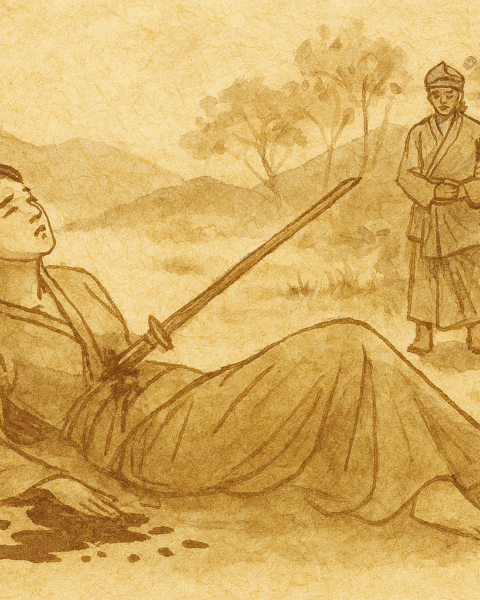
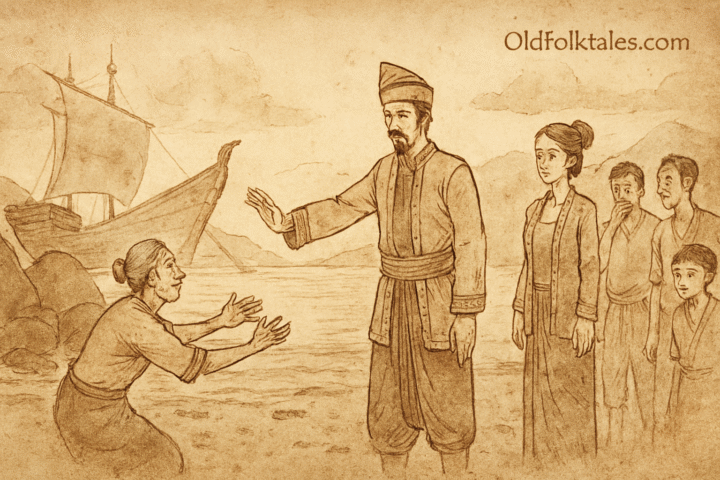
Parchment-style illustration of Mahsuri pierced by keris, white blood flowing, villagers stunned in Malaysian folktale.

The White Blood of Mahsuri

More than four hundred years ago, on the verdant island of Langkawi, where emerald waters kissed white sandy shores and rice paddies stretched like golden carpets across the land, there lived a maiden of extraordinary beauty. Her name was Mahsuri, and she was renowned throughout the island as the most
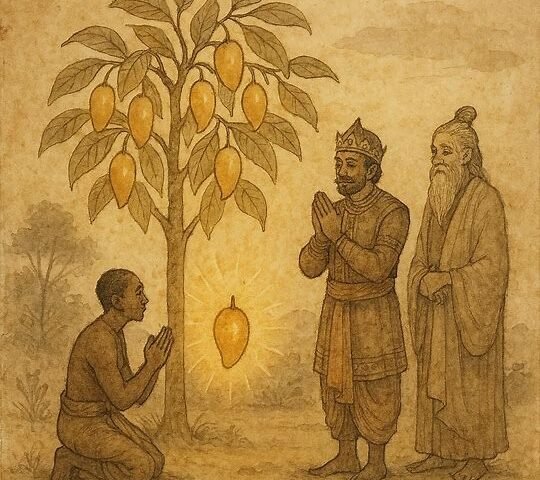
the Rice Goddess Mae Posop blessing golden rice fields as villagers give thanks, symbolizing the Lao folktale about gratitude and respect for nature.

The Golden Rice Ear

Long ago, when the earth was young and the Mekong River still whispered secrets to the mountains, the people of Laos lived in great abundance. The land was rich, the air was sweet, and the rice fields shone like gold beneath the sun. In those ancient days, rice grew in
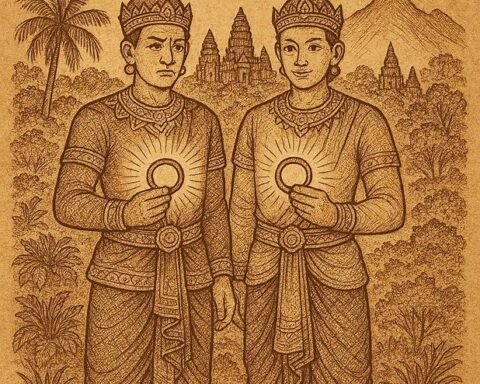
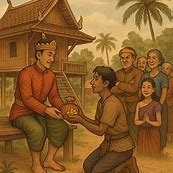
two royal brothers in Khmer attire holding magical rings, representing loyalty, justice, and reunion in the Cambodian epic Vorvong and Sorvong.

Vorvong and Sorvong

Long ago in the ancient Khmer kingdom, two princes were born to a wise and just king. The elder was Vorvong, noble and strong, and the younger, Sorvong, gentle and wise. The brothers were inseparable in childhood, bound by deep affection and loyalty. Together, they studied the arts of statecraft,
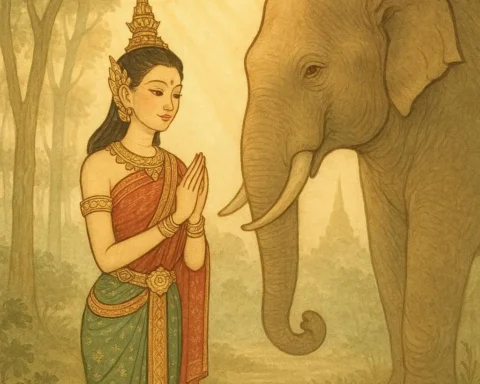
a kind Cambodian girl offering flowers beneath a glowing fig tree as a radiant spirit watches over her, symbolizing love, faith, and gratitude.

The Origin of the Sirenia

In the heart of a peaceful Cambodian village surrounded by green rice paddies and gentle hills stood an ancient fig tree. Its roots were thick and twisted like old serpents, and its branches stretched wide enough to shade the entire shrine beneath it. The villagers called it the spirit tree,

Popular

Go toTop