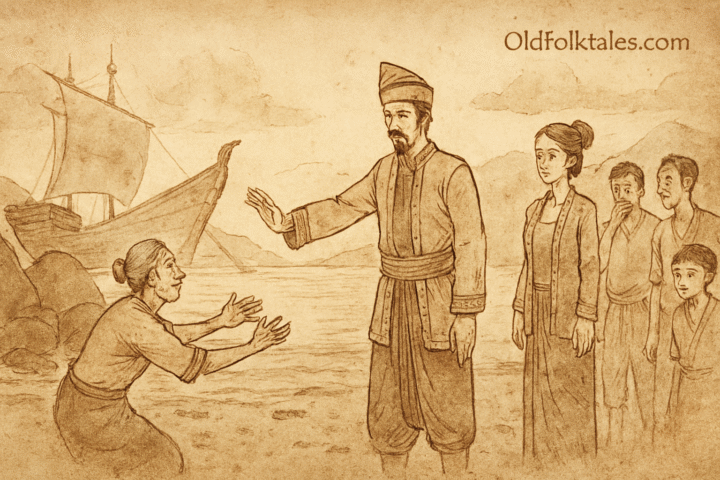
In a small Uzbek village where earthen homes clustered near open steppe and narrow paths led to the bazaar, there lived a poor family whose lives were shaped by hardship. Their harvests were often thin, winters were harsh, and each season tested their endurance. Yet though they lacked wealth, they never lacked dignity.
On either side of their modest home lived neighbors whose lives were more stable. These neighbors owned livestock, stored grain in full jars, and had weathered many difficult years before. Rather than turning away from the struggling family, they chose another path.
Explore desert legends and palace tales in our Western Asian Folktales archive.
When winter winds howled across the steppe and food grew scarce, the neighbors shared what they could, warm bread, dried fruits, and sacks of grain. When wild animals prowled near the village at night, the neighbors stood watch together, ensuring no home stood unprotected. When rumors of bandits spread, they warned one another and traveled in groups.
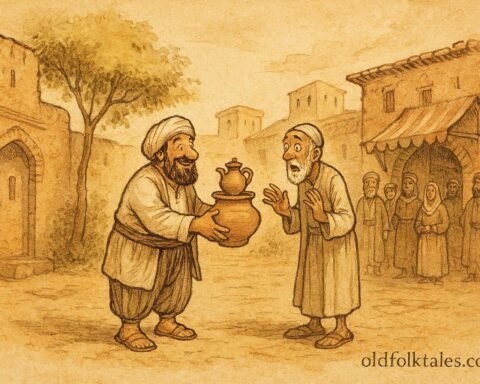
The poor family accepted this help with humility. They never demanded more than offered and repaid kindness in the only ways they could. Guests who entered their home were treated with respect, offered tea, and welcomed warmly. When neighbors needed help repairing a fence, tending animals, or caring for children, the family gave their labor freely.
Life in the village moved with the rhythm of seasons. In spring, yurts were cleaned and repaired. In summer, bazaars buzzed with trade and voices. During festivals, neighbors gathered to share food, stories, and music. Though wealth varied, the bonds between neighbors remained strong.
Years passed, and fortune slowly shifted. The poor family, strengthened by cooperation and trust, began to recover. Their harvest improved, their animals multiplied, and their home became a place of welcome and stability.
Then misfortune struck, not the poor family, but the generous neighbors. A season of drought ruined crops. Illness weakened livestock. What once had been abundance dwindled to uncertainty.
Without hesitation, the formerly poor family acted. They opened their stores, shared food, offered shelter, and returned every kindness once given to them. Where neighbors had once stood watch for them, they now stood watch in return. Where neighbors had offered guidance, they now provided strength.
The village took notice. It became clear that wealth had never been the true foundation of survival, good neighbors were.
In time, balance returned. Though fortunes rose and fell, the village endured, bound together not by riches, but by trust, generosity, and shared responsibility.
Moral Lesson
This folktale teaches that good neighbors create strong communities. Trust, generosity, and mutual support are more valuable than wealth, and kindness given freely will one day return.
Knowledge Check
1. Why do the neighbors help the poor family?
Because they value generosity, responsibility, and communal well-being.
2. How does the poor family respond to kindness?
By offering respect, hospitality, and help whenever possible.
3. What challenges do neighbors face together?
Harsh winters, poor harvests, wild animals, and outside dangers.
4. What happens when the generous neighbors face hardship?
The poor family repays their kindness with support and care.
5. What does the village setting represent?
A community where survival depends on cooperation among neighbors.
6. What core Uzbek values does the story reflect?
Hospitality, reciprocity, trust, and mutual responsibility.
Source: Collected in Uzbek village storytelling tradition; documented in folk tale anthologies
Cultural Origin: Uzbekistan (Uzbek moral folk tale)