In a quiet corner of Uzbekistan, where orchards breathed perfume into the morning air and irrigation channels traced silver lines through the soil, there lived a humble gardener. His life was shaped by the seasons: planting, tending, and waiting with patience for what the earth might offer. Though his hands were worn, his heart was kind, and he spoke softly to the plants as if they were old friends.
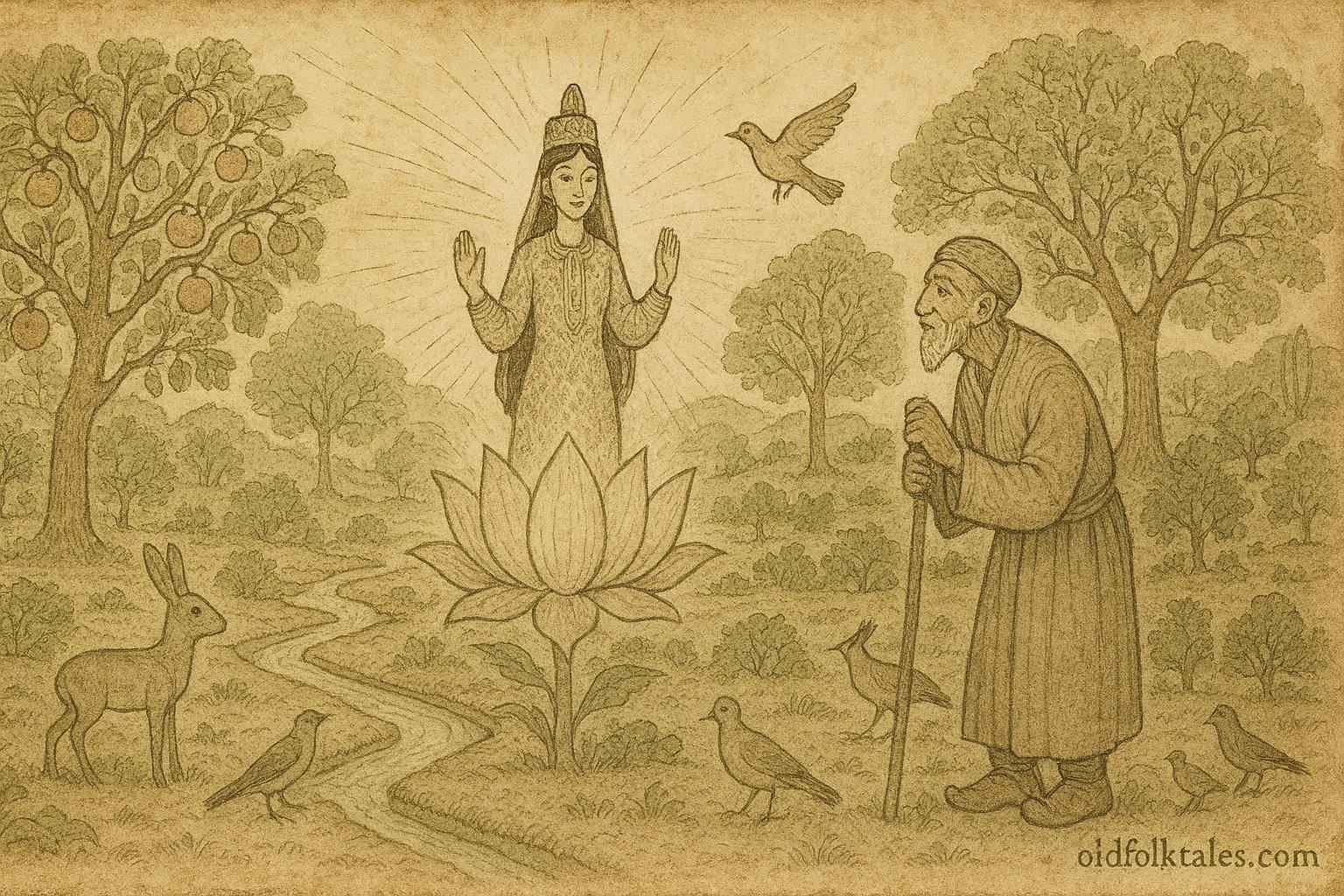
One dawn, as the sun lifted above the garden walls, the gardener noticed a flower unlike any he had ever seen. It stood at the center of his courtyard, taller than the others, its petals shimmering with colors that shifted like light on water. As he drew closer, the flower slowly opened, and from within stepped a young girl.
Discover the wisdom of Persian poets and Arabian storytellers in Western Asian Folktales.
She was radiant, yet gentle, her presence calm as morning dew. Startled but not afraid, the gardener listened as the girl spoke. She asked for shelter and kindness, offering nothing but her gratitude. Moved by compassion, he welcomed her without question. He named her Guli, after the flower that had brought her into the world.
From the moment Guli entered his home, the garden changed. Where she walked, plants grew greener and stronger. With a touch, she could heal the sick, soothe animals, and bring tired soil back to life. Birds perched near her without fear, and even the most stubborn plants seemed to lean toward her voice. Yet Guli never used her gifts for pride or display. She worked quietly, teaching the gardener through example that care and humility were stronger than command.
News of these wonders did not remain hidden for long. A greedy merchant, known in the town for valuing profit above all else, heard whispers of a girl who could make crops flourish and heal with ease. His thoughts turned quickly to gain. If he could possess such power, his wealth would grow without limit.
The merchant came to the garden with flattering words and false smiles, offering gold and promises. Guli listened politely but saw the hunger in his heart. She did not refuse him outright. Instead, she tested his character, asking small acts of kindness and patience. Each time, the merchant failed, growing impatient, demanding reward before effort. Seeing through him, Guli used her wisdom and subtle magic to evade his attempts. Paths twisted, animals blocked his way, and the garden itself seemed to resist him. Frustrated and empty-handed, he departed, his greed unanswered.
Others came as well, curious villagers, travelers, and those seeking favor. Some approached with respect and humility, others with selfish desire. Guli treated each according to their nature, rewarding sincerity with help and turning away those driven by greed. Through her actions, the garden became a place of quiet teaching, where people learned that virtue mattered more than desire.
Among those who visited was a kind-hearted young man, modest in speech and generous in action. He helped the gardener without being asked, tending the soil and repairing walls simply because it was right to do so. He did not seek Guli’s gifts, nor did he speak of her wonders. Instead, he listened when she spoke and learned from her gentleness.
Over time, Guli chose this young man as her companion. She taught him lessons of humility, honesty, and compassion, not through commands, but through shared work and quiet reflection. Together, they nurtured the garden, which became a symbol of harmony between human care and natural balance.
As seasons passed, Guli’s presence continued to bless the land. Crops flourished, animals thrived, and those who approached with pure intentions found help. The greedy merchant, however, faded from memory, his schemes leaving no mark upon the living earth.
Thus, Guli remained a living reminder that true magic lies not in power alone, but in virtue aligned with nature. Her story was passed from one storyteller to another, carried like a seed into future generations.
Discover the wisdom of ancient India and the Silk Road in South & Central Asian Folktales.
Moral Lesson
This tale teaches that kindness, humility, and respect for nature invite true reward, while greed and selfish ambition lead only to loss.
Knowledge Check
1. Who discovers Guli?
A humble gardener living among orchards and gardens.
2. How does Guli enter the world?
She emerges from a magical flower in the gardener’s courtyard.
3. What special abilities does Guli possess?
She can heal, make crops flourish, and communicate with animals.
4. Who tries to exploit Guli’s powers?
A greedy local merchant seeking wealth.
5. How does Guli respond to greed?
She tests character and uses wisdom to evade selfish intentions.
6. What values does the story emphasize?
Humility, compassion, honesty, and harmony with nature.
Source: Uzbek oral tradition; recorded in regional fairy tale collections
Cultural Origin: Uzbekistan (Uzbek folk tale)