Across the vast open steppes of ancient Kazakhstan, where survival depended as much on character as on strength, the name Kambar Batyr became a measure of true honor. He was not celebrated for riches or loud triumphs, but for the discipline with which he lived and the responsibility he carried toward his people. In a world shaped by rivalry and ambition, Kambar stood apart, a warrior whose power was guided by restraint, and whose loyalty to justice defined his legacy.
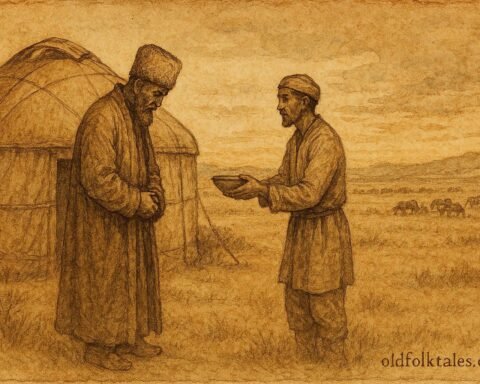
Kambar lived simply, as many steppe men did. He was a hunter by trade, providing meat and skins for his people, and a warrior only when necessity demanded it. His yurt stood no taller or richer than those of his neighbors. He dressed plainly, spoke sparingly, and listened more than he talked. Elders respected him for his discipline, and the young admired him for his skill, though Kambar himself never sought their praise.
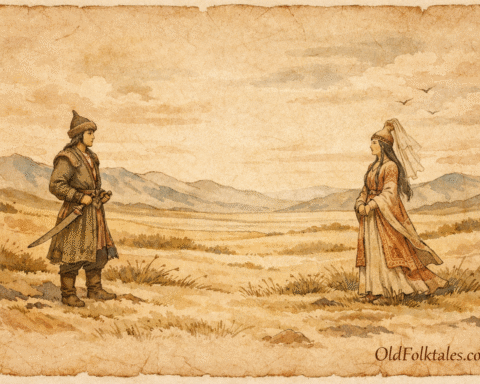
In those days, the land was not always at peace. Rival tribes and arrogant warriors often sought to dominate weaker clans, demanding tribute or control over grazing lands. Among Kambar’s people lived Nazym, a noble maiden admired for her wisdom, dignity, and grace. Many powerful men sought her hand, not out of love, but because marriage to her promised influence and authority. These suitors arrived with boasts, gifts, and threats, attempting to impress or intimidate her family and tribe.
Kambar watched all this from a distance. He did not compete with the others, nor did he speak of Nazym openly. His respect for her was quiet and sincere. He believed that honor could not be won through arrogance, and that a person’s worth was shown through actions, not words.
When hostile forces began pressing into the land, threatening to seize pastures and subdue smaller clans, fear spread among the people. Some warriors argued loudly, others fled, and a few sought to bargain away their freedom. In this moment of uncertainty, Kambar stepped forward—not to claim leadership, but to accept responsibility.
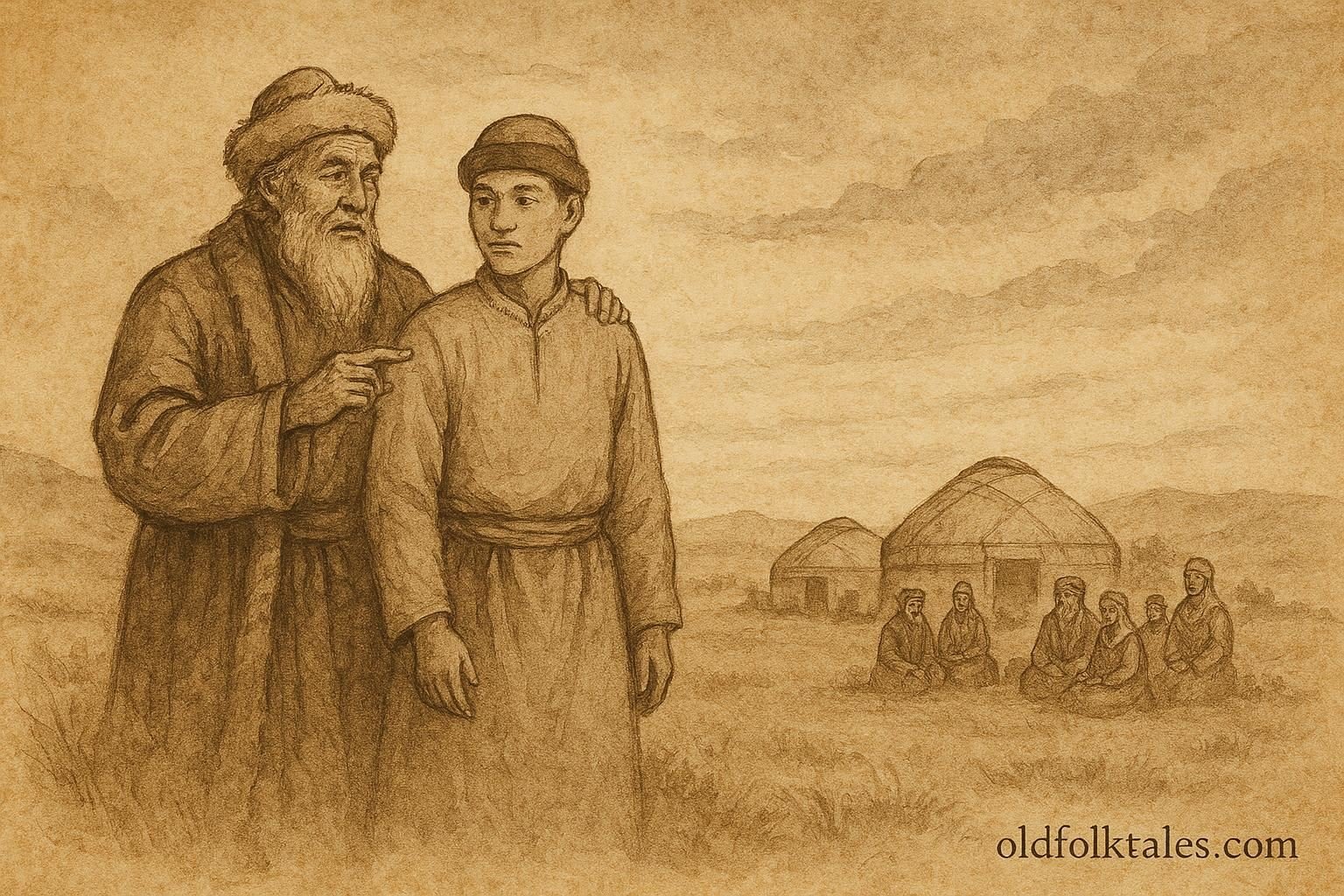
He gathered his people and spoke calmly, reminding them of their ancestors, their shared land, and their duty to protect one another. His words were simple but steady, carrying the weight of truth. Seeing his resolve, the people placed their trust in him.
When conflict erupted, Kambar led with discipline and restraint. He did not rush into battle recklessly, nor did he fight for cruelty or revenge. His strength lay in endurance, precision, and self-control. Against powerful enemies and boastful rivals, he proved that skill guided by honor was greater than brute force driven by pride.
One by one, the hostile warriors were defeated. Kambar did not humiliate them, nor did he pursue unnecessary bloodshed. He fought only as much as was required to protect his people and their land. Even in victory, he remained humble, refusing to glorify himself or claim rewards beyond what was fair.
Through these trials, Nazym saw Kambar’s true nature. Unlike the others who sought to possess her as a symbol of power, Kambar treated her with respect, seeing her as an equal bound by shared values rather than conquest. In many tellings of the epic, their bond grows from mutual honor and trust, not force or vanity.
Peace eventually returned to the steppe. The land remained in the hands of its people, and the threats that once loomed were driven away. Kambar did not remain at the center of attention. When his duty was fulfilled, he returned to his modest life, hunting and serving his community as before.
The people, however, never forgot him. They sang of Kambar Batyr as the ideal warrior, one whose strength served justice, whose loyalty outweighed ambition, and whose honor defined true heroism. Through the voices of zhyrau and akyns, his story was carried across generations, echoing across the Kazakh steppe as a reminder of what it truly means to be a batyr.
Moral Lesson
Kambar Batyr teaches that true heroism lies not in domination or pride, but in service, restraint, and loyalty. Strength guided by honor protects communities and preserves dignity far better than power driven by ego.
Knowledge Check
1. Who is Kambar Batyr in Kazakh folklore?
Kambar Batyr is a heroic warrior known for loyalty, humility, and moral discipline.
2. What role does Nazym play in the story?
Nazym represents dignity and noble character, sought by many but respected truly by Kambar.
3. Why does Kambar rise as a leader?
He rises out of duty to protect his people, not for glory or personal gain.
4. How does Kambar defeat his enemies?
Through skill, endurance, and restraint rather than cruelty or arrogance.
5. What does the story say about true heroism?
True heroism is shown through protection, justice, and service, not conquest.
6. What cultural ideal does Kambar Batyr represent?
He embodies the Kazakh ideal of a batyr devoted to honor, community, and balance.
Source: Kambar Batyr epic, transmitted orally by Kazakh zhyrau and akyns
Cultural Origin: Kazakhstan (Kazakh heroic epic tradition)